A Moment of Anguish: Revisiting the Separation of Singapore from the Federation of Malaysia Through British Library Newspapers

|By Liping Yang, Senior Manager, Academic Publishing, Gale Asia|

On the morning of August 9, 1965, a visibly shaken Lee Kuan Yew, prime minister of Singapore, stood before journalists and television cameras. His voice trembled and his eyes welled with tears when he talked about the moment when the agreement “which severed Singapore from Malaysia” was signed. For him, it was “a moment of anguish.” His words marked the beginning of a new chapter for Singapore—a moment that would redefine two nations.

Sixty years on, the emotional weight of that day still echoes through the region’s political and cultural memory. But what did ordinary people know at the time? How did newspapers report the unfolding crisis, and what voices emerged in the public sphere?

Read more

In Need of Some Good News: Daily Mail Historical Archive, 2017-2021

│By Emma Harris, Associate Editor, Gale Primary Sources

The period of 2017 to 2021 spanned both my university education and then being thrust into the adult world of work – a turbulent time for any, exacerbated by a period of news headlines dominated with political fallout, freak weather, and global pandemics. This period saw elections, both in the United Kingdom and the United States, and the likes of Brexit lead to political divides within countries, and not to mention the coronavirus pandemic that absorbed most of our lives considerably from 2020 into 2021.

However, this isn’t to say these years weren’t filled with positive change at all. In fact, there was rather a lot of good news. And when we’re still dealing with the inundation of negative news topics daily – inflation and wars being some of the topics to greet me on the news this morning – sometimes it’s helpful to be reminded of the good news that’s out there too.

So, using the most recent update to Gale’s Daily Mail Historical Archive, 1896-2021, allow me to put some joy back into your day with some of the positive news that came from the last decade.

Read more

Perfecting the Elevator Pitch: Using Gale Primary Sources to Unpack Intellectual History

│By Sofía Sanabria de Felipe, Gale Ambassador at the University of Oxford│

With great power comes great responsibility. With being a doctoral researcher comes the ever-present question: what do you work on? As a response, you come up with an elevator pitch that somewhat does justice to your project. To do so, you find yourself using abstract terms like ‘universality’ and ‘contingency’, often leaving your audience none the wiser as to what exactly it is you do.

So, when Gale Primary Sources offered me the opportunity to write a blog post centred on my research, I decided to use their archives and digital humanities tools as a way of finally perfecting my elevator pitch.

Read more

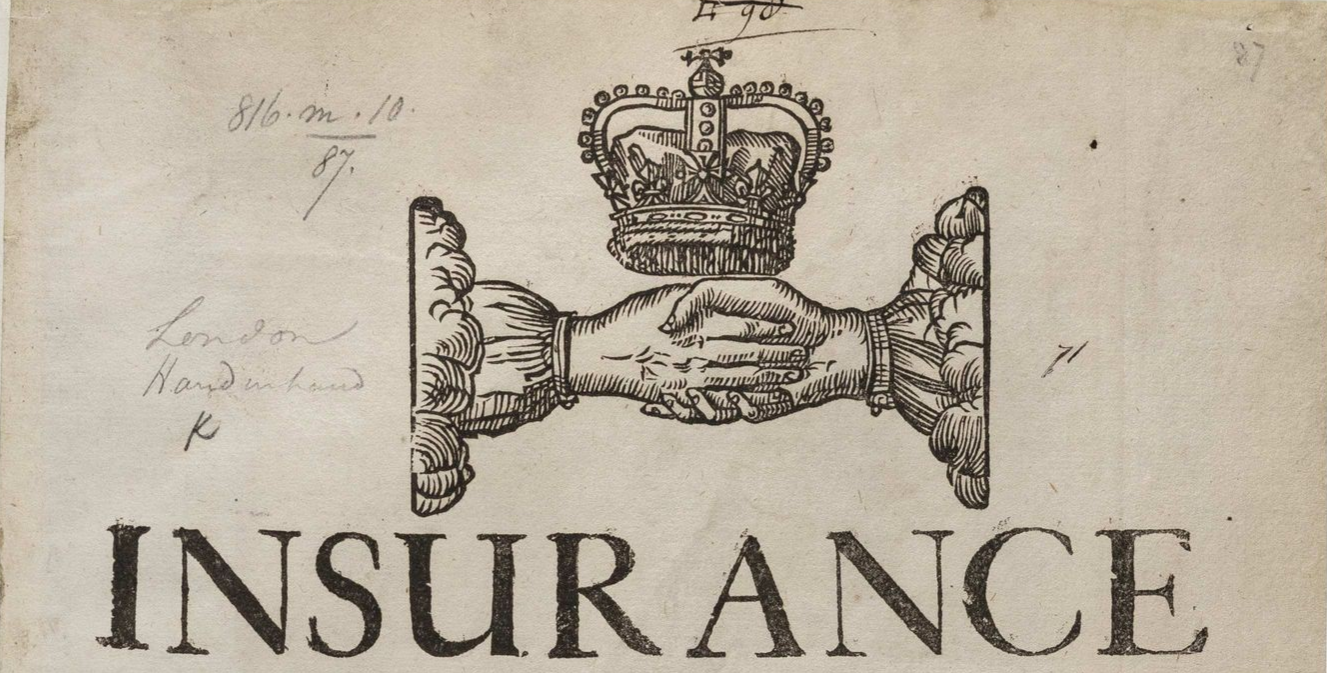
Fabricating History: Empire Lines, Modern Designs, and the Politics of Dress in Regency Representations

│By Megan Harlow, Gale Ambassador at Durham University│

It is a truth universally acknowledged that Regency fashion has become a cultural touchstone, romanticised amid the contemporary resurgence of early nineteenth-century period dramas. The global reception of Bridgerton (2020–), alongside the proliferation of the ‘Regencycore’ aesthetic, exemplifies the symbiotic relationship between historical narrative engagement and a renewed preoccupation with sartorial historiography, positioning fashion as a dynamic site of aesthetic and ideological negotiation.

Yet, as screen portrayals negotiate between historical fidelity and modern sensibilities, they often obscure the constructed nature of costume, selectively resurrecting aspects of the past while neglecting the intricate social, political, and economic meanings embedded in dress. 

Drawing on Gale Primary Sources, this analysis interrogates how Regency fashion was originally represented and how its legacy is reshaped in adaptation. Ultimately, questioning what histories are made visible through costume, and what is strategically forgotten, highlighting the historiographical implications of fashion in contemporary media.

Read more

Leaning Into The Great Gatsby and Other Primary Sources

Still from the Film “the Painted Flapper"

│By Caley Collins, Gale Ambassador at University College London (UCL)│

At 100 years’ old, The Great Gatsby is more popular than ever. F. Scott Fitzgerald’s seminal 1925 novel encapsulates the obsessive nature of the American Dream alongside investigating truths about love and desire. Novels like this are one example of a primary source, with primary sources being first-hand accounts of contemporary periods and phenomena.

Needless to say, various types of primary source should be positioned differently within the creation or evidencing of an argument, and each source has many arguments that can be drawn out from it. But what are the best ways to use these primary sources? This post will guide you through the process of finding and using primary sources from Gale Primary Sources, starting with The Great Gatsby.

Read more

How Gale Primary Sources Supports Students Taking Exeter University’s ‘Approaches to Criticism’ Module

│By Poppy Sargent, Gale Ambassador at the University of Exeter│

The first year ‘Approaches to Criticism’ module taught to English students at the University of Exeter is notoriously one of the hardest compulsory modules, spanning across both first and second term. Throughout this module, you learn to think about yourselves as infinitely complex social and political subjects and how our social and political being shapes reading practices, focusing on systems and subjects in relation to one another.

Leveraging literature from Gale Primary Sources, this blog will highlight how Gale supports this module, sourcing manuscripts and monographs to aid students and lecturers in their work. By focusing on three of (in my opinion) the most interesting and crucial topics of this module, I will show you how Gale’s extensive archives highlight articles covering Marxism, Bodies and Medicine, and Critical Race Studies.

Read more

Lights, Camera, Snaption: The Impacts of Living in an Imaged Based Society

│By Olivia McDermott, Gale Ambassador at the University of Liverpool│

In our contemporary world, visual media plays an increasingly important role in how we socialise, develop our opinions and create online personas. Though the ability to capture and translate the world around us into images can be dated back to the time of Aristotle, the invention of the photographic camera occurred in the early nineteenth century by Frenchman Joseph Nicéphore Niépce.

Over a period of just under two hundred years, the commercialisation of the camera now means that anyone can become a photographer. However, many scholars argue that such rapid technological advancement is leading to social changes that we are struggling to adapt to. For example, the pressures on people to only post perfect, airbrushed photos are causing an identity crisis, particularly amongst the youth; AI deepfakes are causing detrimental, psychological issues and the obsession with only sharing the good parts of life is leading to increasing reports of isolation.

As a young woman who has grown up in the digital age, I am more than aware of the ways in which social media infiltrates through to all areas of life. Living in an imaged-based society continues to overlap within the personal, relational, academic and professional spheres, but how did we get here?

Read more

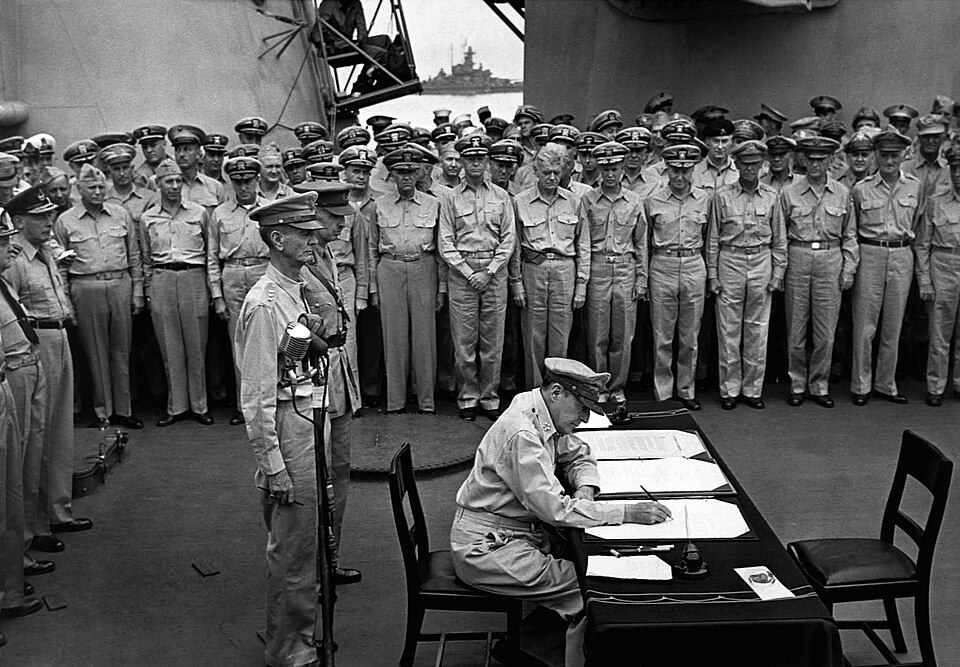
Edward Teller: No Cold War without the Father of the Hydrogen Bomb

│By Sofía Sanabria de Felipe, Gale Ambassador at the University of Oxford│

On July 21, 2023, the world – or at least the world that exists on the internet – was taken over by a cinematic phenomenon: the simultaneous release of Greta Gerwig’s Barbie and Christopher Nolan’s Oppenheimer. ‘Barbenheimer’, if you will. The long, pandemic-delayed release of a film about the world’s most famous doll and the man behind the Manhattan Project became an unlikely couple, drawing people back to the cinema screen in unprecedent numbers.

As a historian who’s particularly fascinated by popular culture and the Cold War, the summer of 2023 became a perfect opportunity for me to reflect on the relationship between these two concepts, especially when understanding the prevalence of the American – arguably Western – perspective on the twentieth century. Two years on, Gale Primary Sources collections, primarily Archives Unbound, have given me the tools to explore my interests further.

Read more

Reflecting on the Recent Past with The Independent Historical Archive Supplement, 2017-2021

│By Leila Marhamati, Associate Editor, Gale Primary Sources

Through their daily, on-the-ground coverage of current events, newspapers continue to be a rich resource for understanding key societal issues. In March 2025, Gale released a supplement to its digital archive of the major British newspaper The Independent, bringing coverage up to 2021.

The additional 190,000 pages of material offered in this supplement provides a unique opportunity for users to reflect back on events they have lived through as a matter of scholarly interest, such as the COVID-19 pandemic. Using this archive, we can paint a retrospective of this major recent event, thinking about questions of hindsight, bias, and personal experience.

Read more

From the Physical-to-Digital Archive and Back: A Gale Fellow’s Account of Trials and Errors

│By Vanessa Bateman, ESEH-Gale Fellow│

When I received the 2024/2025 ESEH-Gale Non-Residential Fellowship in Digital Environmental History I was just starting the early stages of my first solo book project. I had done enough research to develop my book’s main themes, structure, and research questions, but I had not started the writing process because I still had some gaps to fill.

As someone new to the Digital Humanities (DH), I applied to the Gale Fellowship because I wanted to learn how DH methodologies could elevate my research and eventually expand my output beyond a traditional academic book. As a Gale Fellow, I received training in different research and analysis methods that could be achieved in Gale Digital Scholar Lab, and access to the Gale Primary Sources.

Below I share an account of how I had to problem solve and pivot my research in the digital space, and some findings I made that will be useful in the future. Sharing moments when research didn’t go according to plan, I believe, is just as important as a polished finished project.

Read more