
Off with Her Head? The Initially Mixed Reaction to Queen’s Iconic Song ‘Bohemian Rhapsody’

Ewbank, Tim. "A first-class hit." Daily Mail, 4 Dec. 1975, p. 19. Daily Mail Historical Archive, 1896-2004

│ by Lily Deans, Gale Ambassador at the University of Birmingham │

Over the past year, the cinematic world has produced numerous biopics which share the stories of stars many of us have grown up with, love and admire. The most memorable one for me was the double BAFTA-winning Bohemian Rhapsody which portrayed the fantastic story of the most talented (in my opinion!) band of the past century: Queen. The film highlighted not only the unparalleled talent of this eclectic band but also the dedication and effort that went into producing the songs we all now know and love. Interestingly, however, one section of the film focused on the release of the now classic song Bohemian Rhapsody in October 1975 and highlighted the initially negative reception of the song (from some critics). This surprised me, as I have come to know Bohemian Rhapsody as a song that passes through generations with adoration and unyielding success. Thus, when I was introduced to Gale Primary Sources, I thought it would be interesting to research the critical reviews of Bohemian Rhapsody in Gale’s online archive, to see first-hand the opinions and negative comments that were made at the time of the song’s release – and to reflect on how questionable they are in retrospect!

Read more

Surprises in the History of Men’s Euro Football

"Football Euro 2004." Times, 23 June 2004

│ by Lotta Vuorio, Gale Ambassador at the University of Helsinki │

From a sport seen as unfit for physical education and women, to a sport for everyone – regardless of gender, class or nationality. That sport is football, and as the last rounds of the UEFA Euro 2020 qualifiers are being played 14th – 19th of November, it seemed an apt time to share with you what Gale Primary Sources has to offer when it comes to the history of football and the European Championship.

Read more

Escaping from Communist East Germany

│ By Stefanie Meinken, Gale Field Sales Executive, South-West Germany & Switzerland │

This year, 2019, is a year of anniversaries in twentieth-century German history. Not only is the Federal Republic of Germany celebrating its 70th birthday, former East Germany – officially known as the German Democratic Republic (GDR) –– was also founded 70 years ago, on 7th October 1949. The latter anniversary might spark divergent emotions; the period of the GDR’s existence is often seen as a time of suppression and uncertainty. The end of this period also has a significant anniversary this year: it is 30 years since the fall of the Berlin wall on 9th November 1989.

Read more

The Peterloo Massacre, August 1819

Reform. Libel. -- Sedition. -- Treason. -- Persecution. 1819, January - 1820, November. Radical Politics and the Working Man in England: Part One: Sets 7-11, 13-32, and 34-46 Set 40; Vol 1. British Library. Nineteenth Century Collections Online, https://link.gale.com/apps/doc/CREORT076326165/GDCS?u=webdemo&sid=GDCS&xid=c5017dd3

│By Clem Delany, Associate Acquisitions Editor│

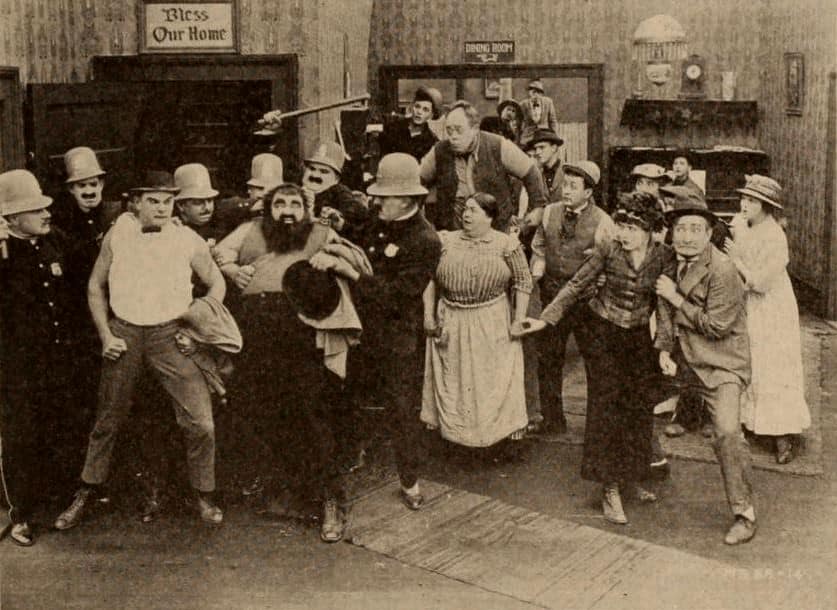
Two hundred years ago, on 16th August 1819, at least seventeen people died at St Peter’s Field, Manchester, during a peaceful protest calling for the reform of parliamentary representation.

This year, the two hundred-year anniversary, has been marked in the UK by a wealth of newspaper articles covering ‘a tragic event of minor historical significance that happens to accord with a Marxist version of Britain’s past’ 1 (The Times) or ‘the bloodiest event on English soil in the nineteenth century’ 2 (The Daily Mail). The BBC, from its new headquarters in Manchester, produced ten radio programmes and performances to mark the anniversary. You can buy a Peterloo mug or a Peterloo tea towel, and around Manchester live music, poetry readings, open-air karaoke and other family-friendly events took place over the weekend.

I dug through the Gale archives to see how the event was represented at the time, and at its centennial in 1919.

Read more

Discovering FDR through Gale Primary Sources

Franklin Delano Roosevelt and images from this blog post

│By Tom English, Gale Field Sales Executive – North UK │

I recently enjoyed reading three excellent books on Franklin Delano Roosevelt (FDR), 32nd President of the United States: Jean Edward Smith’s single-volume biography, FDR, which provides an excellent overview of his life and presidency; David B. Woolner’s The Last 100 Days: FDR at War and at Peace, which gives an incisive and detailed account of the final days of his life, including negotiations with Stalin and Churchill at Yalta and his fight to the end to build international institutions to prevent future wars; and Susan Dunn’s A Blueprint for War: FDR and the Hundred Days that Mobilized America, which tells the story of how FDR outmanoeuvred those who opposed America’s support for Britain and Russia in WWII. 

Having thoroughly enjoyed the secondary sources on FDR, I thought that I’d delve into Gale Primary Sources to see what’s there…

Read more

A Whistle-Stop Tour of Famous Dachshunds

Waldi Dachshund

│By Jasmine Weller, Inside Sales Executive for Eastern Europe │

Weenie. Wiener. Dashie. Datsun. Doxin. Doxie. Sausage dog. Hot dog. Teckel. Dackel. No matter what you like to call them, there is no denying that the Dachshund is ever growing in popularity thanks to advertising campaigns, dedicated Instagram accounts, a multitude of home interior accessories and ‘those’ sausage dog walks. Being the proud ‘fur’ mum to two of my own, I thought it was time to pay homage to these tenacious little creatures, with the help of Gale Primary Sources.

Read more

DH2019 – Lifting the lid on how we created the Gale Digital Scholar Lab

Busy crowd at the DH2019 Conference in Utrecht, the Netherlands

│By Chris Houghton, Head of Digital Scholarship, Gale International│

It was a real honour for Gale to expand our partnership with ADHO (the Alliance of Digital Humanities Organisations) and serve as Gold Sponsor for their DH2019 conference. This incredible event brought together 735 participants from Europe, 203 from North America, 72 from Asia, 38 from Africa, 11 from Oceania, and 7 from South America. In total, 1066 scholars working in, or with an interest in Digital Humanities, attended, coming together earlier this month in Utrecht, the Netherlands.

Read more

Noddy in Archiveland

“Pop Career for Noddy." News Review. Sunday Times, 16 Nov. 2003, p. 14[S3]. The Sunday Times Digital Archive, http://link.galegroup.com/apps/doc/FP1803638499/GDCS?u=webdemo&sid=GDCS&xid=141de559

│ By Rebecca Bowden, Associate Acquisitions Editor │

Everybody knows Noddy. Created by Enid Blyton in 1949, the Noddy books – and subsequent television show – tell the story of a wooden man who runs away from the toy store and finds himself in Toyland. There he makes his home after the town’s residents have established that he is, indeed, a toy. The adventures of this blue-hatted man and his friends (Big Ears, PC Plod, Dinah Doll, Tessie Bear et. al.) are a staple of the British childhood, enduring through years of changes and controversy. With this year marking Noddy’s 70th birthday, we take a look in Gale Primary Sources to uncover the history of the little man in the red and yellow car.

Read more

From Archives to Arguments – a Project Course at the University of Helsinki makes use of the Gale Digital Scholar Lab

│ By Rebekka Väisänen, Gale Ambassador at the University of Helsinki │

The English Philology corridor at the University of Helsinki has an area which we call the Aquarium, a glass-walled space that is often used for smaller faculty events, informal gatherings, and course “end offs” (the last meeting at the end of a course). On the 17th of April, I arrived there to see the poster presentations for the “Archives to Arguments” course, a module in which students use the Gale British Library Newspapers and other archives to do linguistic research into democratization

Read more

British Royal Babies Through the Ages

| By Rebekka Väisänen, Gale Ambassador at the University of Helsinki |

All media outlets are now brimming with news about the newest addition to the British Royal Family, HRH Prince Harry and Meghan’s baby boy. In light of this, I decided to search Gale Primary Sources to see how royal births have been documented and celebrated throughout the ages. Below I explore the media hype around five royal ancestors, ranging from poetry to the decoding of names. 

Read more