Coming Soon: Global Politics and US Foreign Policy: The Council on Foreign Relations, 1918–2000

│By Clem Delany, Acquisitions Editor, Gale Primary Sources│

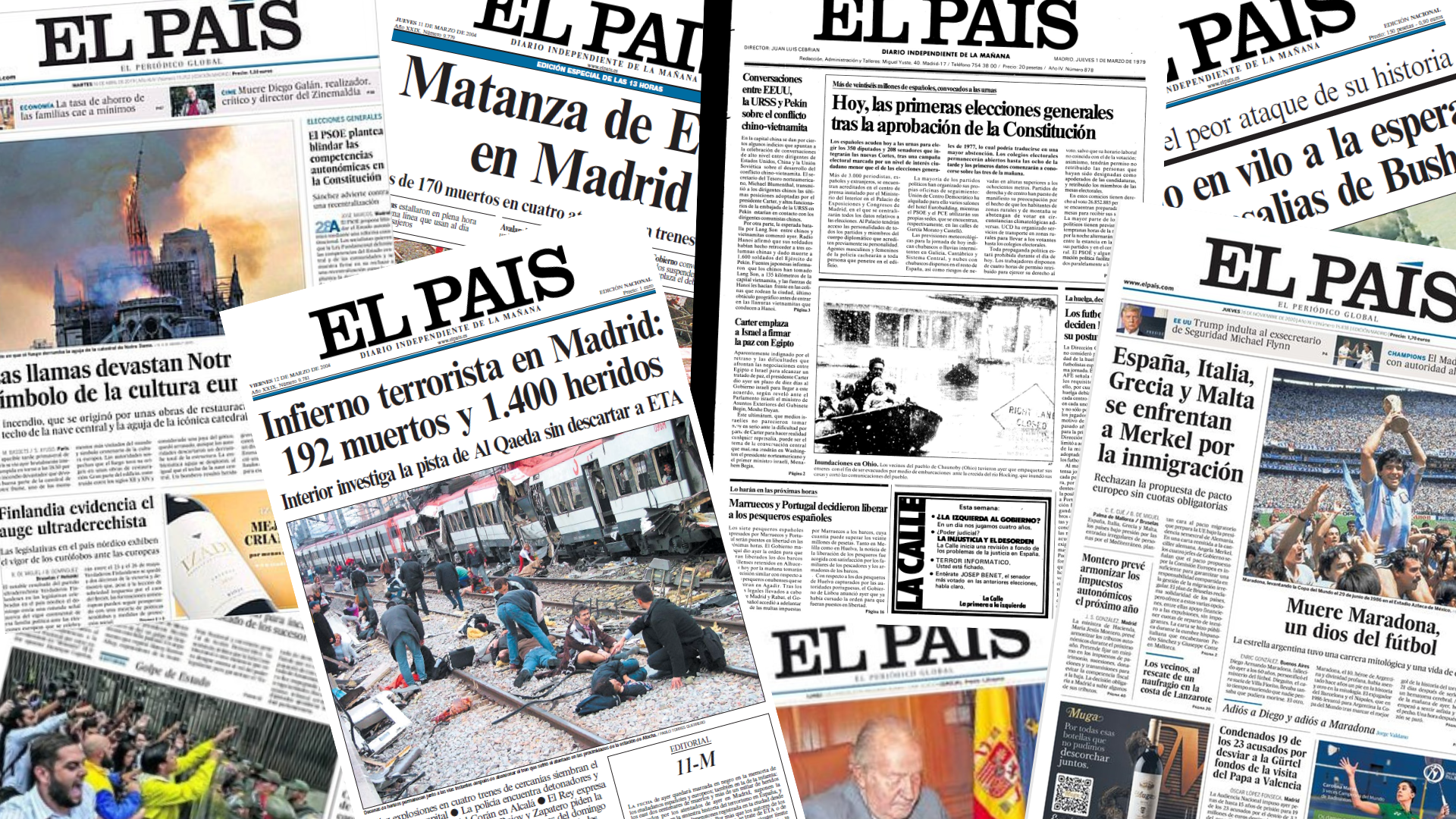
December 2025 will see the launch of a new digital archive, Global Politics and US Foreign Policy: The Council on Foreign Relations, 1918–2000.

This is the digitisation of material from the Studies Department, Records of Groups, and the Records of Meetings of the Council on Foreign Relations, a non-partisan, independent US think tank focused on the international relations of the United States and its role in the world.

This role, and public perceptions of it, has altered greatly throughout the twentieth century, from the isolationist principles of the 1920s and 30s, to the American engagement in WWII and subsequent support in Allied recovery processes, to the Cold War, global anti-communist fears, and the growth of American soft power. In 2025, many of the programs of the United States Agency for International Development (established in 1961 and a key tool of US soft power) were shut down and a new phase of US international relations began.

Read more

Terra Nullius: The Legacy of “The Land of No One”

│By Oralkhanova Alima, Year 11 Student at Nazarbaev Intellectual School in Semey, Kazakhstan│

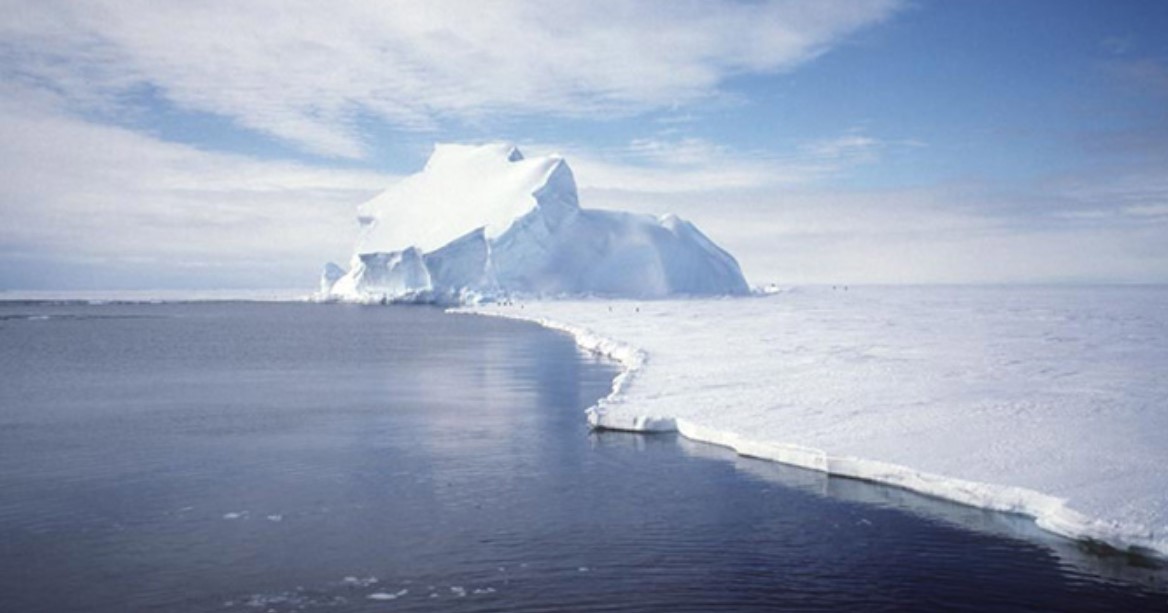
In an era when concerns about overpopulation and scarcity of natural resources are rising, it may seem paradoxical that certain areas of land remain unclaimed and unwanted. Even today, when countries continue to engage in territorial disputes and conflicts, there still exist regions that have been ignored by the international community. To describe such territories, early international law introduced a specific term – terra nullius, a Latin expression meaning “the land of no one”. Although this term is no longer officially used, the concept of terra nullius continues to captivate people’s minds.

Read more

Collisions: Driving Through Digital Humanities in Search of Roadkill

│By Gilberto Mazzoli, ESEH-Gale Fellow│

In 2024 I have been one of four recipients of the ESEH-Gale Fellowship in Digital Environmental Humanities. This fellowship has been a good opportunity to explore some aspects of my research in environmental history in a different way and helped to make my current research more visible.

This fellowship not only allowed me to access for seven months, numerous online Gale Primary Sources archives related to the environmental history of the United States and to experiment with tools contained in the Gale Digital Scholar Labbut enabled me to develop a part of my research project related to the creation of digital interactive maps. This pushed me to learn new technical skills, like GIS, and to think differently about some aspects of my research in environmental history.

In this brief account I reflect on my first experience with digital humanities and on the challenges faced during my research.

Read more

G is for Golden Age: Exploring a Golden Age of Children’s Literature with Gale’s Nineteenth Century Collections Online

│By Elizabeth Gaglio, Academic Customer Success Specialist│

The nineteenth century is known as a “Golden Age” of children’s literature. Advancements in printing and new views on childhood transformed the genre that was overwhelmingly moral and didactic, finally allowing for tales of adventure, nonsense verse, and imaginative illustration.

Rather than reading just to learn proper behaviour and lessons, children got to find out what happened to Alice when she fell down the rabbit hole and follow the woodland adventures of “a silly old bear” and his friends. Reading for pleasure, curiosity, and wonder became a valued part of childhood in this golden age.

By looking at one popular style of book, the alphabet book, we can see echoes of trends found across children’s literature in the nineteenth century, laying the foundations of modern works. Didactic by nature, but with growing whimsy and creativity, these alphabet collections found in Gale’s Children’s Literature and Childhood archive (part of Nineteenth Century Collections Online) help us track the evolution of children’s literature.

Read more

Italian Futurism and Gale Primary Sources

│By Caley Collins, Gale Ambassador at University College London (UCL)│

Italian Futurism was an avant-garde movement founded in 1909 by F. T. Marinetti upon the publication of his tract The Founding and Manifesto of Futurism. The Futurists aimed to radically break from the past and create new types of literature, art, photography, and even music. They intended to glorify technology, aggression, and speed while destroying artistic and literary conventions.

The movement officially ended in 1944 with Marinetti’s death, however it is often considered to have had two phases. The first, more valiant phase is perceived as having ended in 1916 upon the deaths of several key members of the movement, including Umberto Boccioni, in WWI. In the subsequent years, Futurism moved in a different direction, allying itself with the Italian National Fascist Party and thus occasioning its own downfall. Using Gale Primary Sources, this post will explore the different facets of Futurism’s attempted creative emancipation from the past, alongside the movement’s legacy.

Read more

Femininity and Masculinity in Nineteenth-Century European Aesthetics

│By Sofía Sanabria de Felipe, Gale Ambassador at the University of Oxford│

In March 2022, an exhibition entitled Fashioning Masculinities opened at the Victoria and Albert Museum in London. Its manifesto was to show a ‘history of changing ideas of masculinity’. The exhibition greeted visitors with a gallery of plaster-casts of statues in a Greco-Roman idiom. Amongst them stood Pietro Francavilla’s statue of Apollo, a Renaissance sculpture depicting the apparent timelessness of the nude masculine ideal of Western classical epistemology.

Read more

In the Footsteps of My Avô: Exploring Angola’s Fight for Independence Through Family History

|Rosa Ferreira, Digital Product Trainer|

Armando Dias De Castro, my avô – my Portuguese grandfather – was a man full of life. He was warm, funny, always ready with a story or a joke. He was also the kindest man you’d ever meet. But when it comes to his time in Angola, I’ve got nothing. No stories, no memories. If he ever spoke about it, I must have been too small to notice, or the words just never stuck.

My uncle, however, recalls many conversations. That makes me believe my avô must have shared his experiences, at least in fragments, though they slipped past me.

It is this gap – between the grandfather I knew and the silence that lingers – that has drawn me into the archives.

Read more

Glam Rock to Georgian Riots: Bowie’s Last Notebook

│By Eleanor Leese, Acquisitions Editor, Gale Primary Sources

If, like me, you frequently find yourself wondering what David Bowie would be up to if his time with us mortals hadn’t been so tragically short – last week we got some answers. The BBC reported that David Bowie spent his last months deep in research about eighteenth-century Britain.

The appeal of the eighteenth century is something we know a little about here at Gale Primary Sources, as publishers of Eighteenth Century Collections Online, the largest collection of digital primary sources emerging from that century which is shortly to receive a large additional module in the form of ECCO, Part III. So, of course, the first thing that I did after learning about Bowie’s interest in our favourite historical era was to set about looking for the sources he had been reading. I wanted to see if I could find what had captured his imagination and ECCO did not disappoint.

Read more

Uncovering India with Gale Primary Sources

│By Mickey Mehta Arorra, Digital Product Trainer│

India’s history unfolds across centuries of transformation – colonial rule, the struggle for independence, post-colonial reconstruction, and global diplomacy. Much of this complex narrative has long remained buried in distant or hard-to-reach archives. Now, Gale Primary Sources brings these rich and rare documents into the digital realm, making them accessible to students, educators, and researchers across India.

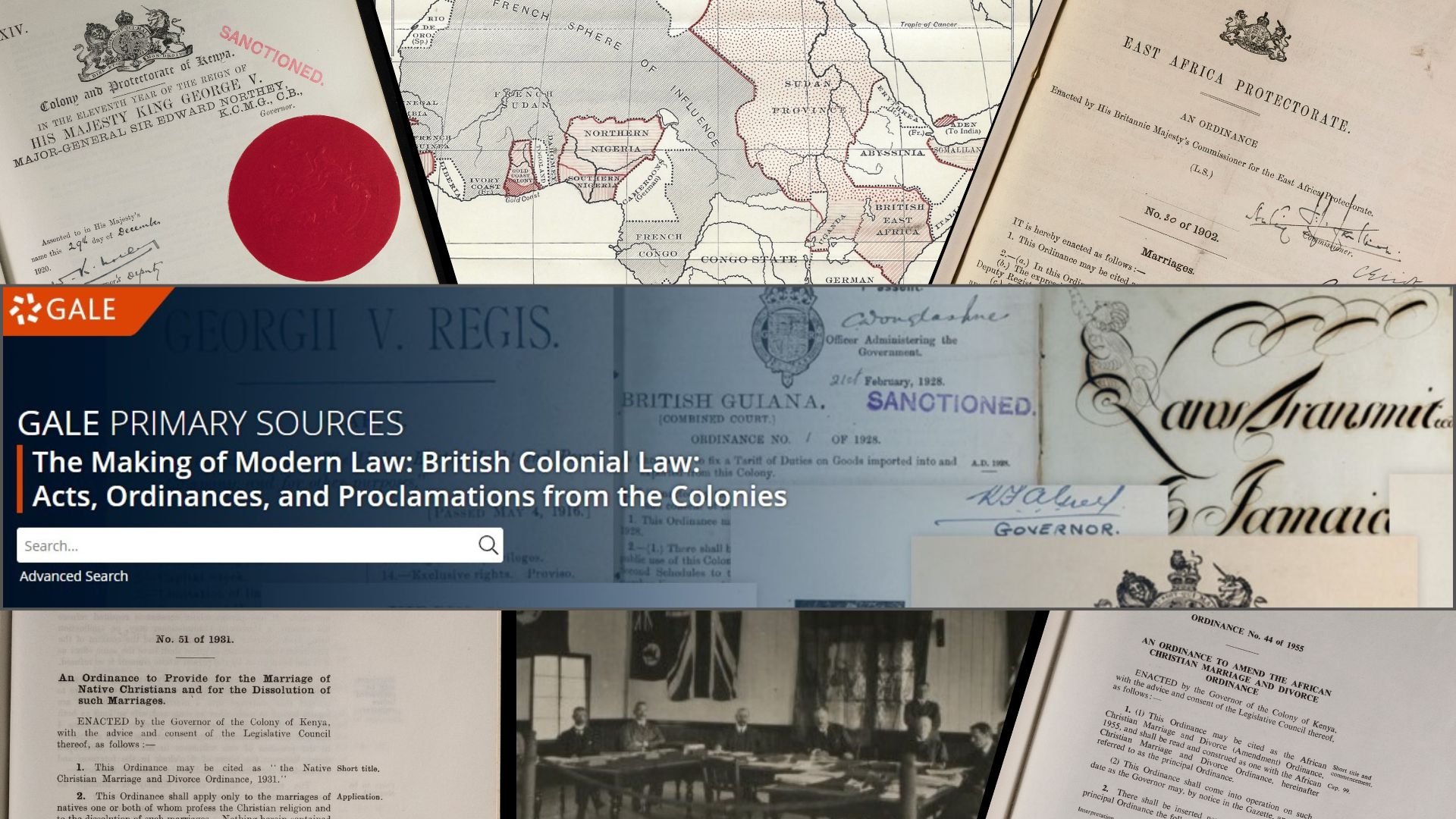
With collections such as Decolonization: Politics and Independence in Former Colonial and Commonwealth Territories, The Making of Modern Law: Legal Treaties, 1800-1926, and Women’s Studies Archive, learners can dive deep into archival material that brings India’s layered past to life in vivid detail.

Read more

Solving the Third Condiment Mystery with Primary Source Documents

Dinner table from 1895 combined with source from the article showing a photo of a cruet

|By Kevin Kohls, Marketing Manager| The internet loves a good mystery. They allow content creators to put on their detective hats to try to determine fact from fiction and provide a real opportunity to answer questions that had previously been unknown. When I saw a YouTube video which mentioned the “Victorian third condiment mystery” earlier … Read more