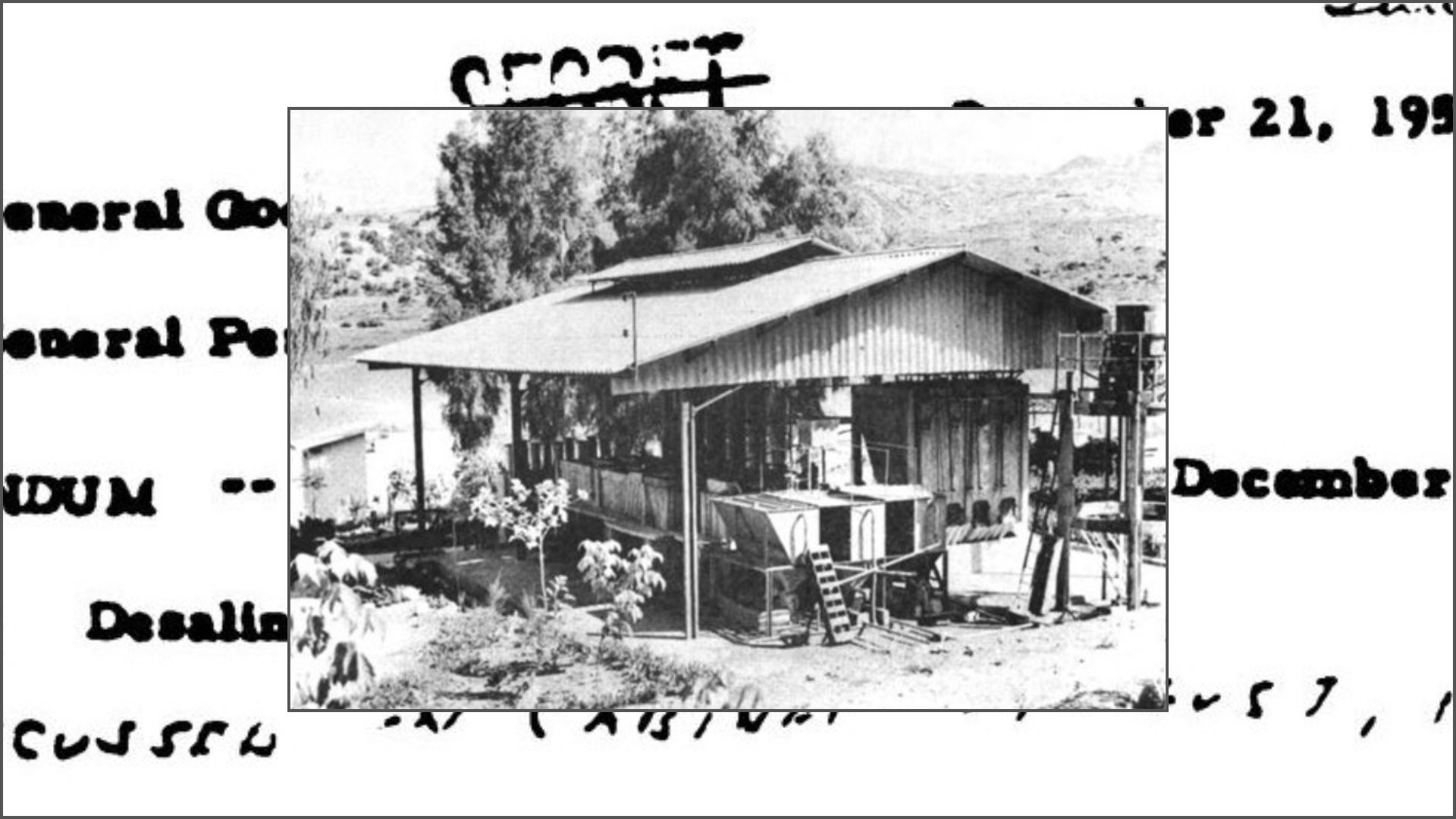
From Salty Dreams to Solar Futures: Rethinking Desalination with Gale Primary Sources

│By Elizabeth Hameeteman, Postdoctoral Researcher, Technische Universität Berlin │

When I began my Gale Fellowship, I was curious about how digital tools might support my historical research. As someone trained primarily in archival and text-based methods, I was eager to explore how computational approaches might offer new ways of seeing familiar materials – or even lead me to sources I wouldn’t have encountered otherwise. What I didn’t expect was that it would shift the trajectory of my work entirely.

Read more

In the Footsteps of My Avô: Exploring Angola’s Fight for Independence Through Family History

|Rosa Ferreira, Digital Product Trainer|

Armando Dias De Castro, my avô – my Portuguese grandfather – was a man full of life. He was warm, funny, always ready with a story or a joke. He was also the kindest man you’d ever meet. But when it comes to his time in Angola, I’ve got nothing. No stories, no memories. If he ever spoke about it, I must have been too small to notice, or the words just never stuck.

My uncle, however, recalls many conversations. That makes me believe my avô must have shared his experiences, at least in fragments, though they slipped past me.

It is this gap – between the grandfather I knew and the silence that lingers – that has drawn me into the archives.

Read more

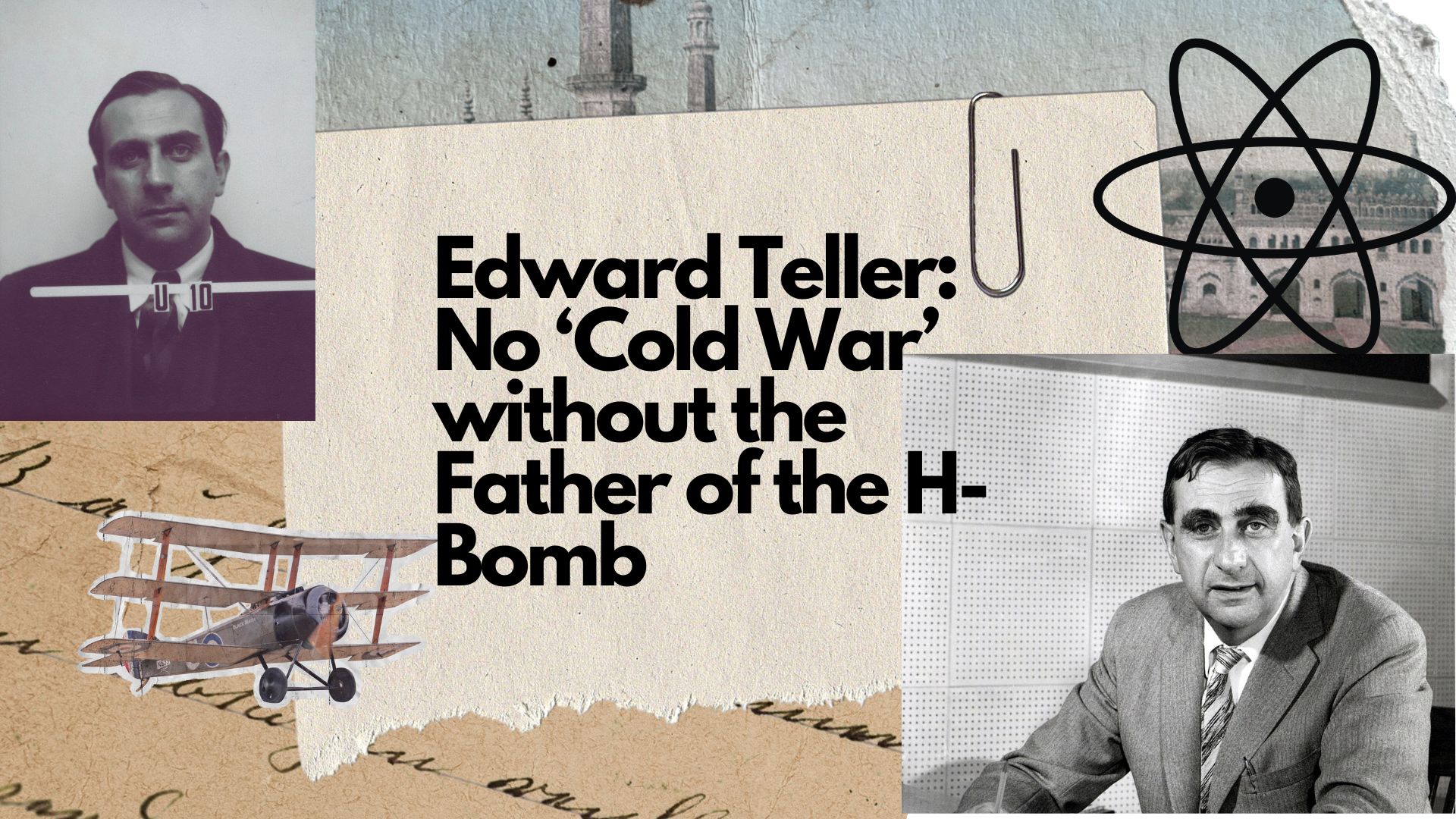
Edward Teller: No Cold War without the Father of the Hydrogen Bomb

│By Sofía Sanabria de Felipe, Gale Ambassador at the University of Oxford│

On July 21, 2023, the world – or at least the world that exists on the internet – was taken over by a cinematic phenomenon: the simultaneous release of Greta Gerwig’s Barbie and Christopher Nolan’s Oppenheimer. ‘Barbenheimer’, if you will. The long, pandemic-delayed release of a film about the world’s most famous doll and the man behind the Manhattan Project became an unlikely couple, drawing people back to the cinema screen in unprecedent numbers.

As a historian who’s particularly fascinated by popular culture and the Cold War, the summer of 2023 became a perfect opportunity for me to reflect on the relationship between these two concepts, especially when understanding the prevalence of the American – arguably Western – perspective on the twentieth century. Two years on, Gale Primary Sources collections, primarily Archives Unbound, have given me the tools to explore my interests further.

Read more

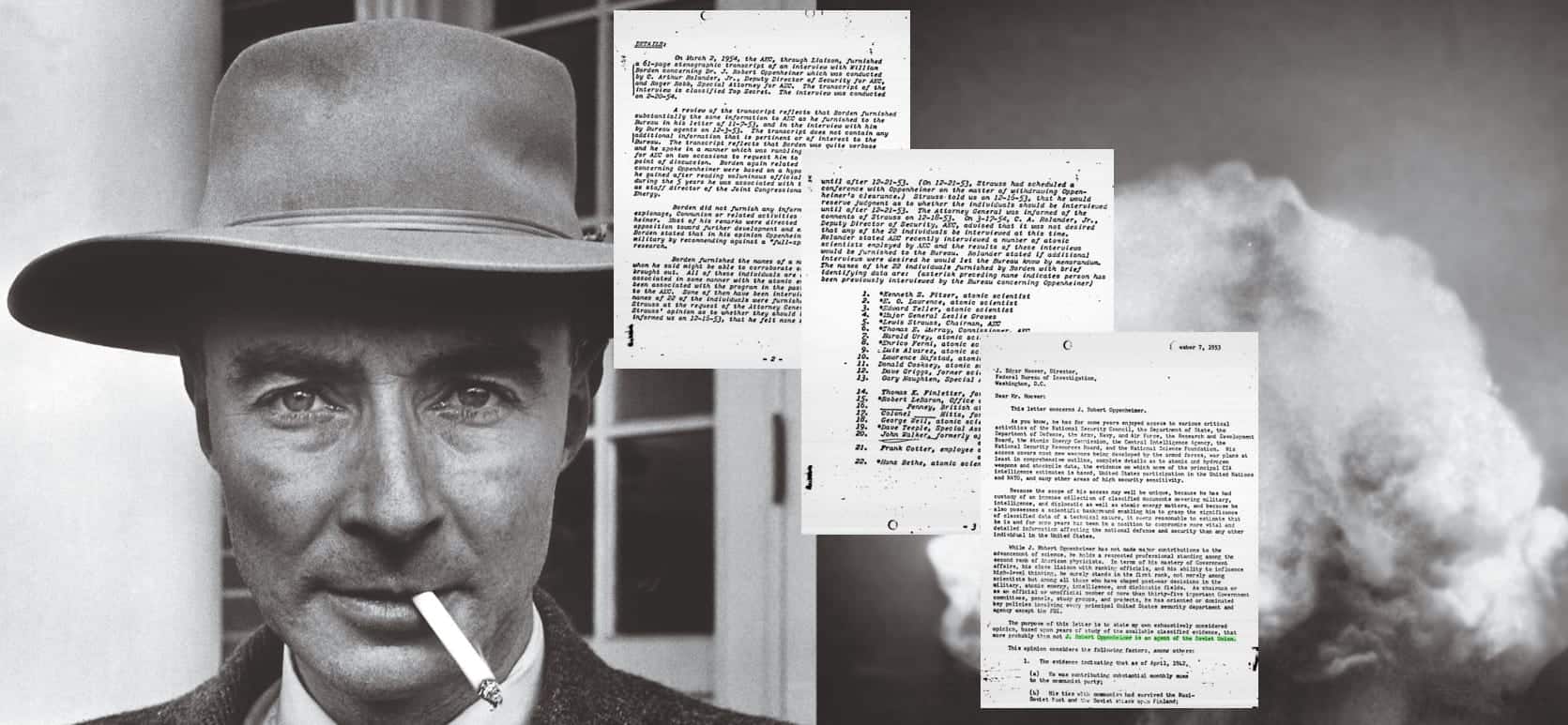
Uncovering the Betrayal of J. Robert Oppenheimer with Gale Primary Sources

│By Nicolas Turner, Gale Ambassador at Leiden University│

The release this year of Christopher Nolan’s Oppenheimer biopic has focused attention on the ‘Red Scare’ of the early 1950s in the United States, a period of history filled with all the ingredients of a thriller: double agents, secret recordings, and dramatic revelations. As Nolan’s film reminds us, however, there was also a very real human cost to the persecutions, with – in the words of the historian Ellen Schrecker – an impact on “the lives of thousands of people”.1

I have always been fascinated by this McCarthyite moment, in which the tide of history seemed to suddenly go out, leaving people stranded with beliefs that had previously been acceptable but were now framed as treasonous or worse. I was therefore thrilled to discover in Gale’s Political Extremism and Radicalism archive a treasure trove of documents that offered direct access to the experiences of those living through that dramatic moment – including, most tantalisingly of all, J. Robert Oppenheimer himself.

Read more

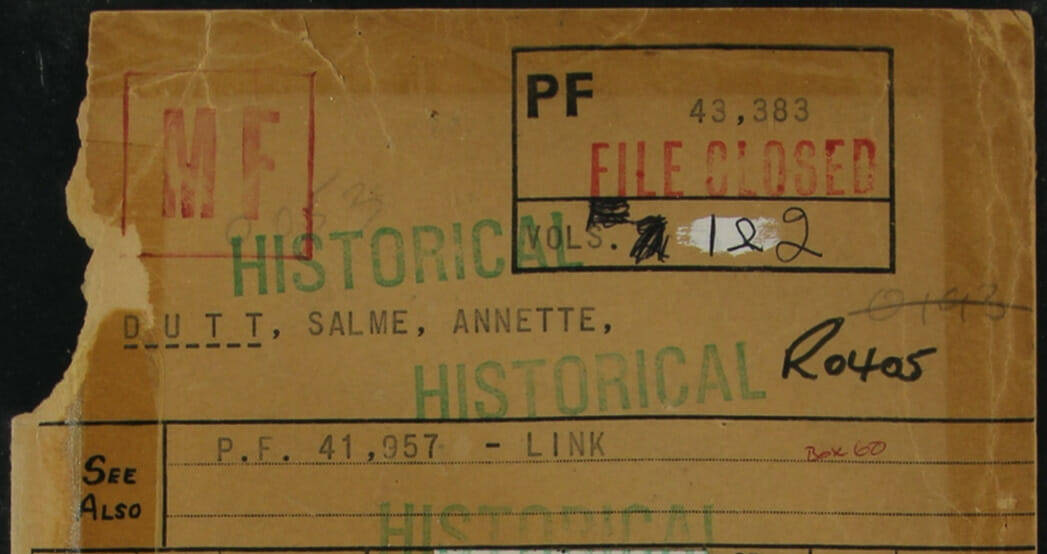
Writing Sensitive Personal Histories

Sensitive documents

│By Jade Burnett, Gale Ambassador at the University of Sheffield│

Throughout this academic year I have been working on an MA dissertation on the marriages of members of the Communist Party of Great Britain (CPGB). In working on this dissertation, I have tried to piece together the personal lives of people who existed largely in the political sphere. While this work is hugely interesting and deeply fulfilling academically, it can also be very tricky, with the writing of personal histories bringing up a range of difficulties surrounding how academics can seek to sensitively piece together the intimate lives of individuals. I hope that this blog post can offer readers some tips and tricks on how to approach writing these histories. 

Read more

How to Make Use of British Security Service Documents

│By Jade Burnett, Gale Ambassador at the University of Sheffield│

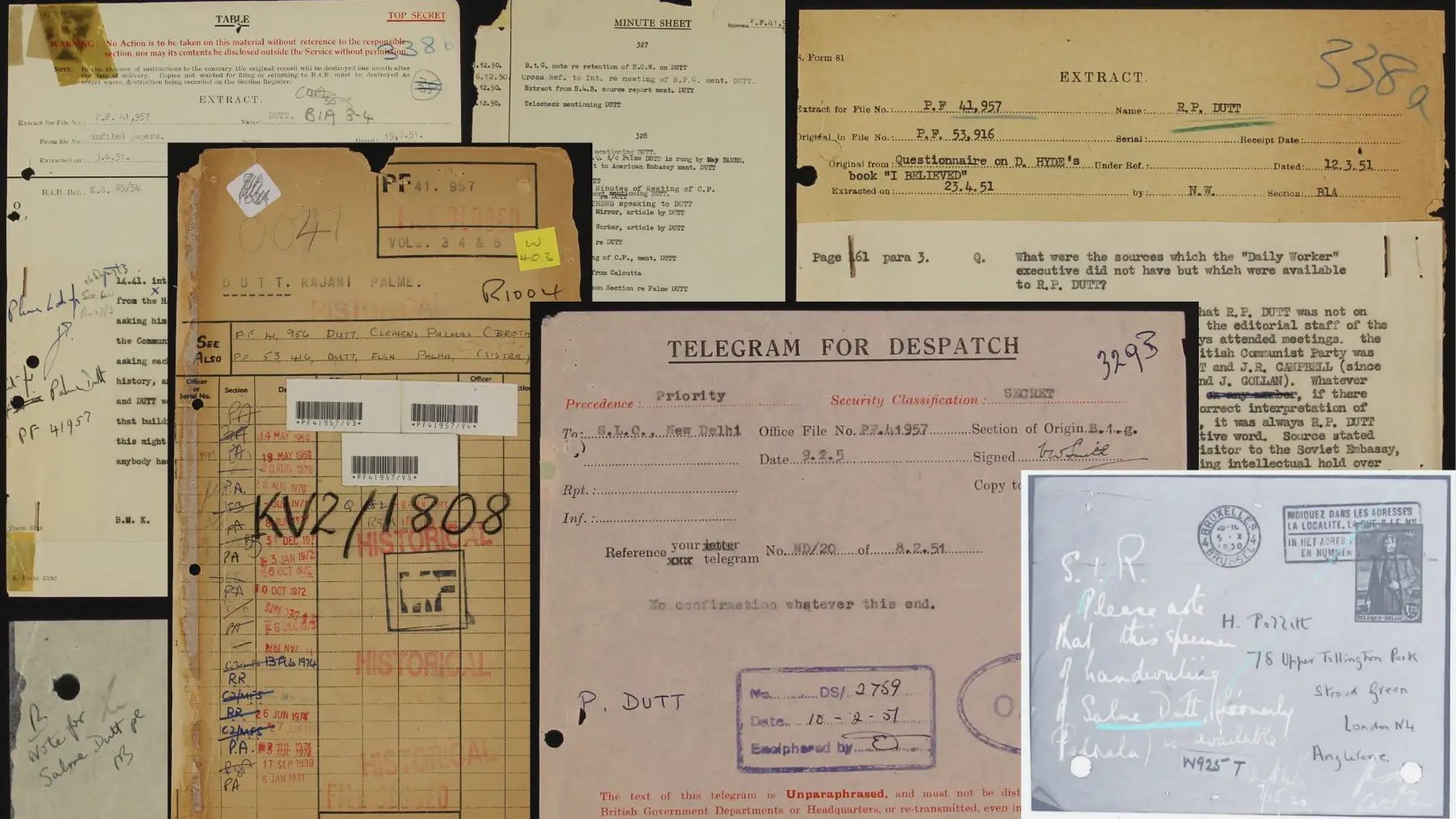
British Security Service files from Gale’s Political Extremism and Radicalism archive have a huge amount to tell us about British political life in the twentieth century. These files deal with the activities of extreme British political figures and movements. At first, these files may seem somewhat inaccessible, compiled in large folders, containing information which spans long periods of time and refers to a range of different figures, often with little context. However, once you get an understanding of how the archival documents are best used and approached, there are huge benefits to using them for academic research. 

Read more

The Importance of Archives – Preserving the Past and Contextualising the Present

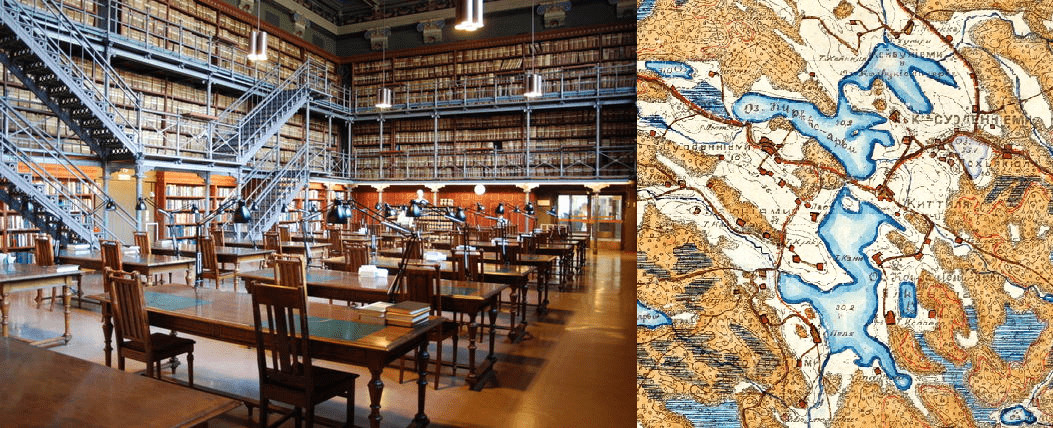
Finnish National Archives

│By Torsti Grönberg, Gale Ambassador at the University of Helsinki│

Historian Jo Tollebeek once wrote that increasing “scientification” of history at the end of the nineteenth century produced a new kind of archival-fantasy: a belief that all relevant documents from the past could be gathered. Nowadays it is vital to comprehend and take into account the diversity of an archive. Every archive is bound not only to its history and context but also the demands of the current era. At the end of the day, an archive is in of itself an intellectual problem and a cultural artefact to be studied. Historian Natalie Zemon Davis has also made the important point that, even though the world of archives has encountered many changes, the most important aspect is still the same: when you read documents in an archive you have a physical link to the past in front of you that connects you to people long dead and strengthens the researchers attempt to tell about the past as honestly as possible.2

Read more

Declassified Documents Online: Twentieth-Century British Intelligence, An Intelligence Empire

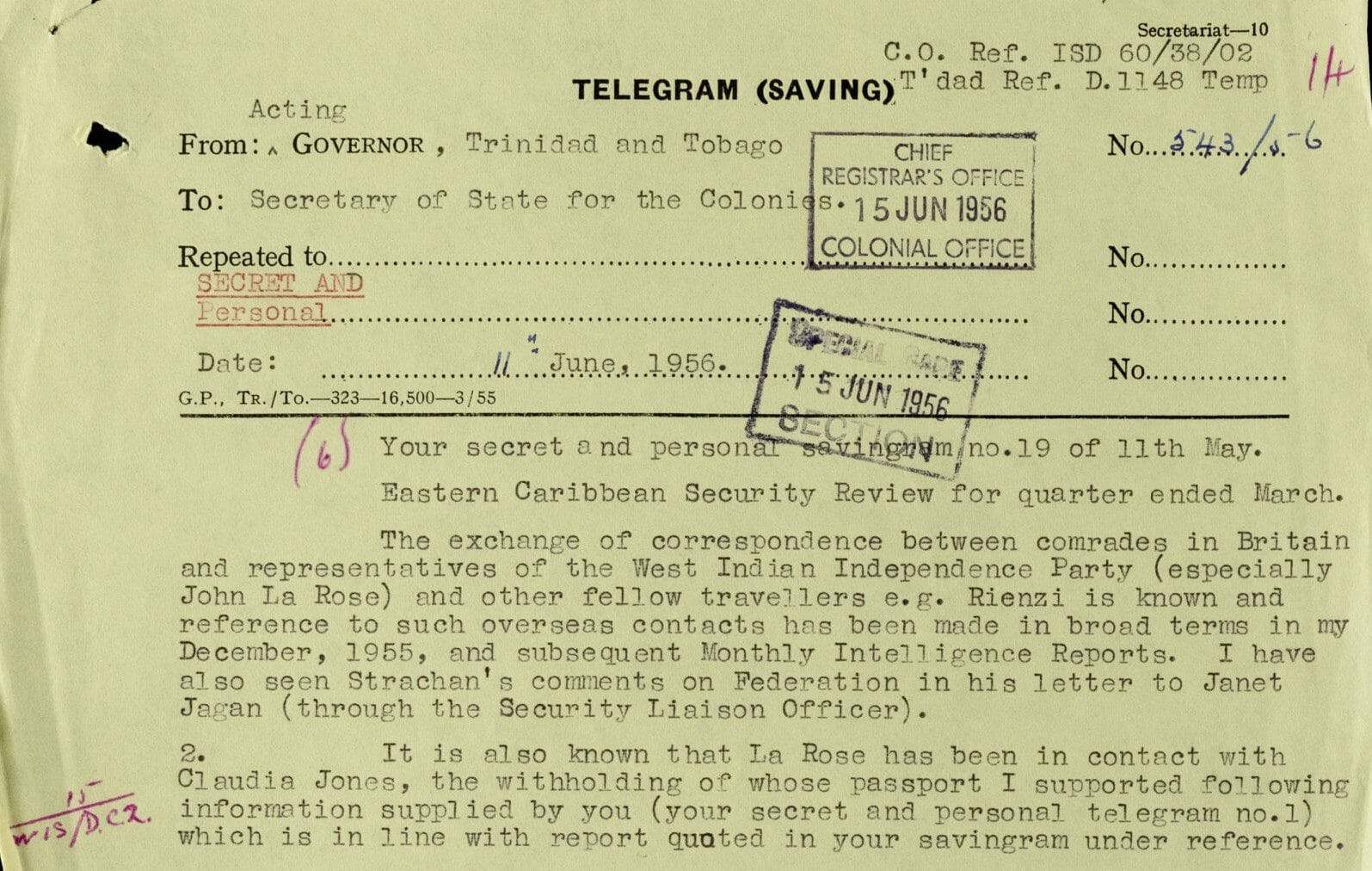
Scan of a Telegraph. Security Liaison Officer, Trinidad: security reviews of Eastern Caribbean and British Guiana. (January 1, 1955-December 31, 1956). CO 1035/16. The National Archives (Kew, United Kingdom).

│By Clem Delany, Associate Acquisitions Editor, Gale Primary Sources

The twentieth century was an era of global conflict and careful diplomacy, of the rise and fall of political extremes, of great strides in technology and vast change in the everyday lives of people around the world. Britain began the century with an empire that straddled the globe, and ended it with just a handful of small overseas territories. Warfare moved from trenches and bayonets, to weapons of mass destruction and long-distance drones. The global population skyrocketed. The internet came to be.

The scope and geographical spread of the interests of the British government over this century was vast. It reached beyond the UK and the mandates, protectorates and colonies of the British Empire, to the affairs of the self-governing Dominions and the later Commonwealth, as well as those of allies and enemies. British interests and British intelligence reached every corner of the globe from Aden to Zanzibar.

Declassified Documents Online: Twentieth-Century British Intelligence, An Intelligence Empire makes available online over half a million pages of British government papers relating to security and intelligence work in the twentieth century. It brings together files from the Security Service (MI5), the wartime Special Operations Executive (SOE) and Ministry of Economic Warfare, the Intelligence and Security Departments of the Colonial Office in the twilight of Empire, communications and intelligence records of the Ministry of Defence, and material from the Cabinet Office, including Joint Intelligence Committee reports, documents from the Special Secret Information Centre of WWII, and papers of the Cabinet Secretary relating to intelligence and espionage matters.

Read more

Was the Space Race worth it?

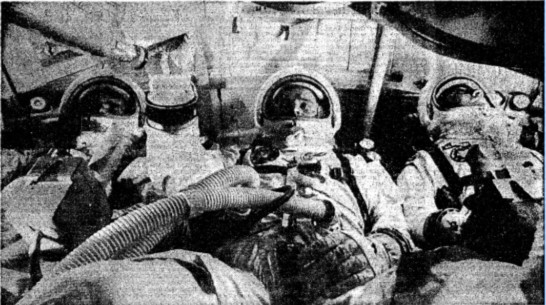
“The astronauts practicing in an Apollo capsule, identical to the one in which they died. From left: Chaffee, White, Grissom.” "Death . . ." Sunday Times, 29 Jan. 1967, p. 11. The Sunday Times Digital Archive

│ By Kyle Sheldrake, Marketing Manager – Insights and Development│

As we approach fifty years since man first set foot on the moon, it feels like a good time to reflect on attitudes and opinions in the lead up to one of humanity’s greatest scientific achievements. With the benefit of hindsight, it is easy to think that the space race was always seen positively, receiving unanimous public support and the unity of the scientific community, but this was not necessarily the case.

Read more

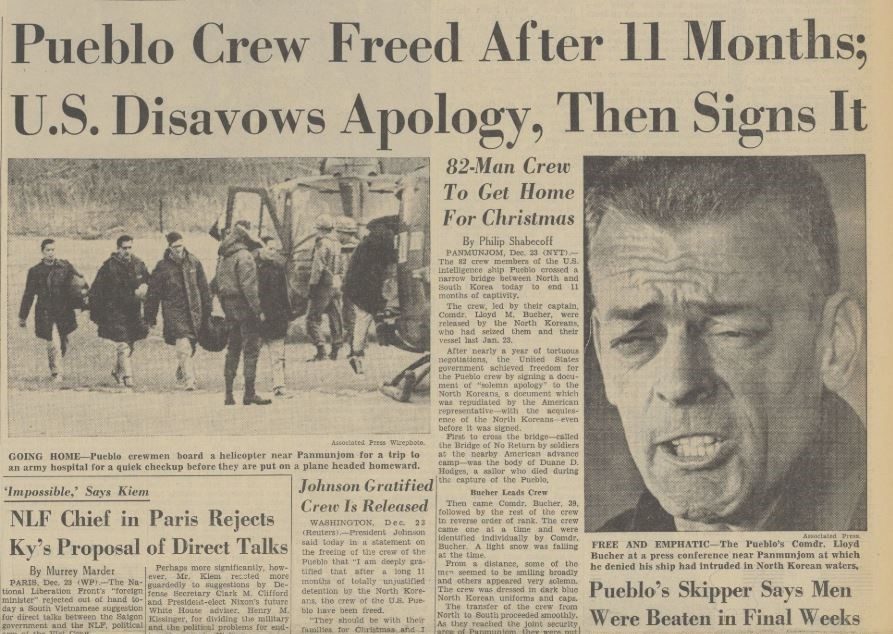
“U.S. Disavows Apology, Then Signs It” The Pueblo Incident of 1968

“If you fancy a long weekend with a difference,” writes The Times’ travel section of 18 February 2006, “Regent Travel has a five-day break to Pyongyang, North Korea’s highly planned capital”. The article then mentions, as one of the highlights of the tour, that “You’ll also get to board USS Pueblo, the U.S. spy ship captured in 1968.”

Read more