
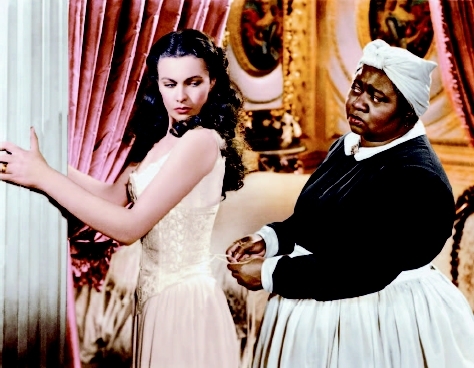
| By Gulsezim Maratkyzy, Grade 11 Student at NIS Shymkent |
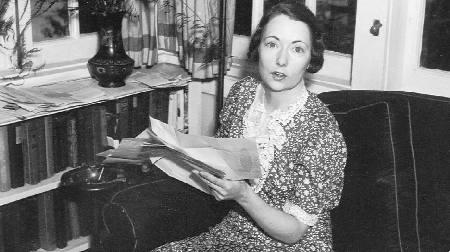
Some history is written by historians. But the history people remember is often written by storytellers. In 1936, Margaret Mitchell published Gone with the Wind, a love story set in the American South during the Civil War (1861–1865), and in 1939 it became a film. Adjusted for inflation, that film is still the highest-grossing movie ever made, and the novel became America’s best-selling book of the twentieth century (Walton, 2022). For millions, this romance did not simply describe the past. Quietly, it replaced it.
In this blog post, I will use Gale databases to explore how Gone with the Wind shaped the way Americans remember the Civil War, tracing where the “Lost Cause” myth came from, how the novel and film presented it, and why so many people believed it. My argument is simple: the story did not invent this myth, but it gave it its most powerful form.
What Is the “Lost Cause”?
To understand the story, I first had to understand the myth behind it. After the South lost the war, many Southern writers tried to win the memory of it instead. In Gale In Context: World History, I found historian Sarah Churchwell’s description of their argument as “two staggeringly shameless denials”: that slavery was not the cause of the war, and that slavery was kind rather than cruel (as cited in Walton, 2022). However, the facts say otherwise. An article in The Sydney Morning Herald reminds readers that the Southern states’ own documents “said explicitly that their cause was the maintenance of slavery” (O’Malley, 2015). The myth survived not because it was true, but because it was comfortable.
What surprised me most was that historians also supported it. In the early 1900s, scholars of the “Dunning School” described Reconstruction, the years after the war when freed Black Americans gained citizenship and the right to vote, as “a tragic era” for the white South (Summers, 2015). According to historian Mark Wahlgren (Summers, 2015), these scholars used “no black sources” at all. A history that ignores the people who suffered most cannot be a complete history.
How the Story Presents the Myth
Gone with the Wind turned these ideas into emotions. I noticed three main techniques.
The first is nostalgia. The film begins by describing “a land of Cavaliers and Cotton Fields called the Old South,” which is now “no more than a dream remembered” (as cited in French, 1996). In an article from Gale Literature Resource Center, film critic Tony French asks whether this world was “pretty” for enslaved people, “or only for the ‘Masters’.” The opening invites viewers to miss the Old South instead of questioning it.
The second technique is the “happy slave.” The New York Times describes Mammy, played by Hattie McDaniel, as “an agreeable slave at the whim of Scarlett O’Hara” (Abrams, 2023). In the novel, Ashley Wilkes even claims that his slaves “weren’t miserable” (as cited in Yaeger, 1999). Because these words come from a likeable character, readers accept them as memory rather than question them as an argument.
The third technique is a reversed picture of Reconstruction. The story shows the years after the war as a disaster for white Southerners, and the novel even praises the Ku Klux Klan (Walton, 2022). Yet The Economist reports that former Confederate states elected more than 2,000 Black state and local officials during this period (“Revolutionary Embers,” 2020). Real Reconstruction was a time of Black political progress, but the story presents it as chaos.
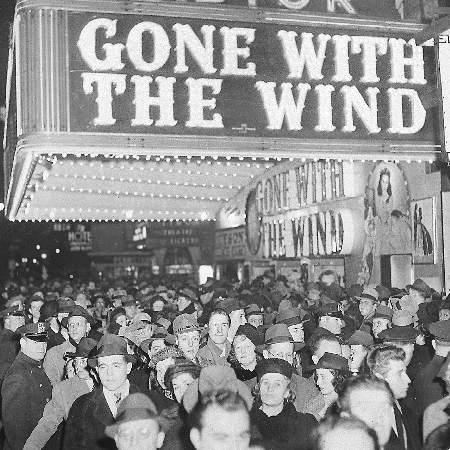
The scene at the premiere of Gone with the Wind on December 19, 1939 [Photograph]. (2002). In R. C. Hanes & S. M. Hanes (Eds.), Historic events for students: The Great Depression (Vol. 2). Gale, 2002. Gale In Context: World History,. https://link.gale.com/apps/doc/PC3424887251/WHIC?u=nisshypm&sid=bookmark-WHIC&xid=c18a77e9
Why Did People Believe It?
A more accurate history already existed. In 1935, one year before the novel, W. E. B. Du Bois published Black Reconstruction, which showed freed people as “the principal agents … of their own liberation” (“Revolutionary Embers,” 2020). However, a scholarly book could not compete with a best-selling romance.
The power of storytelling explains this. Literary scholar Patricia Yaeger (1999) calls the novel’s racial politics “absolutely abhorrent,” yet she admits that while rereading it, she found herself “empathizing with the Klan.” If even an expert can be pulled into the story, it is easy to imagine how millions of ordinary readers were.
The film’s own history shows the gap between story and reality. At the 1939 premiere in Atlanta, a city still ruled by segregation laws, “the cast members who had played all those contented slaves weren’t invited” (Walton, 2022). The audience applauded loyal slaves on screen, while the real Black actors were left outside the celebration.
Seeing the Film Differently Today
Today, the film is not banned, but explained. Viewers who rent it on Amazon first see a warning that its “racist depictions were wrong then and are wrong today” (as cited in Walton, 2022). I find this approach wise: it lets people watch the film as a document of its time rather than as a true picture of history. Hattie McDaniel’s story shows why this balance matters. In 1940, she became the first Black person to win an Academy Award, for playing Mammy. To her critics, she answered, “I’d rather play a maid than be one” (as cited in Abrams, 2023). The same film that spread a myth also opened a door.
Conclusion
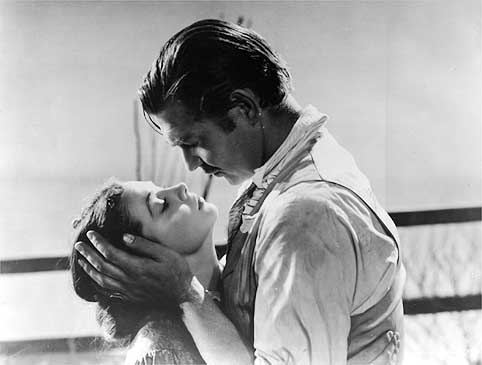
I first read Gone with the Wind in eighth grade. At the same time, we were studying the American Civil War in our World History lessons. In class, I learned that the war was fought over slavery. In the novel, I found a beautiful world of ballrooms and loyal servants, and I felt sorry for Scarlett when it disappeared. I was looking at the same war from two sides, and only now, after this research, do I understand why they looked so different: the textbook told me what happened, while the novel told me what to feel.
Looking back, I realize that Gone with the Wind never needed to lie openly. It simply made an old myth so beautiful that readers stopped questioning it. This research taught me to read every story about the past with one question in mind: whose voices are missing? I still admire the novel, but now I see it for what it is – a powerful work of fiction, not a history lesson.
If you enjoyed reading about how Gone with the Wind shaped America’s memory of the Civil War, you might like:
- The American Civil War: The International Perspective – The First Digital Archive of Its Kind
- Miscegenation, or ‘Fake News’ of the Civil War
- History is Creative: How Can Students Use Gale Primary Sources in New and Unique Ways?
- How Slave Narratives Give Voice to the Enslaved
- Exploring perceptions of Liverpool’s International Slavery Museum using Gale Primary Sources
You might also like to read previous blog posts written by students from Nazarbayev Intellectual Schools, Kazakhstan:
- How Important Was the Role of Women During WWII to the Victory of the Allied Powers?
- Researching the Impact of the New Silk Road on Kazakhstan
- Researching Cults using Gale’s Online Resources
Blog post cover image citation: Vivian Leigh and Hatti McDaniel in Gone with the Wind (Victor Fleming, 1939), distributed by MGM [Photograph]. (2007). In B. K. Grant (Ed.), Schirmer encyclopedia of film (Vol. 3). Schirmer Reference. https://link.gale.com/apps/doc/PC2587687298/WHIC?u=nisshypm&sid=bookmark-WHIC&xid=ec77d470