
│By Helen Cartledge, Gale Ambassador at the University of Birmingham│
Post-colonial thinking is always developing and expanding, especially in relation to how historians understand the Atlantic Slave Trade. Primary sources are integral to the underpinning of this historical narrative and the new ways historians are trying to reconceptualise and re-narrate the slave trade in ways that decentre the European.
Countless types of primary sources exist that can help historians uncover the experiences of many people who were oppressed and marginalised. However, we need to be aware of how primary sources can reveal multiple and strikingly different ideas, even if this is not revealed at first glance.
Thus, this blog post guides you through the process of finding and using primary sources from Gale’s Slavery and Anti-Slavery: A Transnational Archive and the different ways such sources can be used within research.
The Archive as an Accomplice
In a blog post that is promoting the versatility that archival material can have, using Gale’s Topic Finder seems to be a misleading approach to take, since its function is to produce the sources most associated with your search. Thus, in this case, by typing the term ‘slavery’ into the Topic Finder engine of Slavery and Anti-Slavery: A Transnational Archive, you can assume that it is most likely to give insights into topics and historiographical debates about slavery, its conditions, and how it was abolished.
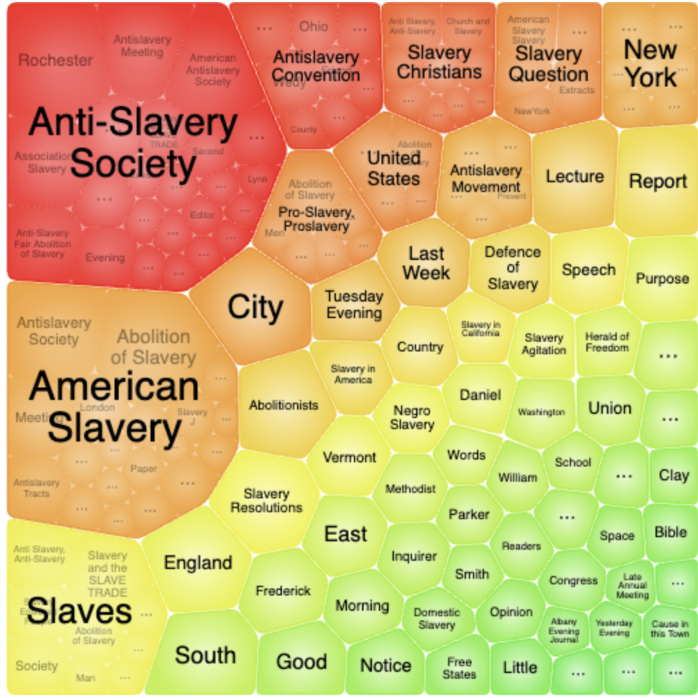
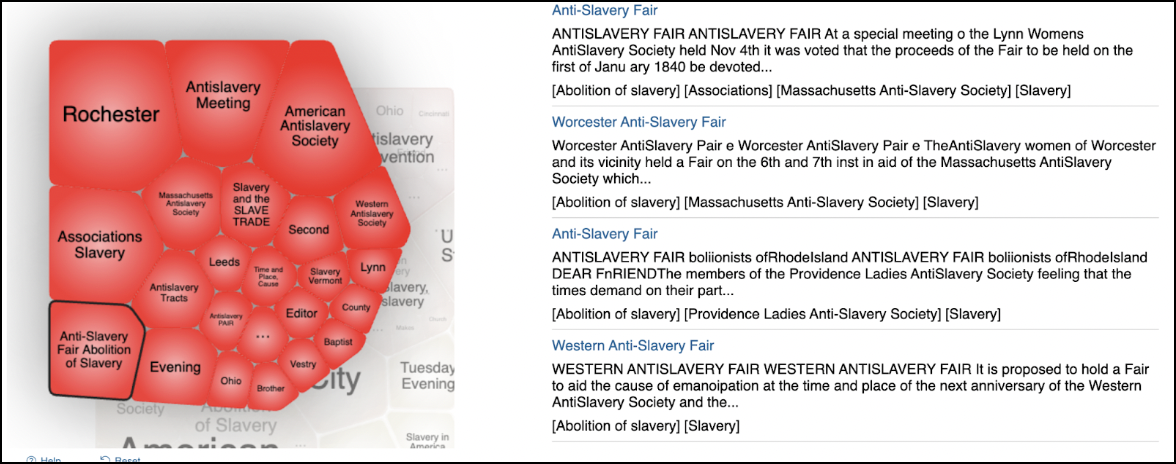
However, one of the most associated sources is that of the Anti-Slavery Fair (1844). Whilst this publication advertising the activities of the Ladies Anti-Slavery Society could traditionally be used to display the growing desire for abolition and the kind of campaigns done to push for this, it also gives crucial insight into how women increasingly appeared in the public sphere as they attempted to expand their roles in society.
What Can It Tell Us?
I would argue you can use the advertisement to highlight how campaigning for slavery’s abolition was deemed a way for women to use their voices in a public setting and escape the private, domestic sphere of the home, that was increasingly being resisted.
The committee’s activities were not seen as a challenge to traditional gender stereotypes and a resistance to the patriarchal system but rather a respectable – even encouraged – activity for women in the public sphere as they campaigned for the horrors of slavery to end.
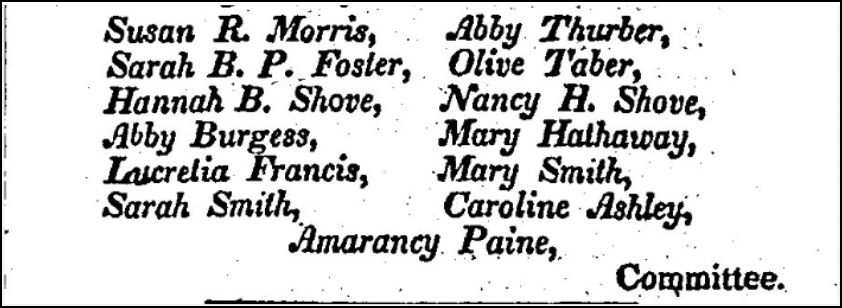
This complex balance is communicated in the source itself, as it encourages other women to get involved through activities traditionally associated with the feminine, like the forming of “sewing circles and knitting societies”. Whilst not an explicit challenge to societal expectations and duty, a sense of pride and fulfilment imbues the source as the women list their names and thus their involvement in the cause.
Thus, as Michel-Rolph Trouillot, Haitian academic and anthropologist, famously advocated for, history reveals itself only through the production of specific narratives1. By shifting our gaze as we view a particular source, different ideas and concepts are revealed.
Not Just a One-Off
Another example where we can interpret and use a source in a different, unexpected way is that of the countless inward slave manifests that exist within Slavery and Anti-Slavery: A Transnational Archive.
These documents list the people being shipped to New Orleans to be sold as slaves and the names of enslavers and shippers involved. Again, these legal documents have been used to highlight the nature and extent of the traffic in trade of enslaved people in the New Orleans region and beyond. It provides researchers access to information on specific transactions, individuals, and firms, which can help develop further understanding of trends in the history of human trafficking.
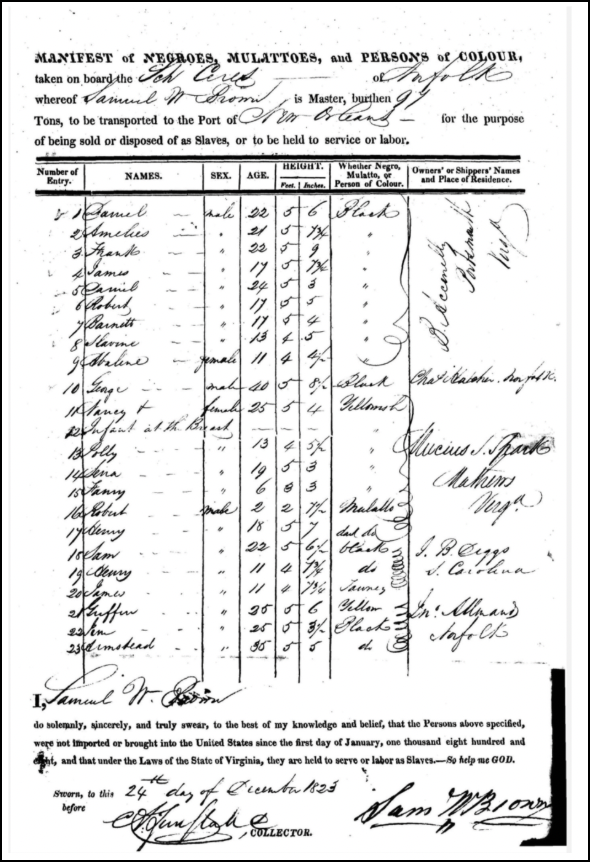
However, the content of the source can reveal much more. The slave manifest I used has a column that labels and classifies the race of the enslaved people, which can be used to indicate the systematic use of race to justify enslavement and how race became a tool of the enslavers to control and oppress.
The limited understanding of race – the labels are restricted to “black”, “yellow”, or even remain unspecified – demonstrates how the complexity of race is ignored and how the identities of the enslaved themselves have been forgotten. Their American names reiterate their lost and disregarded identities. Plus, the contrast between the simple and crude names of the enslaved and the elaborate titles of the enslavers could help students recognise the dichotomy that existed between the two and how this was maintained.
Finally, the official signing of such a document highlights how there is no concern by the enslavers of being associated and actively involved in the enslaving of people. It seems to accentuate how enslavers saw the slave trade as a means of profit and not as a humanitarian crisis. It draws attention to how concerns around the slave trade and calls for abolition were a long way off.
Overall, then, this source does not just have to be seen as a legal document but can give insight into the motivations and systemic beliefs that drove the slave trade and hindered its abolition. It can provide students with a means of understanding wider notions of race and how it was used as a tool of oppression.
Final Thoughts
Thus, as students, you should not be confined and restricted when thinking about what primary sources can tell you. Hopefully, this blog has shown how sources can reveal multiple ideas regardless of where they are kept in an archive. We should not disregard something that might seem irrelevant, as, despite how it is labelled and classified, it could still be useful.
If you enjoyed reading about how to use primary sources in creative ways or slavery as a topic, check out these posts:
- Queen Victoria: The Unexpected Feminist Icon Explored Through State Papers Online: Nineteenth Century: The State Papers of Queen Victoria and King Edward VII
- Revisiting South Africa through Gale Primary Sources
- From Chains to Change: The Differences Between African Slavery and the Trans-Atlantic Trade
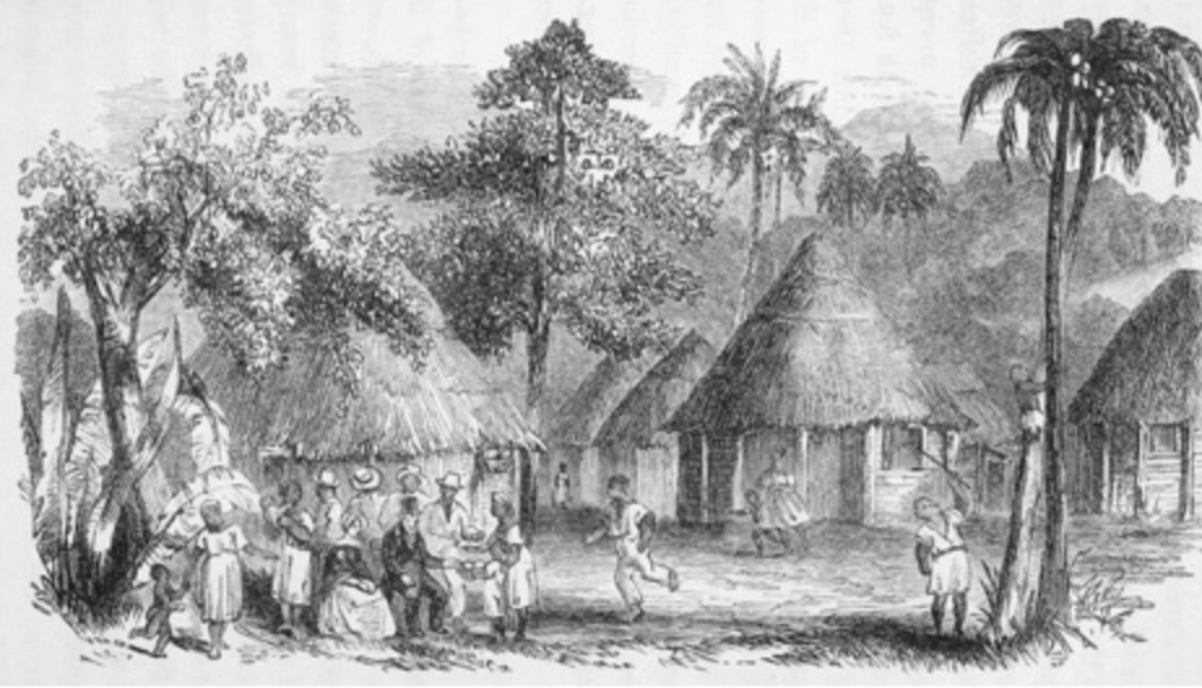
Blog post cover image citation: James M. Phillipo, Jamaica: its past and present state, London 1843.