Unwrapping the Beauty of Bournville

Beautiful Bournville

By Lily Cratchley, Gale Ambassador at the University of Birmingham

Located just a ten-minute walk from Birmingham’s most populous student housing area, Selly Oak, the village of Bournville – one of the first model villages in England – stands as a rare chunk of living history within the bustling city. Efforts to preserve the charm and wellbeing of the village are organised by volunteers, while the old chocolate factory has been transformed into a tourist attraction named after the man who envisioned and created the beauty of Bournville, ‘Cadbury World’.

Read more

Power, Protest & Presidential Profanity: The ‘Race’ for Civil Rights

|By Megan Bowler, Gale Ambassador at the University of Liverpool|
On 16th October 1968, two black-gloved fists were raised in solidarity on the podium of the Olympic Games in Mexico City as a silent, yet powerfully emotive protest against racial injustice. The American sprinters, Tommie Smith and John Carlos, immediately caught the attention of the world’s media as agitators, acting in defiance to the starred and striped flag and all that it appeared to represent. This transpired just six months after the assassination of Martin Luther King.

Read more

Leading Ladies: The actresses who fought for women’s suffrage

By Karen Harker, Gale Ambassador at the University of Birmingham

“There was a young Lady called Vera
As a Speaker all crowded to hear her
She caused a sensation
Throughout the whole Nation
Such as never was seen in our ERA.”

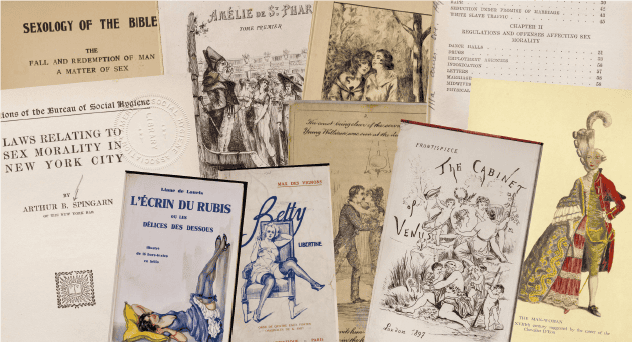
So begins an anonymous limerick written about Vera “Jack” Holme – Edwardian actress, political activist, and militant suffragette. Found in the Archives of Sexuality & Gender, a collection within Gale Primary Sources, this poem is one of thousands of papers, manuscripts, photos and news articles related to the eccentric, multifaceted life of one of Britain’s most devoted advocates for women’s voting rights. Also a part of the Women’s Volunteer Reserve during WWI and Britain’s first female chauffeur, Holme broke the patriarchal boundaries that had surrounded women for centuries through her constant vigilance and dedication to the causes of women’s suffrage and equality.

Read more

‘This is Not A Coup’: Reflections on the Political History of Emmerson Mnangagwa

RIP Robert Mugabe

By Lyndsey England, Gale Ambassador at Durham University

On the 18th of November 2017, the people of Zimbabwe took to the streets of Harare. Men, women and children walked alongside armed military vehicles, shaking hands with soldiers and standing in solidarity with strangers. In a mass demonstration, members of the public marched united through the capital, calling for the resignation of President Robert Gabriel Mugabe. The march was treated as a ground-breaking moment in Zimbabwean history; an unprecedented declaration of the public’s antipathy towards Mr. Mugabe, the war hero who had ruled since the country’s independence in 1980.

Read more

A genius on the throne: Lady Jane Grey remembered

│By André Buller, Gale Ambassador at the University of Portsmouth │

Throughout my historical studies, I remember the speed with which teachers and lecturers taught the Tudor period. Like a child faced with a wall of selections at the sweet shop, it’s practically impossible to give the entire period as much attention as one would like. Thus, more often than not the class would undergo a whistle-stop tour of the century, passing from the social unrest of Edward to the stark Catholicism of Mary’s reign with little consideration to what came in between. Lady Jane Grey has always been an interesting figure to me, and through the incredible resources of the Gale archives it is possible to inspect her further, and see how she has been remembered in the centuries that followed her brief and tragic reign.

Read more

The Ultimate Showman: Freddie Mercury’s untold relationship with the UK press

By James Garbett, Gale Ambassador at the University of Exeter

When Freddie Mercury, lead singer of Queen, passed away tragically in November 1991, many newspapers mourned the passing of one of the greatest musical legends of all time. Much has already been written of the lavish and decadent parties that Mr Mercury had in his too-short lifetime, however utilising the vast wealth of archives in Gale Primary Sources, such as The Times, Archive of Sexuality & Gender and others, a new perspective can be found regarding the incredible showman and his relationship with the press.

Read more

Western Books on Southeast Asia Collection

By Gregory Green, Curator of the John M. Echols Collection on Southeast Asia, Cornell University Library

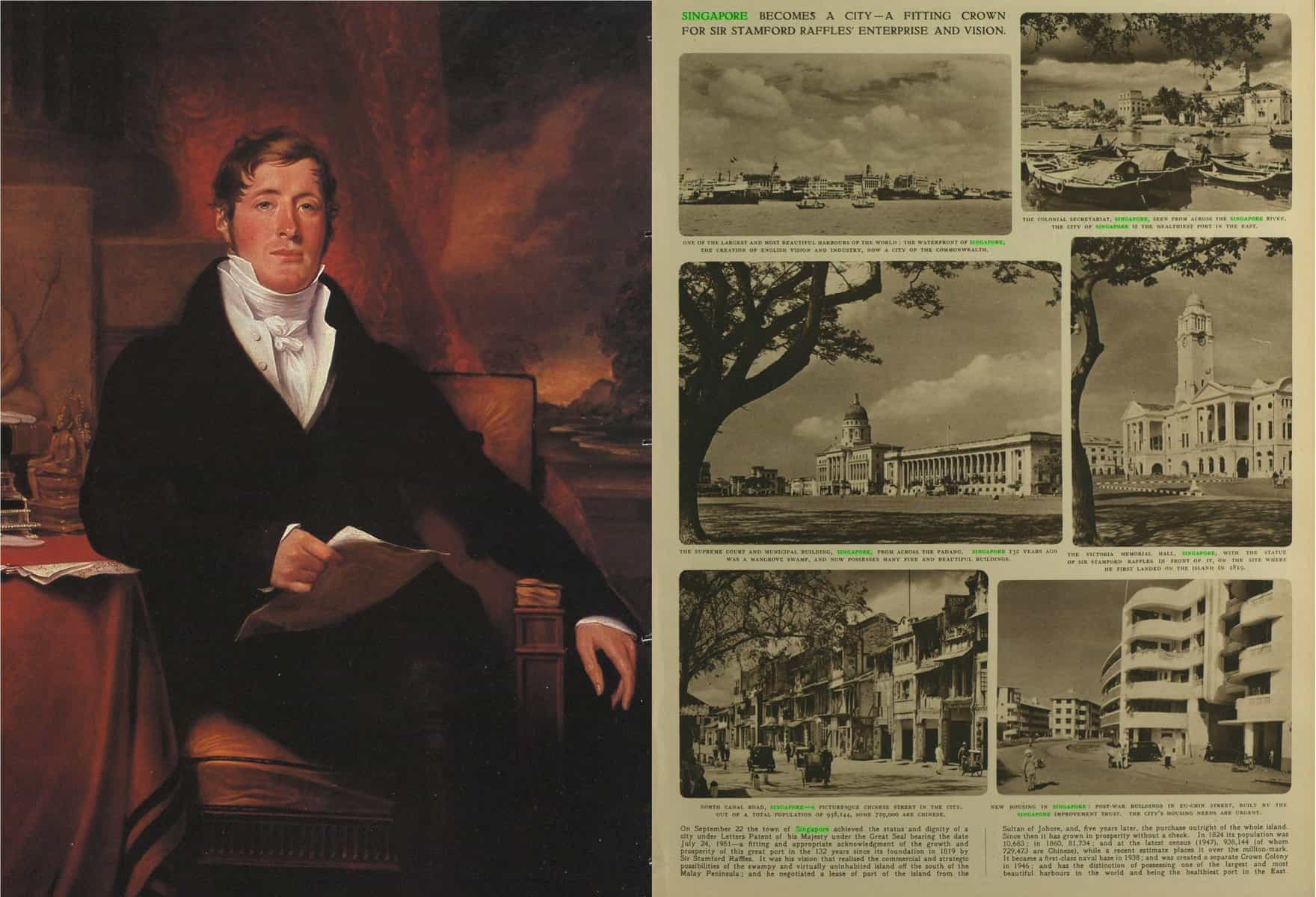
The Gale Archives Unbound collection titled Western Books on Southeast Asia brings together nearly three hundred years of writings by travellers from Europe to Southeast Asia.  These publications range from official reports of government sponsored expeditions to personal journals of people travelling through the region on business or pleasure.  With that variety, one can expect to find a wide range of observations in the collection.  Much of the information is quite accurate, while a large amount is based on misunderstandings of what people were seeing, or in other ways, simply incorrect.  Whether accurate or not, the collection provides a clear view of how Southeast Asia was seen during this period of time by Western eyes.

Read more

Miscegenation, or ‘Fake News’ of the Civil War

(Warning: the below article contains excerpts from historical material that are explicitly racist and offensive to today’s readers. The author does not share the views of the material presented.)

Sometimes a random search can take you to unexpected places. For me it began a few months ago when I was asked to conduct a post-sale training session with a group of students at a university in Japan. I was told beforehand that the students were studying American History, including African Americans and other minorities, and I was asked to prepare an example that would match their interests.

Read more

Dr Wu Lien Teh as a Travelogue Writer – A short review of three travel essays written by Wu in China in the 1930s

Dr Wu Lien Teh (1879–1960) is best known as a returned/re-emigrated overseas Chinese medical doctor who contributed considerably to the building of China’s modern public health and medical education systems. Among the numerous books and articles he published, the absolute majority of them deal with medical topics. However, he was also the author of a number of journal articles addressing non-medical topics. In this blog essay, I will examine a group of three essays he published in the 1930s in the Shanghai-based English journal The China Critic, recording his visits to Tang Jia Wan (Guangdong), Xiamen, and Xi’an. I would argue that Wu is not only a well-trained and -published medical doctor and scientist but also a good literary writer with a patriotic heart, a defining feature of many Chinese elites active in the late Qing and republican period.

Read more