A Classroom Compendium: Digital Humanities Resources for a New School Year

│By Sarah L. Ketchley, Sr. Digital Humanities Specialist│

For the start of a new academic year, this month’s Notes from our DH Correspondent blog post is a useful resource indexing all the Notes posts to date. They are categorised below to support instructors to plan, build and deliver classroom DH curricula.  This is a great page to bookmark!

Each resource can be supplemented with detailed material in the Learning Center in Gale Digital Scholar Lab which provides step-by-step instructions in written and video formats, covering every aspect of working in the platform. 

Need additional support? Our DH team will be happy to answer your questions! Just email us at [email protected]

Read more

Archives Unbound: Preserving Cultural Heritage That Might Otherwise Be Lost in War

│By Philip Virta, Senior Acquisitions Editor│

The Archives Unbound program provides multiple perspectives on global history. Through our institutional partners and archival collections, we preserve, protect, and provide access to government documents, personal papers, organisational records, and heritage collections. In a historic period that has seen conflicts threatening lives, freedom, and cultural heritage, Gale Primary Sources is proud to do its own small part in preserving the past for the benefit of future generations.

Read more

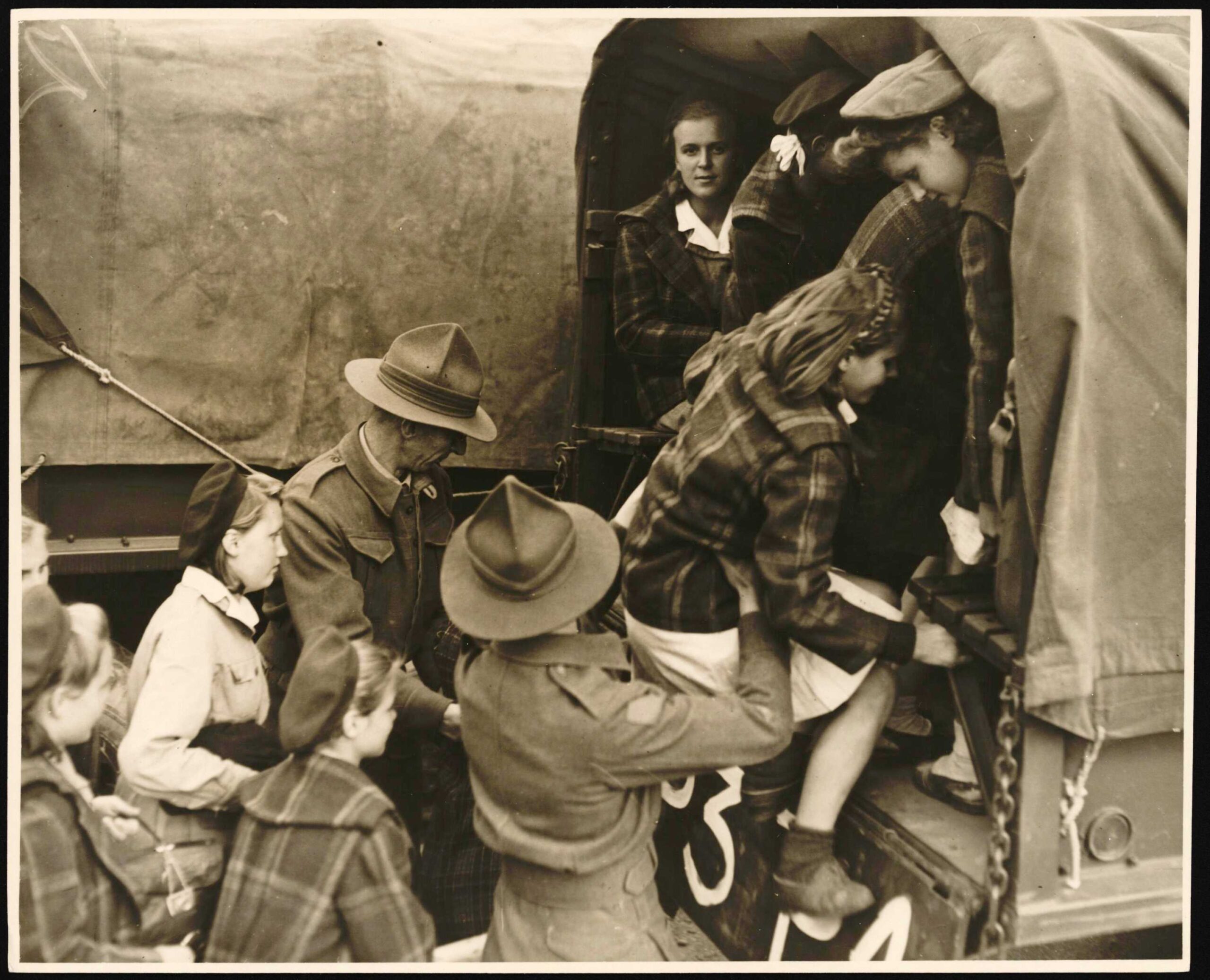
The Untold Story of the 700 Orphaned Polish Children of New Zealand

│By Damian Almeida, Training and Digital Communications Executive, Gale│

In the midst of World War II, there are many stories of bravery, loss, and unexpected kindness. One such story that often goes untold is that of the 700 orphaned Polish children who found refuge in New Zealand. This is the story of their journey, the circumstances that led to their displacement, and how New Zealand became a sanctuary for these young survivors.

Read more

Bridging the Gap: Gale Primary Sources and Gale Digital Scholar Lab

│By Sarah L. Ketchley, Senior Digital Humanities Specialist│

This month’s blog post will discuss how to start the work of sourcing research documents in Gale Primary Sources (GPS) archives, before transitioning seamlessly to Gale Digital Scholar Lab to create content sets, clean OCR text data, and conduct analyses of this material to answer research questions. With this methodology, researchers are able to use the rich contextual detail and varied navigation options to begin compiling their corpus of text data outside of the Lab, which can be an attractive option if the user has an existing working knowledge of specific GPS archives, such as The Times Digital Archive, Women’s Studies Archive, or Nineteenth Century Collections Online.

There is a standardised user experience across GPS and the Lab, making the transition from one to the other familiar and streamlined. However, there are options to view documents in GPS that aren’t yet available in the Lab, which may make combining both access points useful so that no document slips through the cracks!

Read more

China and Australia: Trade, Migration, and Politics in the Nineteenth to Early Twentieth Centuries

│By Liping Yang, Senior Manager, Academic Publishing│

The Flodden was a barque or three-masted sailing ship originally constructed in Britain and later sold to Australia and registered in Melbourne. On June 22, 1883, the ship departed from Fremantle, Western Australia, bound for Shanghai, carrying a cargo of 806 tons of sandalwood.

Unfortunately, on August 23, the ship ran aground near Nanhui, which is now a district of Shanghai. The captain, William Smith, made the decision for the crew to abandon the ship the following day and it was looted by some locals.

Read more

Who was the Chevalier de Saint-Georges?

│By Carolyn Beckford, Gale Product Trainer│

Joseph Boulogne, later adopted as Chevalier de Saint-Georges, was born in Guadeloupe, a former French colony. He was a French violinist, conductor, composer, and a soldier.     

Boulogne was the first classical composer of African descent to attain widespread acclaim in European music. He composed an array of violin concertos, string quartets, sinfonia concertantes, violin duets, sonatas, symphonies, stage works, and opera comique. He was also a contemporary and rival of Mozart, although it’s likely that racism obscured his recognition as a great composer.

Read more

Coding for Humanists: Python Notebooks in Gale Digital Scholar Lab

│By Sarah L. Ketchley, Senior Digital Humanities Specialist│

Recently, three Python Notebooks were added to Gale Digital Scholar Lab to offer additional flexibility in processing and analysing text data. Each of the Notebooks can be downloaded by a researcher, then used or adapted to suit individual needs. This blog post offers some considerations for those interested in incorporating Python-based workflows into their text analysis pipeline but aren’t quite sure where to start.

This blog can also be read in conjunction with Women’s History Month in Gale Digital Scholar Lab: Named Entity Recognition, Python Notebooks, and an Intrepid Female Diarist which offers some practical programming insights into a project using Named Entity Recognition.

Read more

Gale Accelerate: The Best of Gale for You

│By Tom English, Strategic Initiatives Manager – EMEA│

When the world was locked down in March 2020 due to the covid 19 pandemic, students and researchers very suddenly lost access to valuable primary source materials. To compensate for such a swift and sudden loss of access to physical primary source materials, academic libraries needed to quickly obtain access to large swathes of digital primary sources.

Read more

Exploring Genealogy in Gale Primary Sources

│By Emma Harris, Associate Editor, Gale Primary Sources

Gale Primary Sources offers a multitude of digital archives for all manners of historical research. But researchers may not realise that Gale’s archives can be used to explore one popular area of history – family history, or genealogy. Researching family history can often have its limitations, particularly geographical, yet digital archives help to break down these barriers, allowing researchers to find material from a range of locations that would usually not be accessible without travel.

Over the years, my family has been mapping out the history of our relatives, creating a broader picture of where we came from. So, aware of all the useful documents in Gale Primary Sources, I decided to see what extra information I could glean on my relatives, whilst also showing how certain Gale archives are especially useful for genealogical research.

Read more