
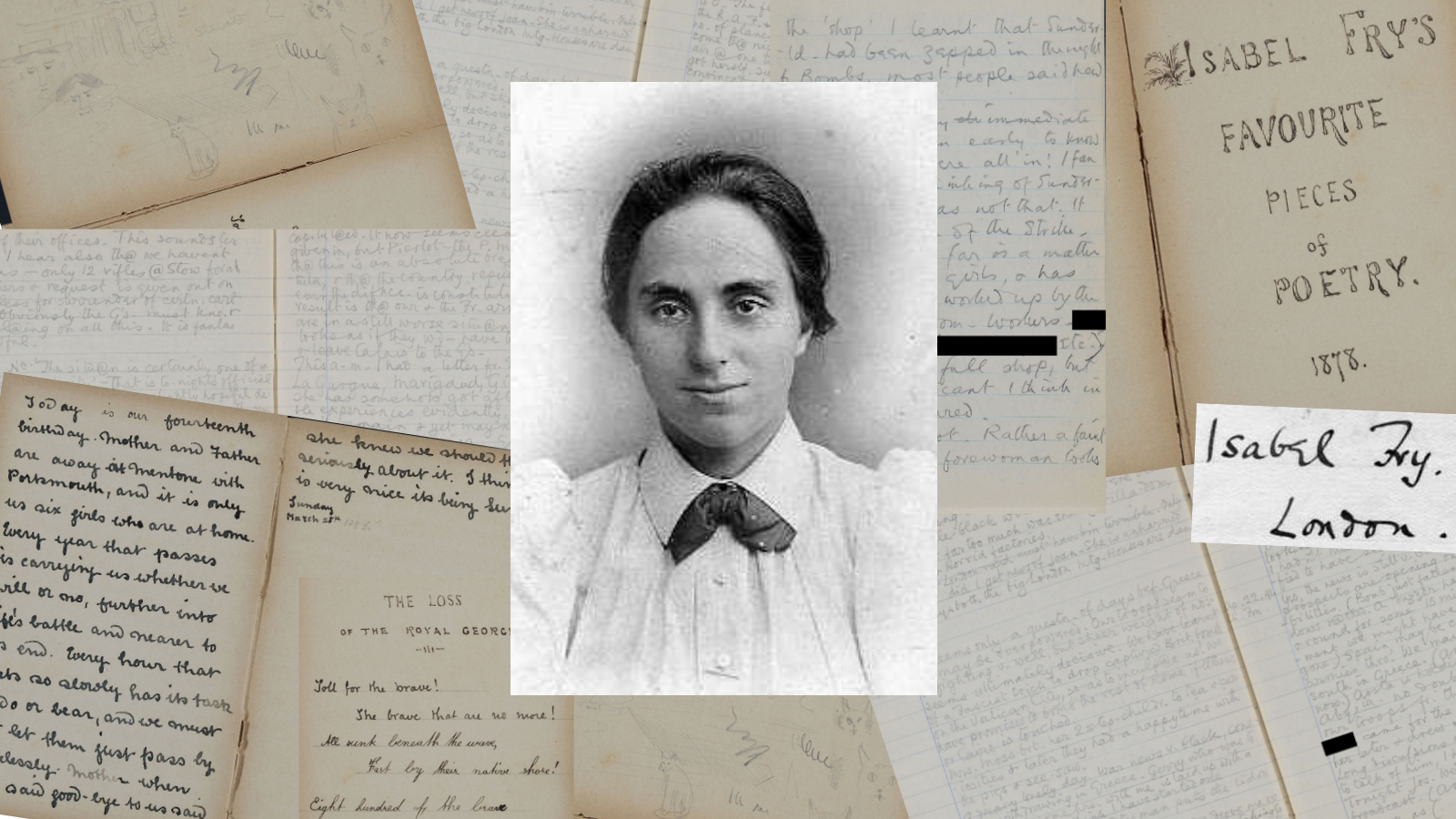
| By Phil Virta, Senior Acquisitions Editor, Gale Primary Sources |
The Isabel Fry Papers, 1878-1958 released this September in Archives Unbound. The papers are a series of diaries and personal papers detailing the life of a remarkable social reformer and keen observer of the events of her day. Isabel Fry (1869-1958) was one of nine children born to Mariabella Hodgkin (Lady Fry) and Sir Edward Fry, a judge and zoologist. Her family were Quakers, and the values of the Religious Society of Friends were apparent in her various pursuits and those of several of her siblings – Edward was a barrister; Joan was a social reformer; Roger was an art historian and member of the Bloomsbury Group; Agnes (Isabel’s twin) was a writer and botanist; Sara was a penal reformer and magistrate; and Anna was a humanitarian and peace activist.
The Isabel Fry Papers offer the opportunity to get to know Isabel through her writings and correspondence. The archive includes materials recording her thoughts from as early as 1878, and she kept detailed journals beginning in 1907 up until her death in 1958. Isabel’s diaries describe not only her thoughts and feelings about everyday relationships, events, and occurrences, but of the rapidly changing world around her. She was well-read, compassionate, intelligent, and well-travelled. In her diaries she commented on major events during her lifetime including the Suffrage Movement, the First and Second World Wars, Russia and the Bolsheviks, and the political situations in Ireland and Türkiye. Her diaries cover 80 years of history; this blog post explores some examples of what can be found within the collection.
Childhood Writing
One of the first items (chronologically) in her papers is a notebook gifted to her by her father as a Christmas present in 1877 when she was eight years old. In a passage inscribed upon her 14th birthday, showing a wisdom perhaps beyond her years, she wrote,
“Every year that passes is carrying us whether we will or no, further into life’s battle and nearer to its end. Every hour that fleets so slowly already has its task to do or bear, and we must not let them just pass by carelessly.”
In spite of occasional feelings of inferiority that come out in her writing, Isabel did not seem to be one to let the hours “pass by carelessly”. She always seemed to be involved in some task or another, working to improve society and make a difference.
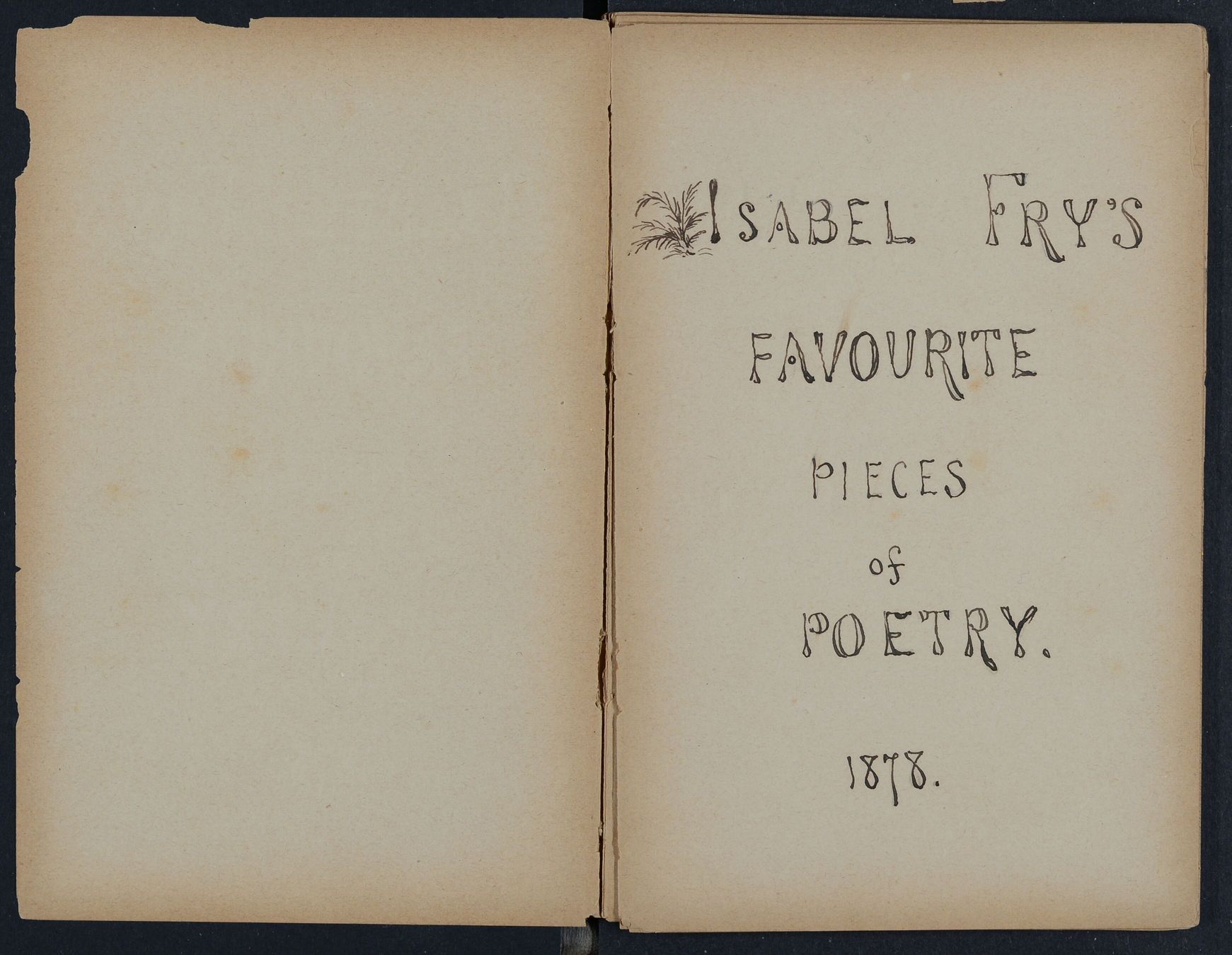
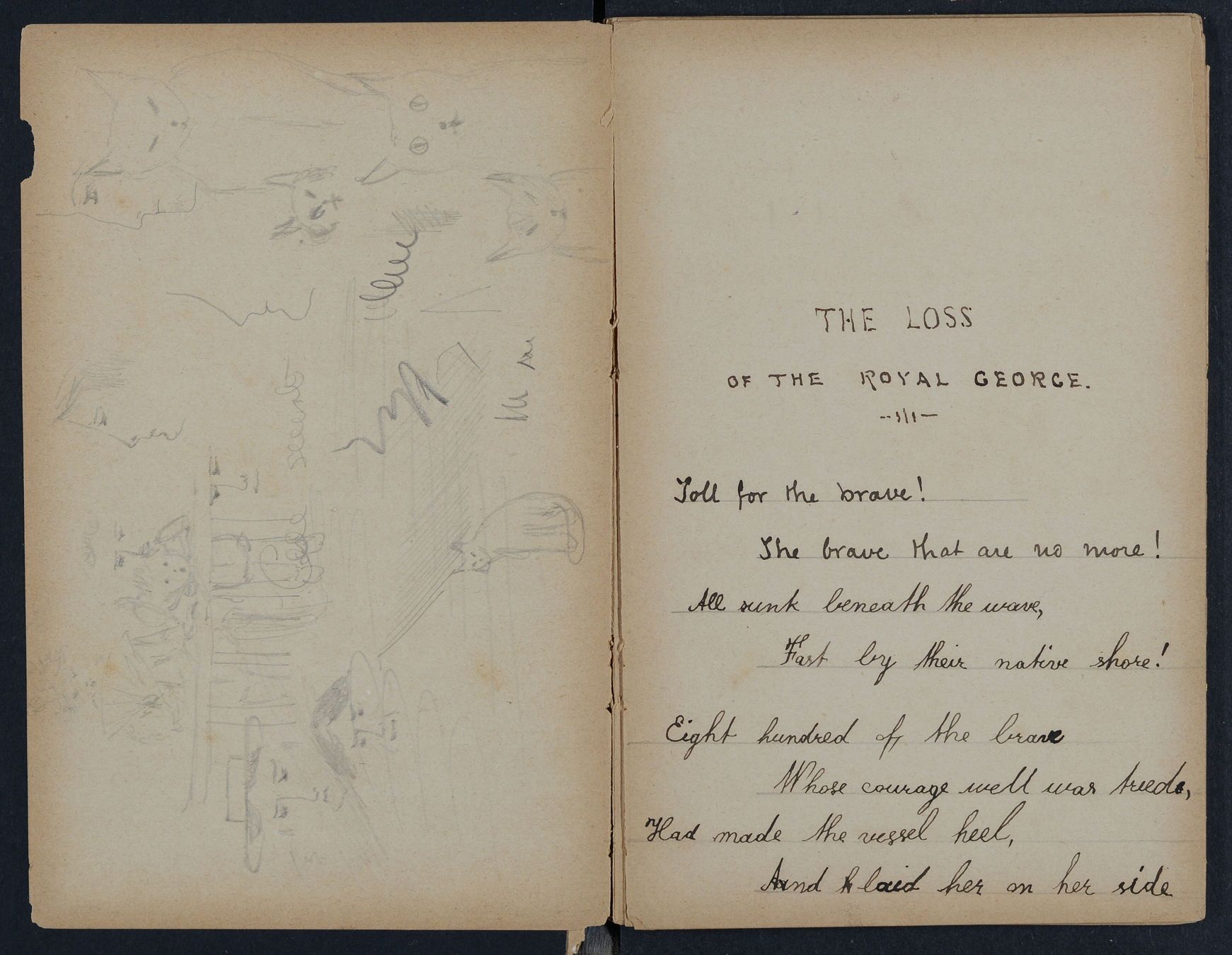
Notebook. 1878-1883. MS Isabel Fry Papers, 1878-1958: Notebooks and Journals FY/A/1. University College London. Archives Unbound, https://link.gale.com/apps/doc/GLUGZF772239637/GDSC?u=virta&sid=bookmark-GDSC&xid=cc58cc18&pg=5
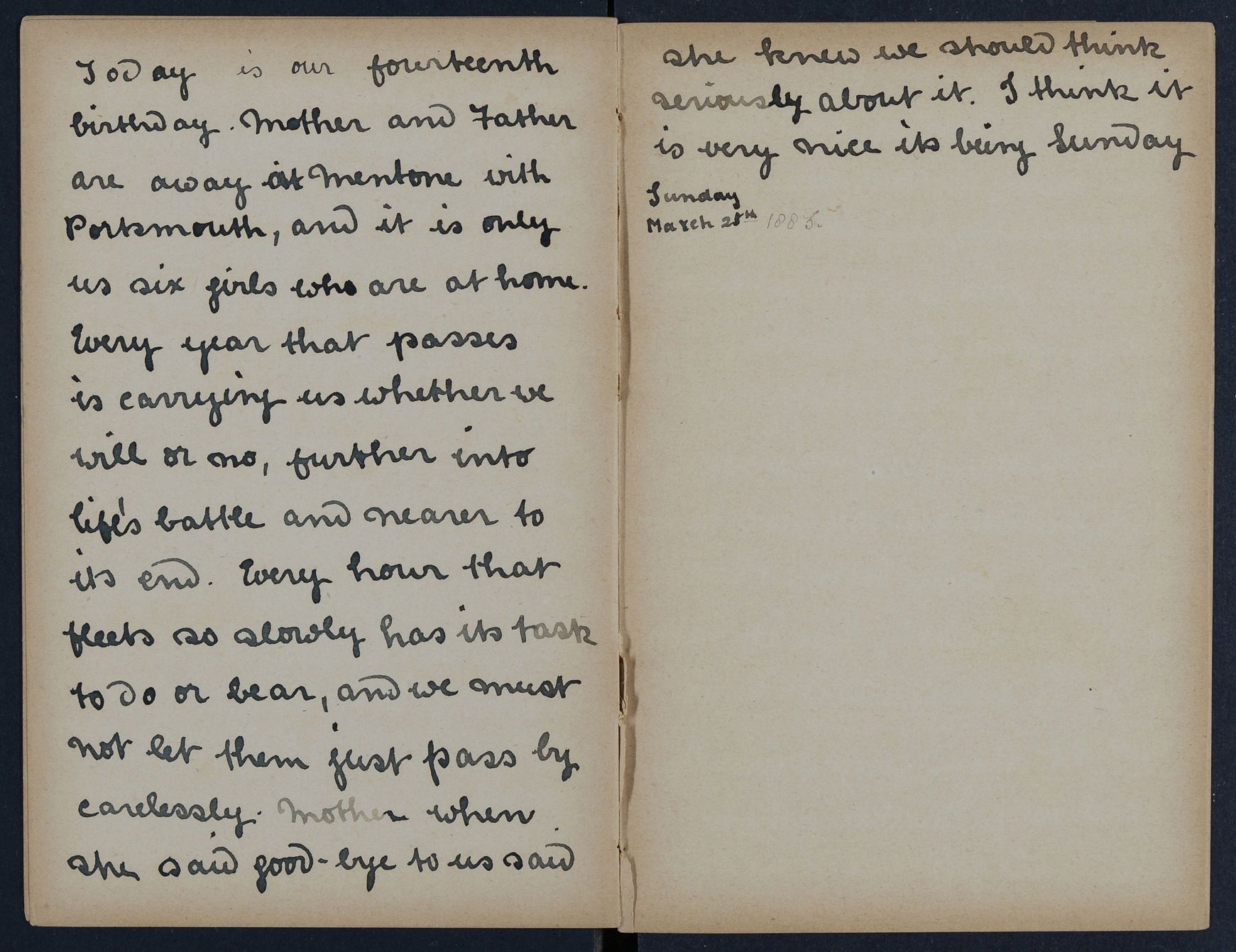
Notebook. 1878-1883. MS Isabel Fry Papers, 1878-1958: Notebooks and Journals FY/A/1. University College London. Archives Unbound, https://link.gale.com/apps/doc/GLUGZF772239637/GDSC?u=virta&sid=bookmark-GDSC&xid=cc58cc18&pg=19
Accounts from Türkiye, 1916-1917
Isabel traveled across Europe to Türkiye multiple times. On one of her earliest visits, she met Halide Edib, a novelist, teacher, feminist intellectual, and Turkish nationalist with whom she maintained a lifelong correspondence. Halide has her own interesting story to discover; she was a proponent of women’s emancipation but was apparently also intimately involved in the “Turkification” of Armenian orphans following the Armenian Genocide.
In visits to Türkiye during 1914 and 1916-1917, Isabel recorded her observations of the people and places she saw. This was a tumultuous time to be abroad with all the shifting political winds and the horrors of the “Great War”. Isabel’s accounts from Türkiye are replete with stories of a changing society during the last years of the Ottoman Empire. Isabel was not traveling merely for pleasure, but also to meet female reformers, visit schools, and advocate for funding for girls’ education. Along the way she documented small everyday details of culture and society, met people from all walks of life, and bore witness to history as it happened.
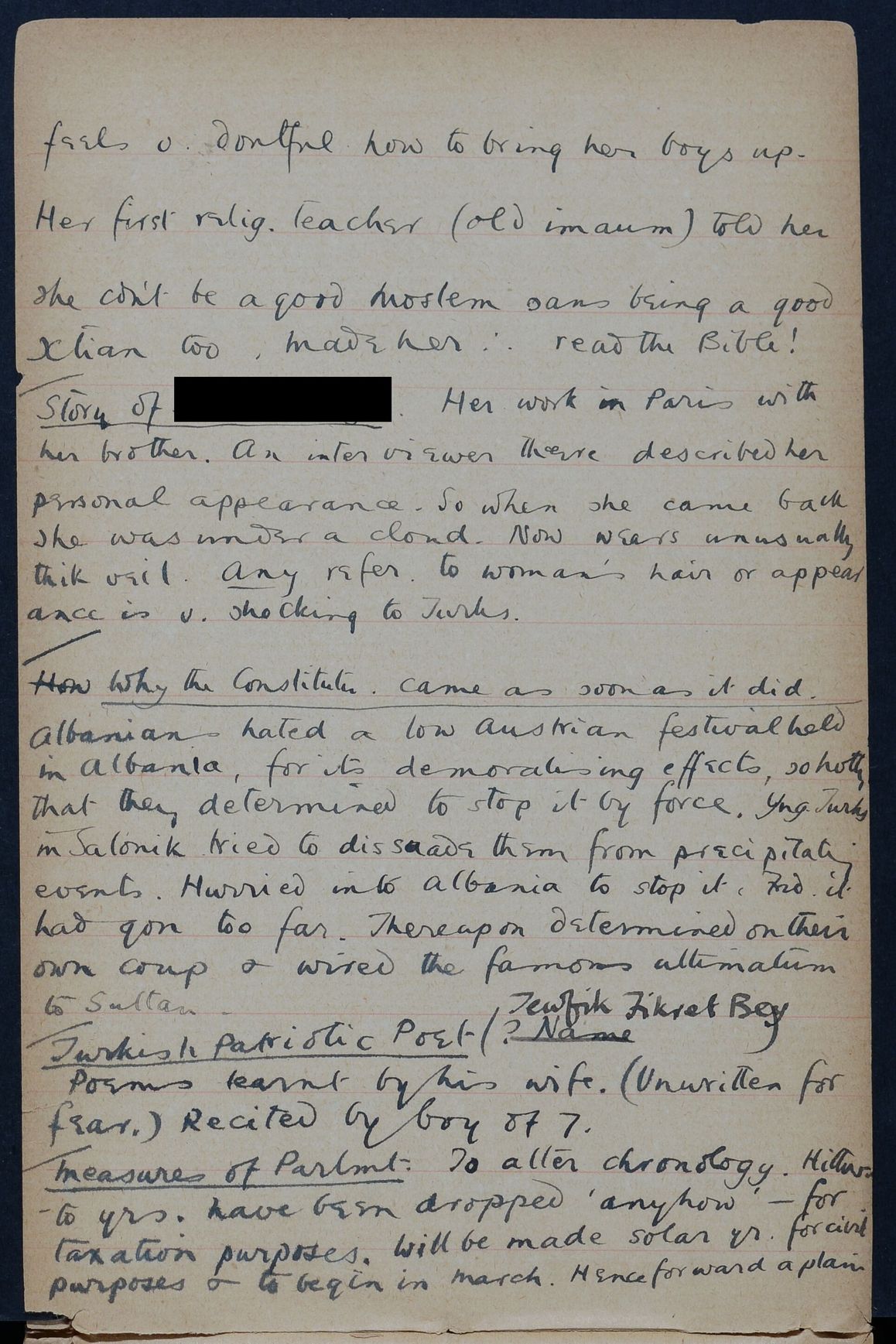
Diary. 1916-1917. MS Isabel Fry Papers, 1878-1958: Notebooks and Journals FY/A/11. University College London. Archives Unbound, https://link.gale.com/apps/doc/GLUZQL687257027/GDSC?u=virta&sid=bookmark-GDSC&xid=f3f0b3ce&pg=24
How World Events Impacted Personal Lives
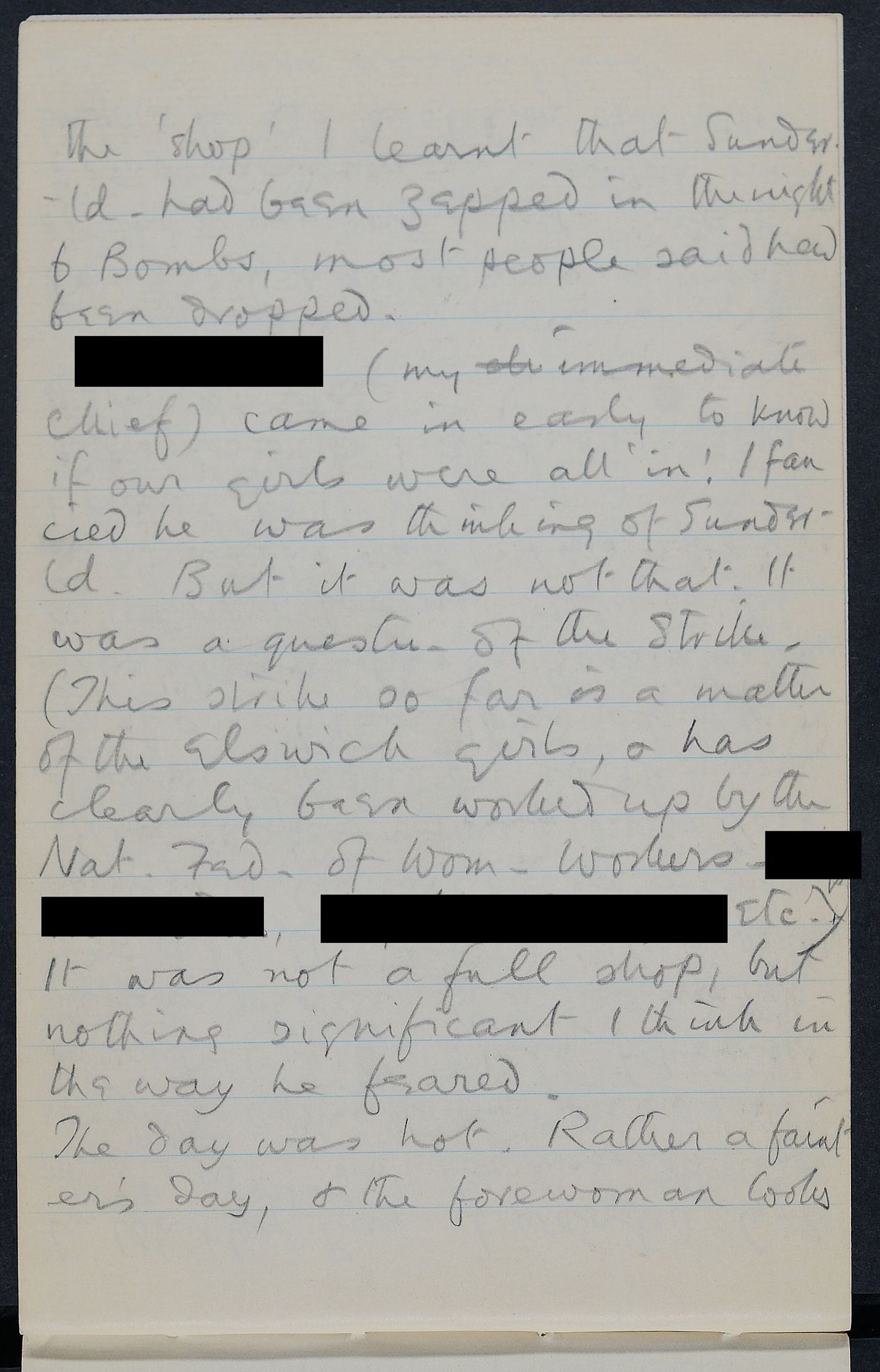
Each diary in the collection opens a unique window on everyday life as illuminated by the events of the time. For example, Isabel’s diary from 1916 (February to June) offers us her perspective on everything from the mundane – her time as a trainee farm labourer during the First World War – to darker entries concerning Zeppelin raids on York, Hull, and London, and Sunderland getting “zepped”.
Throughout the 1916 diary, Isabel offers commentary on progressions regarding the war, working as a Welfare Supervisor in Government-owned factories, Sinn Fein and the Irish situation, her work activities and their effect on her views of the world, her experiences of working the night shift during the threat of a blackout, and the idea of one day running a farm school, which she eventually did, starting in 1918. This kind of account provides us with a more personal view of history, helping us understand how events impacted individuals going about their daily lives.
Isabel’s 1918-1919 diary records her feelings and thoughts on the First World War and the Farmhouse School she started. Some entries recount stories she has heard about the conditions of soldiers at the front lines, with many early entries mentioning Ypres. There are also entries about German and Turkish prisoners of war, conditions in Petrograd, developments regarding territory and battles, and the signing of the Armistice on November 11, 1918.
Another topic much reflected upon is the political situation in Ireland, with the May 25th entry noting suspicions that Sinn Fein was in alliance with Germany. Isabel was kept busy by her work at the Farmhouse School, so many entries describe aspects of this educational farm environment, physical labor, weather, and the effect of the War on their lives. Many entries from October 1918 discuss members of Isabel’s household being ill with influenza; this may have been “Spanish flu”.
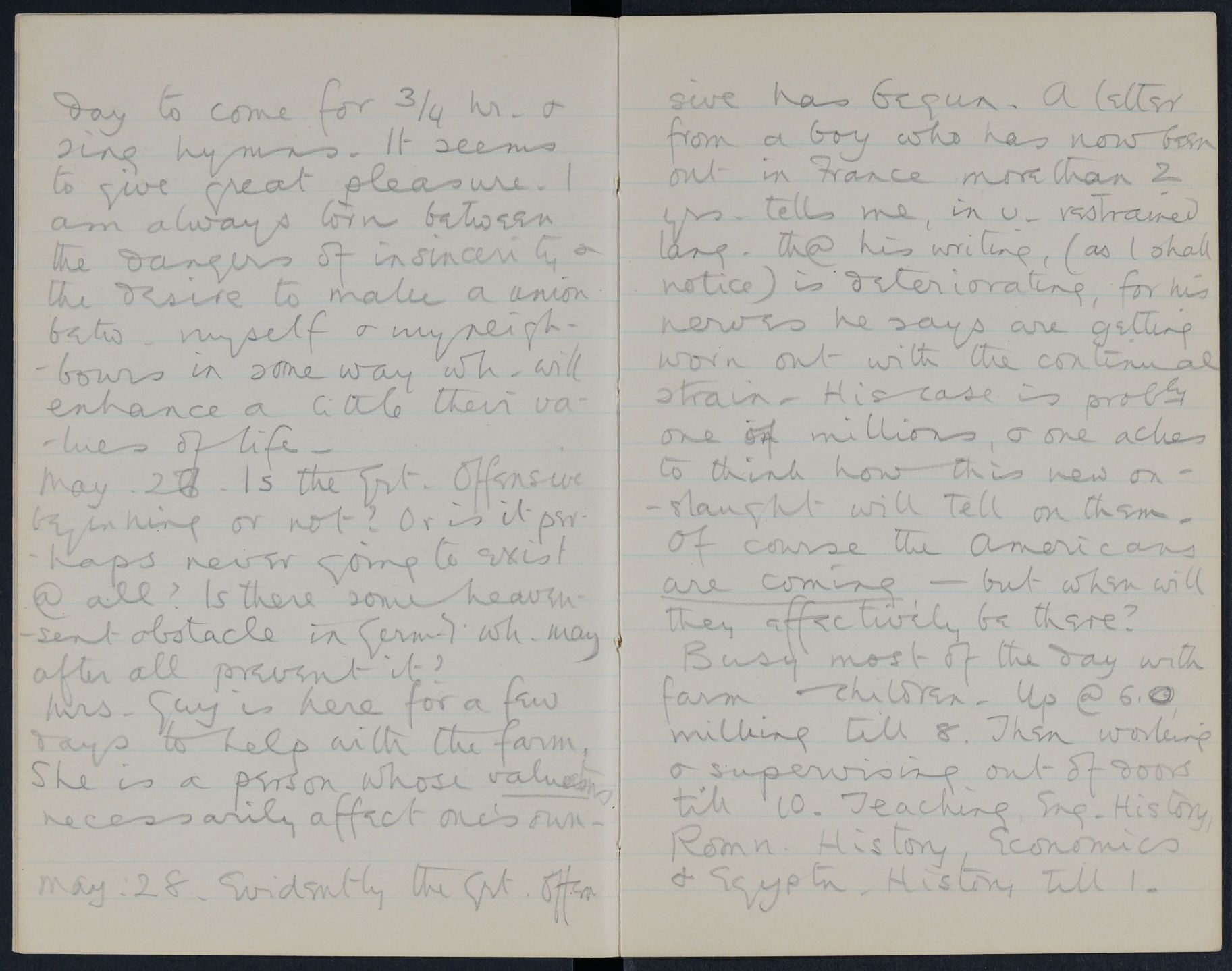
Diary 1918-1919. 1918-1919. MS Isabel Fry Papers, 1878-1958: Notebooks and Journals FY/A/12. University College London. Archives Unbound, https://link.gale.com/apps/doc/GMDRPP847817175/GDSC?u=virta&sid=bookmark-GDSC&xid=61674970&pg=24
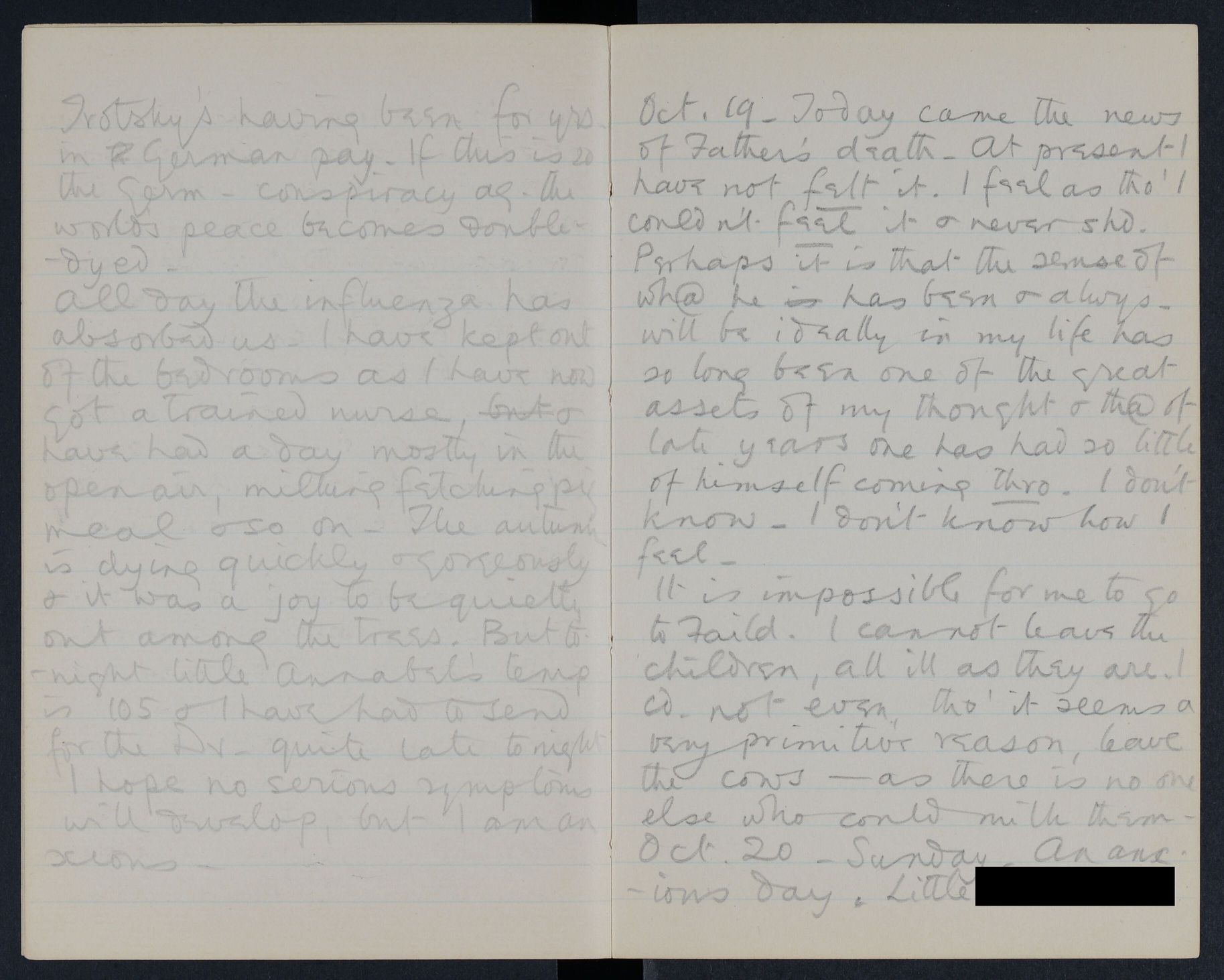
Diary 1918-1919. 1918-1919. MS Isabel Fry Papers, 1878-1958: Notebooks and Journals FY/A/12. University College London. Archives Unbound, https://link.gale.com/apps/doc/GMDRPP847817175/GDSC?u=virta&sid=bookmark-GDSC&xid=61674970&pg=82
World War II
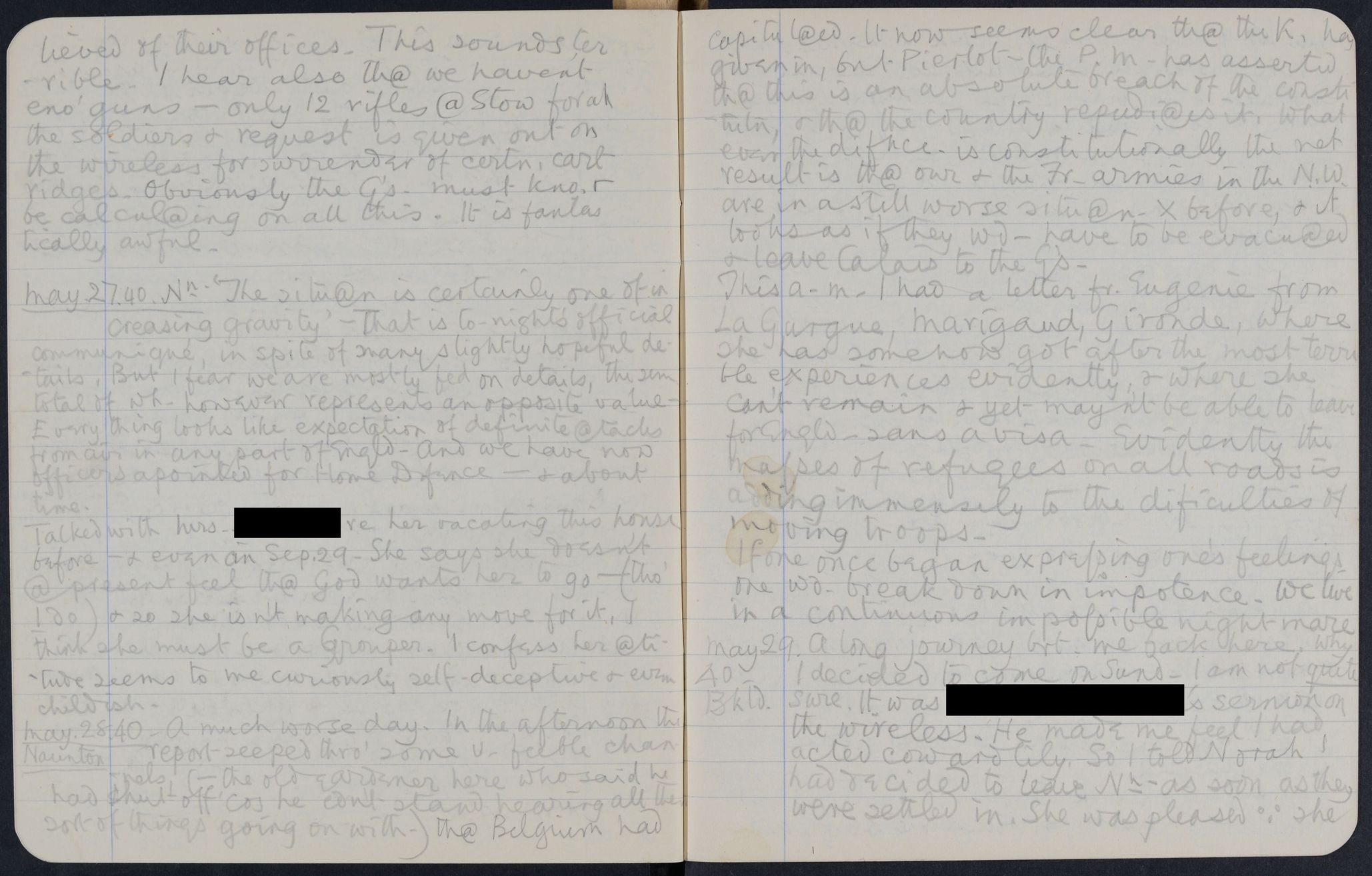
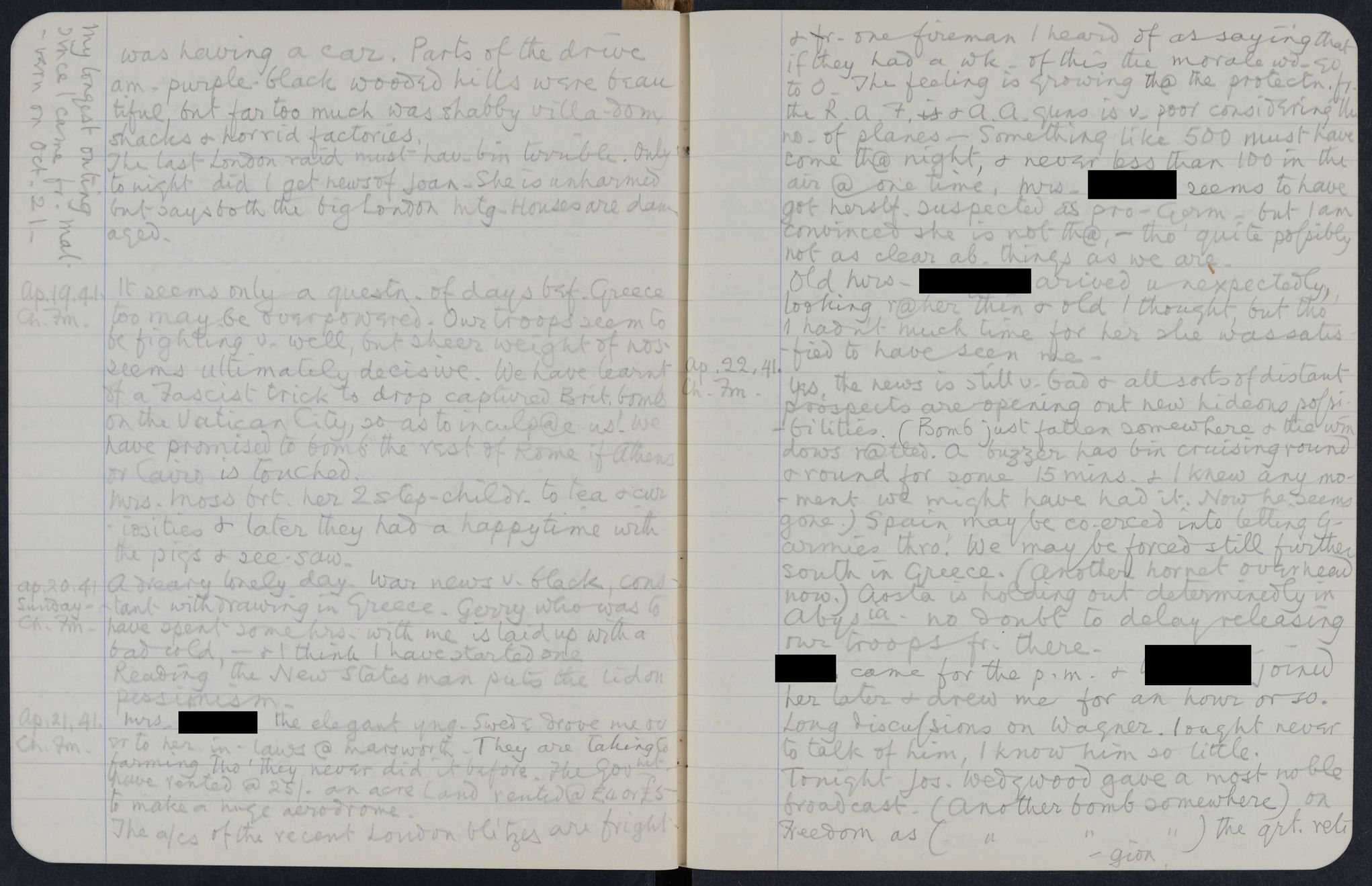
Much of Isabel’s diary from 1940-1941 concerns her feelings and reactions to the Second World War. She records an almost constant commentary of developments heard through the press, by word of mouth, and through her own experiences. This is the period of the German Blitzkrieg, during which Germany overran Denmark, Norway, Belgium, the Netherlands, and France.
Isabel’s entries record tension, fear, and anxiety as news of the war filtered through. The diary entries from May 1940 densely fill the pages and seem particularly frantic as Isabel writes about the events leading up to the evacuation of Dunkirk. After Dunkirk, there is a sense of foreboding throughout many of the diary entries as bombs begin to fall across the UK during the Blitz and the government advises the population about what to do in case of a German invasion.
There is a bleak mood that is almost palpable in Isabel’s writing as there seems to be no good news and a quiet expectation that something dreadful will happen. In the entry from April 22, 1941, Isabel noted that a bomb had fallen nearby while she was writing, rattling windows in the area, and the sound of aircraft buzzing around overhead indicated more bombs might fall.
Career as an Educator
It would be remiss not to mention Isabel Fry’s career as an educator, running various schools throughout her life. Commentary about her work at the schools appears throughout her diaries, and her compassion for the children under her care is apparent. Yet her entries about students, their parents, the running of the schools, and education in general also offer a view of some of the darker aspects of society and working with children.
Redactions and Sensitivities
A review of the diaries from 1943 to 1957-1958 was conducted to ensure the privacy of any named individuals (redactions were made) and to uncover content that may be considered insensitive by modern standards. Notes taken during the review highlight instances of medical issues and illness among the children and adults such as appendicitis, cataracts, depression, diabetes, fever, measles, poisoning, tonsilitis, tuberculosis, and whooping cough, among others. There are references to disabilities in terms not used today, such as “cripples”, “half witted”, “imbeciles”, “mental defectives,” “Mongolian,” and “spastic”. There are also mentions of suicide, of racial stereotypes and language, indications of sexual abuse and assault, and of violence and violent behavior. Just as Isabel’s diaries can be used to study historical events from a personal perspective, they can also be used to better uncover and understand the negative issues inherent in any culture and society.
A Vibrant Insight into the Past, Making History More Human
Isabel Fry’s diaries, publications, and correspondence provide a unique perspective on UK, European, and West Asian historical events, culture, and society from 1878 to 1958. There is something interesting to discover within the pages of each journal; a familiar name or event from history, a place known, a connection with a feeling, a sense of shared experience.
Isabel was a fascinating woman – a social reformer, educator, and activist – who worked to make the world around her a better place. Like all of us, she had her flaws, but reading her diaries gives a sense of her vibrant character and curiosity, her perspicacity, her hopes and dreams, and makes history a little more human and relatable.
If you enjoyed reading about what we can glean from Isabel Fry’s diaries, you may like these other blog posts:
- James Greenwood – Social Reformer or Opportunist?
- Uncovering a History of Disabilities: Disabilities in Society, Seventeenth to Twentieth Century
- Representations of Girls in History of Disabilities: Disabilities in Society, Seventeenth to Twentieth Century
Blog post cover image citation: A montage of images of Isabel Fry made available on the Winterbourne Family History Online by Frenchay Village Museum website, https://www.frenchaymuseumarchives.co.uk/Archives/FryBooks/Vol-2/Page-106IsabelFry.htm (portraits of the Fry Family, Volume Two, 106 Isabel Fry), combined with images from Gale’s Archives Unbound resource.