| Dr Clare Horrocks, Associate Professor in Print Culture and Public Engagement, Liverpool John Moores University|
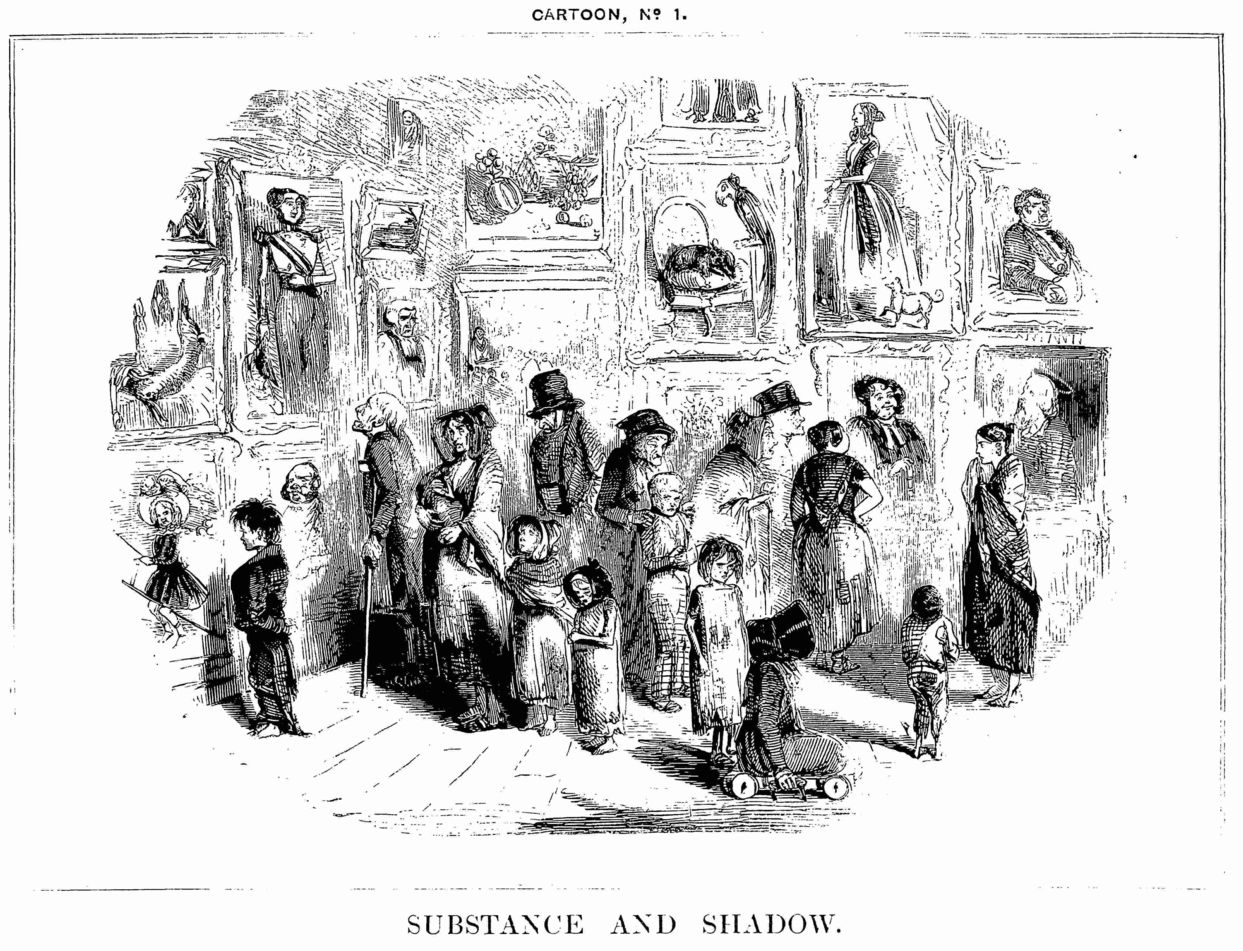
Do you have fond memories of sitting at the doctors or dentists and flicking through the latest copy of Punch? Have you ever wondered about the origin of satirical cartoons? The Punch Historical Archive can help those on a nostalgic journey, as well as students and scholars who use it as a gateway to illustrate the past. Published from July 1841, creating the first cartoon ‘Substance and Shadow’ in 1843 (see this blog post’s title image), Punch was the longest running satirical periodical, spanning two centuries. It paved the way for publications like Private Eye and its response to news and current affairs can be seen to have influenced many contemporary television shows like Have I Got News for You.
First published in 2014, the Punch Historical Archive was a pioneering contribution to the field of authorial attribution studies. Collaborating with the British Library, Punch Limited and Liverpool John Moores University, it combined digital precision and prowess with a keen understanding of the user experience. I was an Academic Advisor for the project, coordinating the transcription of the Ledgers and ensuring that, for the first time, readers of Punch would be able to identify those who wrote for the magazine. Some of these writers, like William Makepeace Thackeray and Douglas Jerrold, are already well known, but other contributors like P. G. Wodehouse and A. A. Milne less so.
This blog starts to look at some of the fantastic projects and discoveries that have arisen in the first ten years since the digital archive was produced. This year, 2026, also marks 185 years since Punch was first published, so it is also a good time to consider where the Punch archive may take us in the future.
Pulling no Punches! The Punch Historical Archive 1841 – 1992