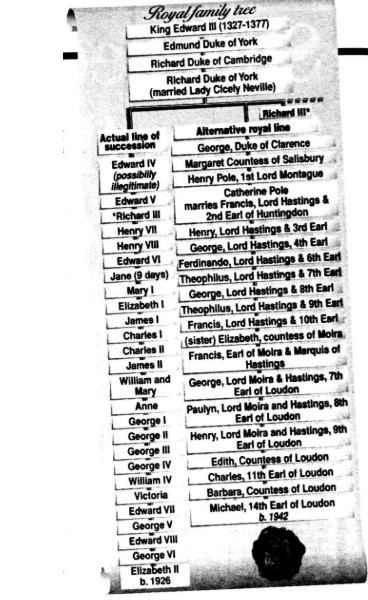
The town of Wangaratta in the north of Victoria, Australia, has a population of approximately 19,000, but little does that population realise that one amongst their number is a man who, but for an accident of history, could today be the King of England. This matter was originally researched by the British historian, Dr. Michael Jones, in 2003, and it can be updated with the help of Gale Primary Sources.
Surprising Search Results: From Crystal Therapy to Singing Bowls
By Rebecca Bowden, Associate Acquisitions Editor
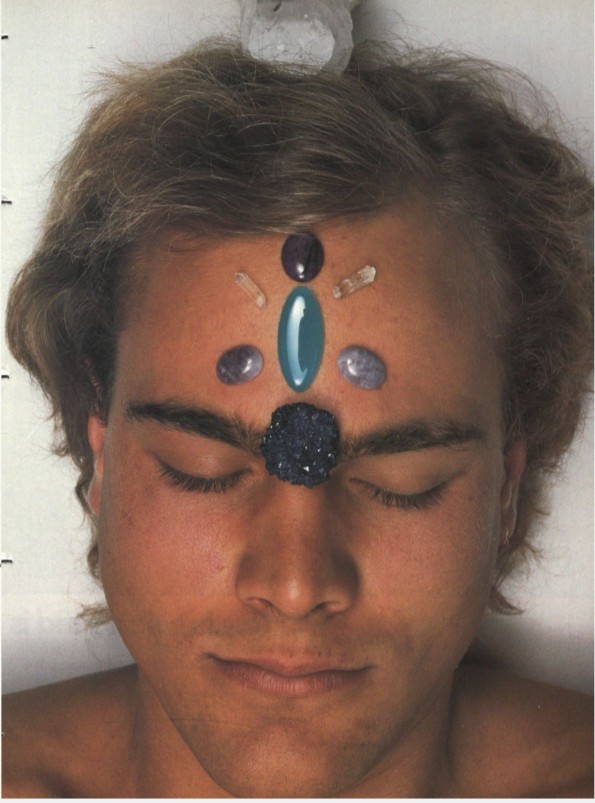
If one was researching current affairs, political history, or a particular literary period, Gale Primary Sources would be an obvious place to look. It is full of useful archives, from newspapers like The Times and The Independent, to huge collections of diverse primary sources, such as Nineteenth Century Collections Online. But what if you were researching something altogether more obscure – say, palmistry, feng shui or crystal therapy? It may surprise you that Gale Primary Sources continues to shine!
Gale and Digital Humanities: A Potted History
In 2014, Gale became the first humanities primary source publisher to give customers access to the Optical Character Recognition (OCR) text that underpins all our resources, both through Text and Data Mining (TDM) drives and through single-document OCR download on the Gale Primary Sources platform. In the intervening four years, Gale has worked closely with … Read more
Inside the BNP: Being a Mole in the British Far-Right
By Rebecca Bowden, Associate Acquisitions Editor On 29 March 1984, at 10:25pm, Channel 4 aired ‘The Other Face of Terror’. According to Elizabeth Cowley, writing for the Daily Mail, ‘if I didn’t know this documentary was fact and that the people we see and hear…were real, I’d swear it was an over-the-top political thriller.’ The … Read more
Ernest Mason Satow: An Essay
Sir Ernest Mason Satow, British diplomat and renowned Japanologist, was a lynchpin of Anglo-Chinese and Anglo-Japanese relations in the nineteenth and early twentieth centuries. During his long diplomatic career, Satow wrote many books on the region, including several on Japan during the transition from rule by the Tokugawa shogunate back to imperial power in the … Read more
Jack’s Alive to Card Castles: Entertainment in the Victorian Parlour
By Rebecca Bowden, Associate Acquisitions Editor
The upper and middle classes of the Victorian period had more leisure time than their counterparts of previous generations, yet they did not have the electronic devices which sap much of our free time in the twenty-first century – televisions, games consoles , mobile phones… our Victorian ancestors had to create their own fun!
“U.S. Disavows Apology, Then Signs It” The Pueblo Incident of 1968
“If you fancy a long weekend with a difference,” writes The Times’ travel section of 18 February 2006, “Regent Travel has a five-day break to Pyongyang, North Korea’s highly planned capital”. The article then mentions, as one of the highlights of the tour, that “You’ll also get to board USS Pueblo, the U.S. spy ship captured in 1968.”
The Contested Legacy of The Iron Duke, Fernando Álvarez de Toledo
By Tom English, Gale Field Sales Executive – North UK
I remember being told in my very first history lecture at university that there’s no such thing as ‘the truth’. I also remember the passion with which the esteemed professor near-bellowed this message to a large group of fresh faced undergraduates. He was adamant. Another professor gave each and every one of his students a letter pointing out that one doesn’t go to university to learn history, but to read history. The message was clear: seeking out and drawing upon a variety of sources and perspectives is an essential part of a history degree.
Indigenous populations: exploring early encounters, subjugation and protection in Gale Primary Sources
By Carolyn Beckford, Gale Product Trainer
Today is International Day of the World’s Indigenous People. This was first put forward by the General Assembly of the United Nations in 1994, and came as result of a commission designed to promote and protect Human Rights. Now, on 9th August, the world works to remember, recognise and respect the rights of indigenous populations and celebrate their achievements and contributions.
“There is no other remedy”: The Argument for Free Trade in the First Issue of The Economist
1843 saw some significant events in world history: Hong Kong was proclaimed a British Crown colony, the amusement park at the Tivoli Gardens opened in Copenhagen (currently the second oldest in the world!), and The Economist published its first issue. This August is the 175th anniversary of The Economist, so it seemed a good opportunity to look back at that first issue.