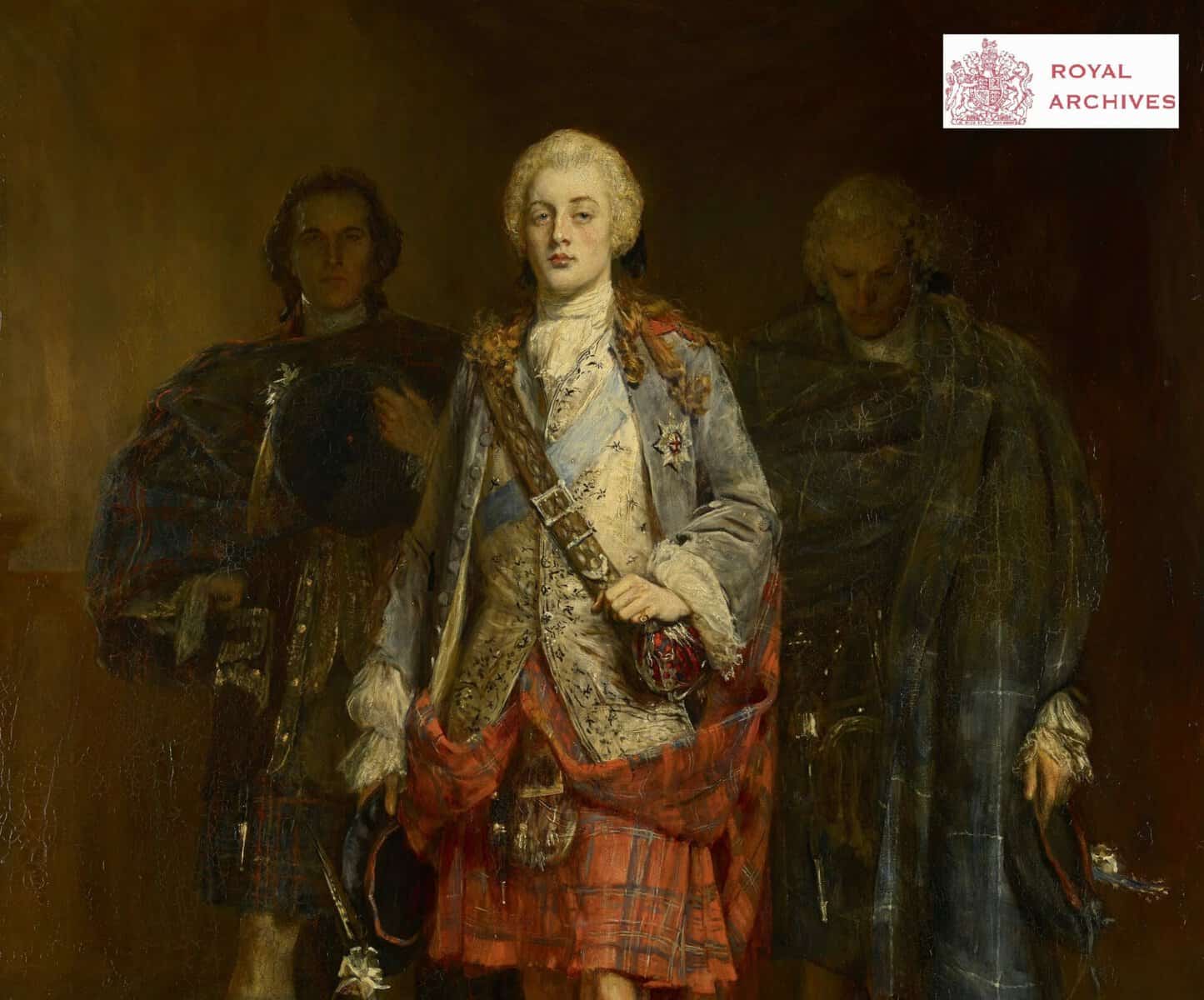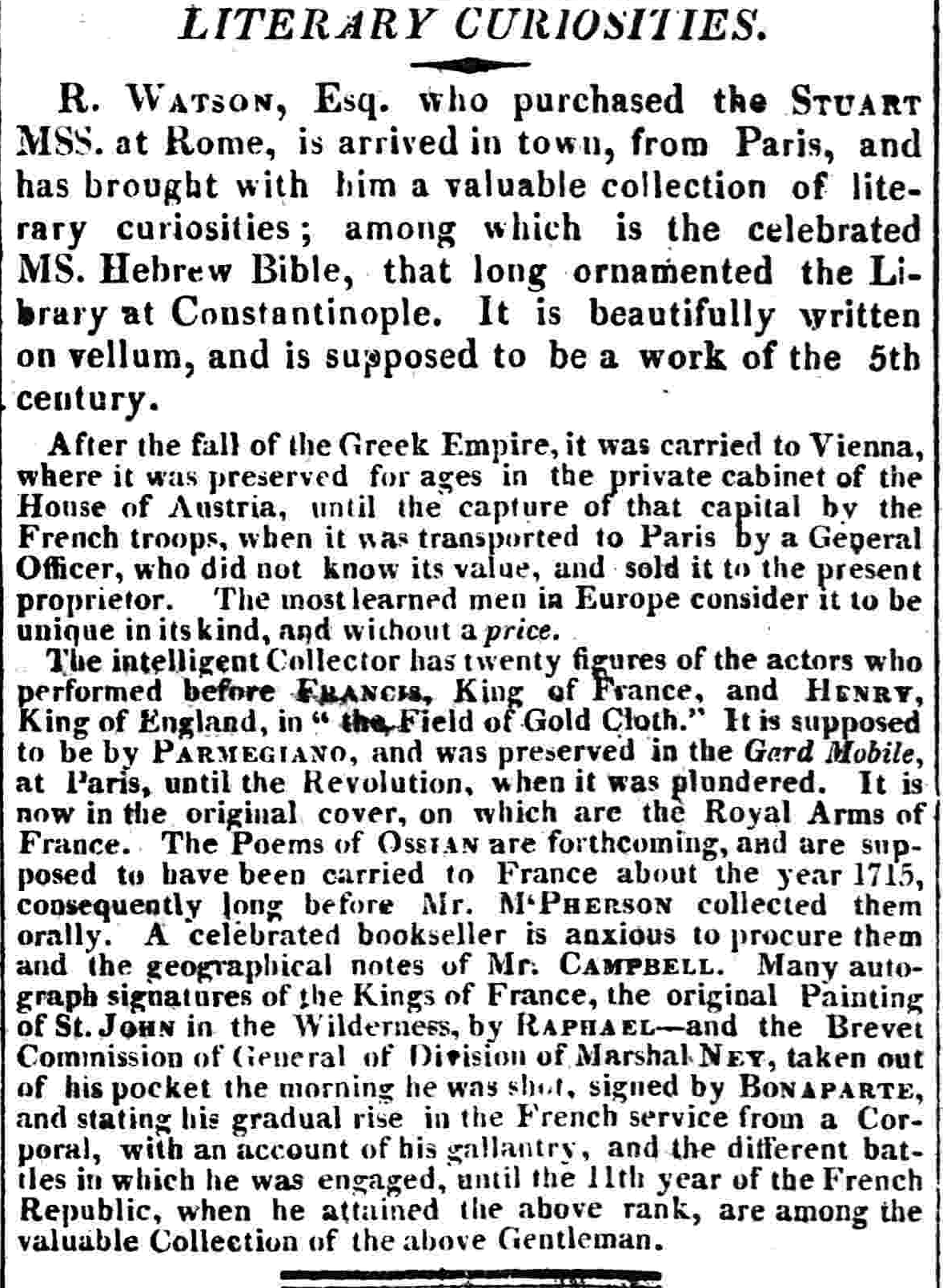
We know that the Stuart Papers were acquired by George IV when he was Prince Regent (1811-1820) following the death of Henry Benedict Stuart, Cardinal York, the final Jacobite heir, and that it was around this time they were moved from Rome back to the UK. They’re now housed in the Royal Archives, Windsor Castle. I decided to search through Gale Primary Sources, focusing particularly on newspapers and periodicals, to see if I could find out more about how the papers of the exiled Jacobite heirs returned to the UK, and how it has been reported in the press at that time, and since. The initial discovery of the Stuart Papers and their subsequent journey from Rome to Windsor Castle makes fascinating reading.
Gale News and Teams
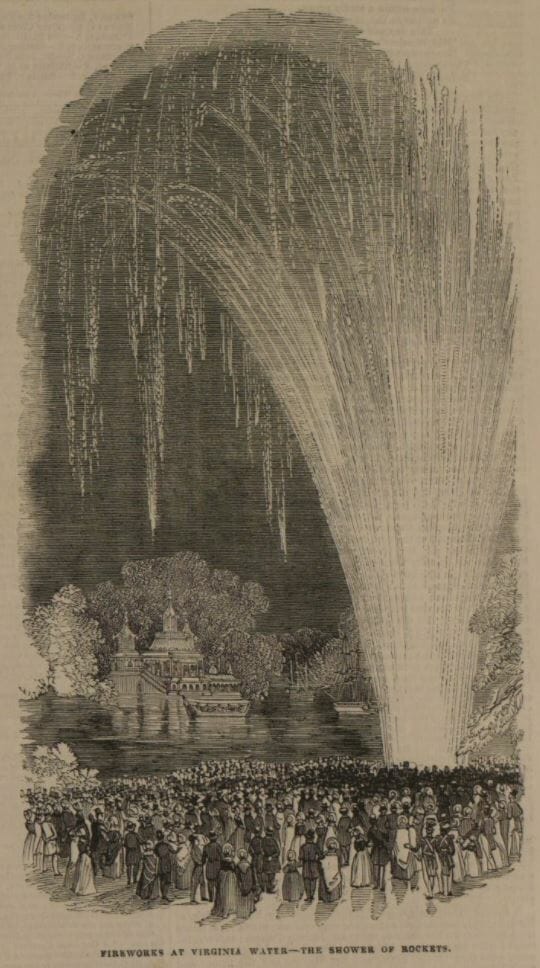
Fireworks Without End
In the UK today, we associate fireworks with the fifth of November and (as the well-known nursery rhyme goes…) gunpowder, treason and plot. For many of us, fireworks are inextricably bound up with the smell of bonfire smoke, and standing in a park or sports ground, ankle deep in mud, waiting for the audio system to work. This is often combined with the unfettered glee of riding a fairground ride that appears never to have been safety tested! And of course, we all know and love the various fireworks themselves: the rockets, Roman Candles, Catherine Wheels, Golden Rain and sparklers. Perhaps your personal favourites are those that burst in gold, and then fizz silver? Maybe those that screech and scream? Or those that launch in a splendid spray of red and blue and then ‘phut’ into nothingness? Or the slow burner… refusing to go off until someone has cautiously poked it with a stick, whilst the others watch terrified that it should explode in the face of the poker… Firework night: a time of education and entertainment for all!
Fostering a Global Perspective
Post by Mary Ruby.
Global perspective. These words are increasingly uttered by educators and employers who understand that this combination of mindset and acquired skill is a critical element for interacting, working, and succeeding in the twenty-first century world.
‘Who knows to suffer, Conquer, and to Save’ – Scottish Romanticism and the Jacobites
A king without a throne, a dashing young prince, and an army of exiles. These basic components of Jacobitism – with some misty lochs, rugged Highlanders, scheming Catholics and royal courts thrown in – lend themselves perfectly to high Romance and adventure. It is no surprise then, that the Stuarts and their Jacobite supporters provided inspiration for early Scottish Romanticism, evident in the works of authors such as Sir Walter Scott and Robert Louis Stevenson, the poetry of Robert Burns, and popular tunes like The Skye Boat Song. With a core narrative of brave young men fighting a doomed cause against an oppressive regime, (particularly embodied in the merciless Duke of Cumberland), the stories surrounding the two Jacobite risings remain popular today, as the recent success of Diana Gabaldon’s Outlander series of historical novels has shown.
The Death of George V – As Reported First in The Times
When King George V died on 20 January 1936 the world was led to believe that he had died entirely of natural causes. Little did people know at the time that his death had been hastened by his physician in order to ensure that the news was reported first in The Times rather than the afternoon newspapers. It is a matter that can be explored with the help of Gale Primary Sources.
The Chinese diaspora during China’s transformation from Empire to Republic: experiences in five different regions

China from Empire to Republic is an ongoing Gale publishing programme aiming to digitise China-related primary source collections from libraries and archives around the world. Two collections have been released in this programme so far: Missionary, Sinology and Literary Periodicals (1817–1949) and the recent Records of the Maritime Customs Service of China (1854–1949). While the dominant topics covered in these two collections are Chinese diplomacy, foreign relations, economy, politics, Christianity, sinology, education, imperialism, and globalisation, we must not overlook another important topic – ‘overseas Chinese’ or the Chinese diaspora.
What will defy, embrace or become a disruption in scholarly publishing?
Thoughts from BookMachine’s latest event ‘Scholarly Publishing: Crossing the Rubicon’
The Jam Factory, Oxford, 7 September 2017
Last Thursday, as I trundled slowly towards Oxford (kicking myself for accidentally catching a slow train – who knew there were quite so many stations between Reading and Oxford?!) I wondered what was in store at BookMachine’s latest event, ‘Scholarly Publishing: Crossing the Rubicon’. The venue, The Jam Factory, Oxford, was alive with conversation and had a very welcoming atmosphere. Winding my way through tables of busily socialising people, I found the room where the discussion was taking place.
The Original Dixieland Jazz Band – Centenary of the first Jazz record
In New Orleans, Jazz began its history around 1895 with the cornetist Buddy Bolden, whom Adrian Troy called Jazz’s first great exponent.[1] Bolden was depicted by Michael Ondaatje in his 1976 novella Coming through Slaughter as a jazz pioneer, struggling with alcoholic psychosis. Writing in The Times in 1992, Clive Davis also named Bolden the first legendary New Orleans jazz figure – legendary in that unlikely tales surround his mythical status, such as that ‘on certain nights, his playing could be heard miles away.’[2] Unfortunately, no recordings of Bolden are known to exist and despite the allure of rumored cylinder recordings dating to 1894 we only have the likes of Ondaatje’s novella to evoke the sound of one of the world’s first Jazz icons.[3]
‘So complex and vital an organ’: 65 Years Since the First Successful Open Heart Surgery
Sixty-five years ago this week, on the 2nd September 1952, surgeons at the University of Minnesota, Floyd John Lewis (1916-1993) and Walton Lillehei (1918-1999), made medical history by performing the first successful open heart surgery. It was a milestone in cardiac surgery – as little as 25 years earlier, such an operation would have been seen as practically impossible. What developments in medical practice led to this landmark?