
│By Anushka Srivastava, Gale Ambassador at the University of Delhi, India│
India-Africa relations are strengthening in a new global scenario, driven by economic complementarity, strategic alignment, and a shared focus on multilateralism. In 2025, India strengthened its ties with Africa through several high-level visits. Prime Minister Narendra Modi undertook a significant five-nation tour in July 2025, in Ghana and Namibia, and President Droupadi Murmu made a historic visit to Angola in November 2025.
Understanding the long-standing relationship between India and Africa requires exploring the historical documents that shaped early contact, mobility, diplomacy, economic networks, and political exchange. For this, Gale Primary Sources offers unparalleled access to documents that illuminate how people, commodities, and ideas moved between the two regions.
This blog post traces these linkages through four lenses – historical, diplomatic, economic, and political – using illustrative citations from Gale Primary Sources collections.
Gale’s collections are indispensable for studying India–Africa relations for key reasons. They offer granular, first-hand evidence. Government dispatches, merchant letters, and newspapers reveal how real people described events in real time. By presenting India and Africa within a shared archival ecosystem, Gale helps scholars to explore the unexplored.
Historical Connection Between India and Africa: The Case of Siddis
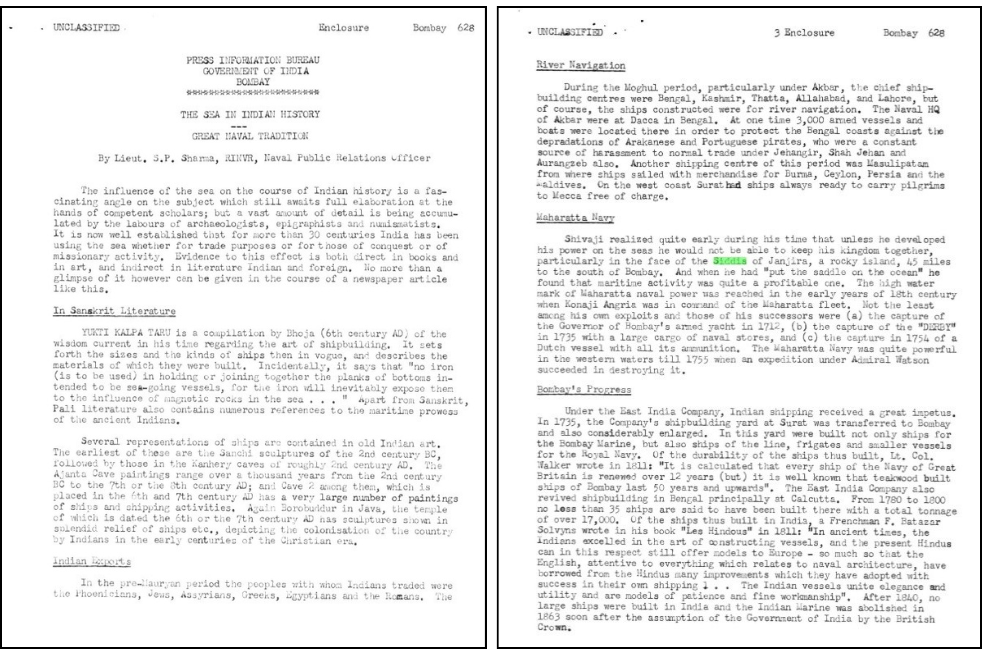
Gale’s Archives Unbound preserves records of the ‘Siddis’ (Africans in India), whose presence represents the oldest Indo-African connection. The document titled ‘The Sea in Indian History: Great Naval Tradition’ by Lieut. S.P. Sharma, a Naval Public Relations officer, says that strong maritime power has long been central to India’s strategic and economic security, especially in relation to African coastal actors like the Siddis of Janjira.
Shivaji’s efforts to build the Maratha Navy show that control over sea routes, ports, and trade networks was essential for protecting the western coast and countering external naval threats. This suggests India’s historical engagement with the western Indian Ocean.
Economic Interactions Between India and Africa
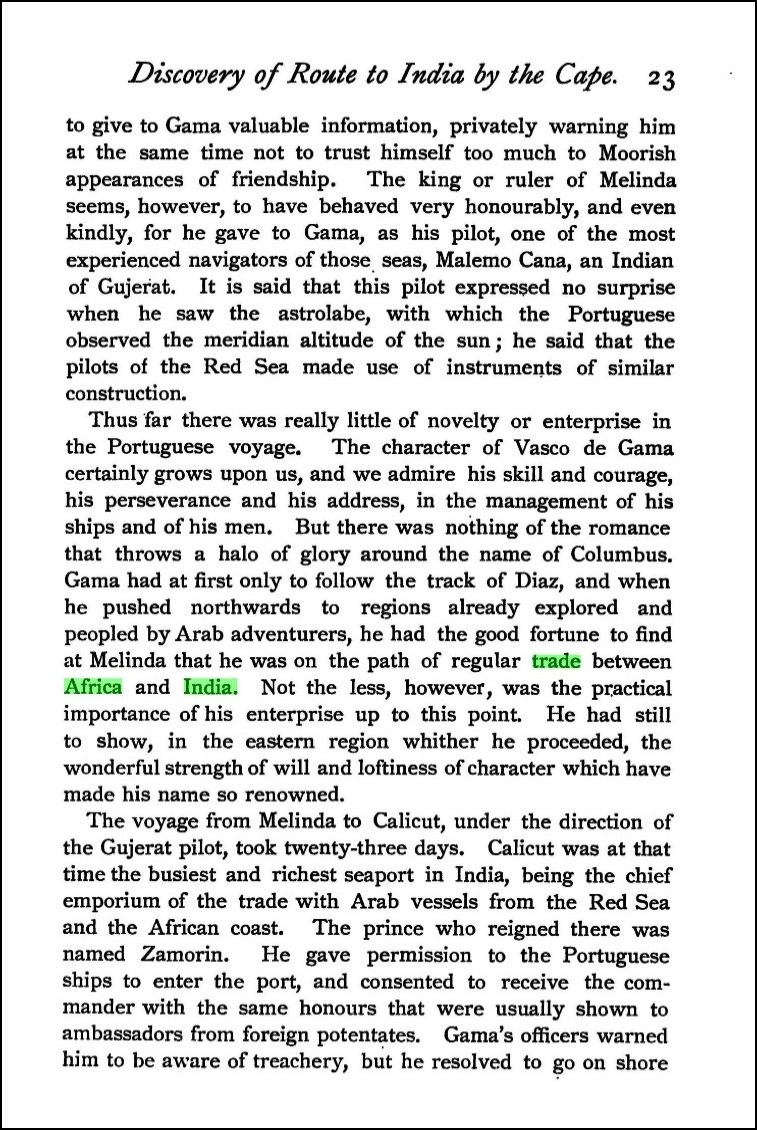
Long before European intervention, Africa and India were already connected through established maritime trade networks, particularly across the Red Sea and the Indian Ocean. Vasco da Gama’s voyage revealed how African ports like Melinda (in East Africa) were integrated into a regular, sophisticated trade route linking Africa, Arabia, and India, with Calicut in Kerala functioning as a major commercial hub.
Goods, people, and expertise moved organically across the Indian Ocean, forming a shared commercial ecosystem. ‘Wonderful Stories of Daring, Enterprise, and Adventure: by Dr. Macaulay’ provides historical evidence that India–Africa trade relations today are not new partnerships but a revival of centuries-old linkages reflecting long-standing economic interdependence.
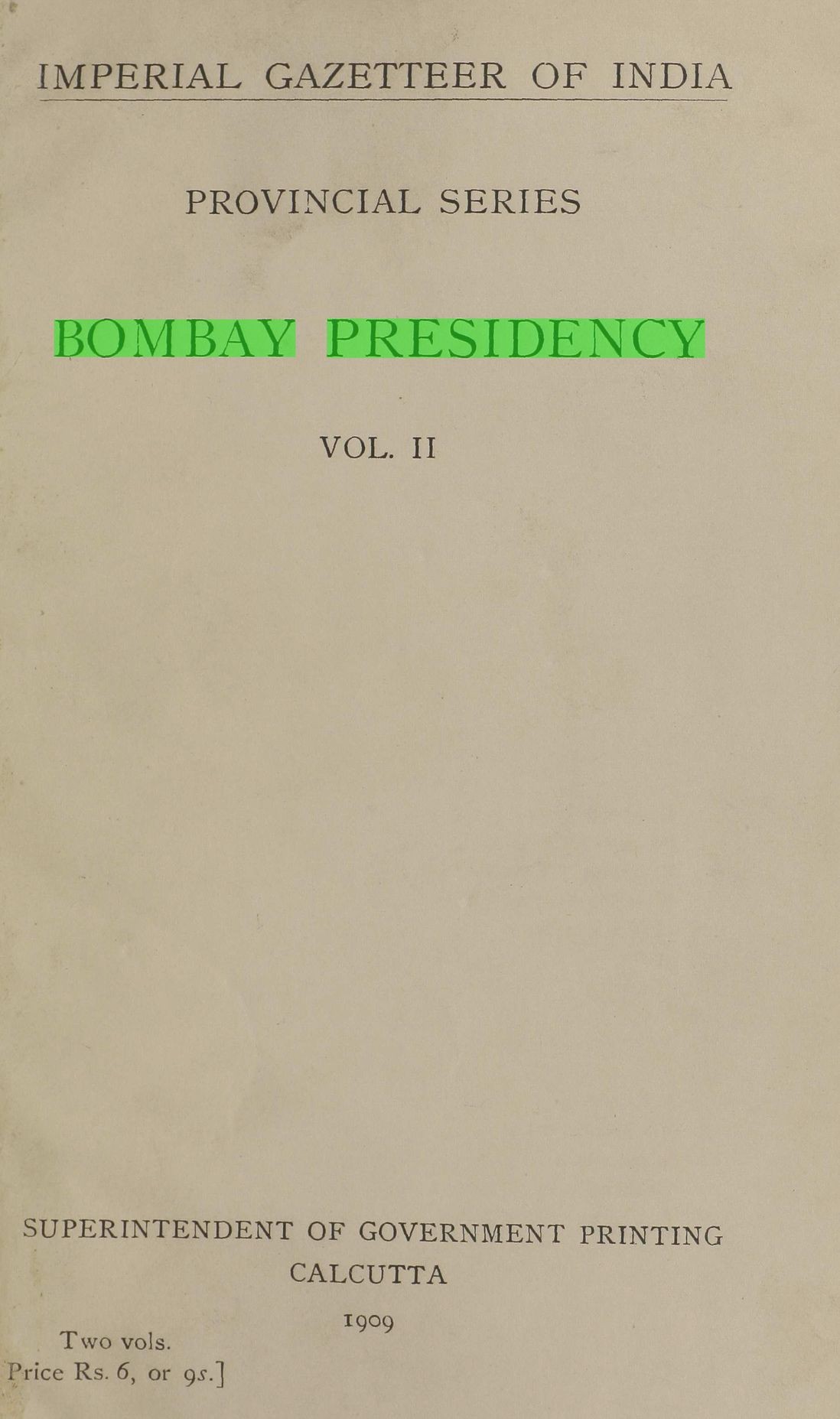
‘Imperial Gazetteer of India: Provincial Series: Bombay Presidency’ informs us that Cambay’s exports such as cotton, cloth, indigo, carpets, and carved stones, and its imports of gold, silver, copper, madder, and horses from the Red Sea, Persian Gulf, and especially East Africa, show that the western Indian coast was integrated with African markets. By the thirteenth to the fifteenth centuries, Cambay traded regularly with East African ports, proving that maritime commerce between India and Africa shaped early global value chains.
Early Colonial Administration and Connected Governance
The administrative machinery of the British Empire created formal diplomatic corridors between India and various African regions. India was the hub of British imperial operations in the Indian Ocean, and many decisions affecting East African territories were historically routed through Bombay or Calcutta.
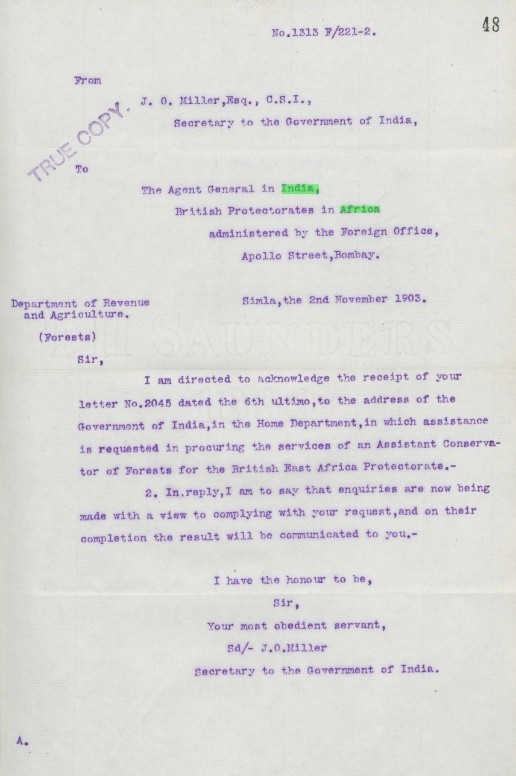
‘Agency in India for African Protectorates. Mr. Simson and Various‘ shows that British India played a key administrative role in supporting African colonies, especially British East Africa. The request for an Assistant Conservator of Forests from India reflects a system where Indian expertise was transferred to Africa to strengthen colonial governance. It demonstrates early India–Africa linkages created through shared bureaucratic structures.
Such exchanges reveal that India’s engagement with Africa began long before independence, rooted in cross-colonial cooperation and the movement of trained personnel across the empire. India’s economic weight and bureaucratic capacity placed it in a semi-diplomatic role in East Africa well before modern diplomacy emerged.
Indian Consular Presence in Africa
By the late nineteenth century, Indian traders, sailors, and settlers were significant enough in East African ports to necessitate official representation. The document titled ‘Pol 17 India-Tanzan Diplomatic and Consular Representation. [Tanzania]’ found within Gale’s Archives Unbound collections shows that India maintained an active consular and diplomatic presence in East Africa during the 1960s.
India also adjusted its diplomatic posture after the Zanzibar Revolution, choosing not to open a separate office in Zanzibar while still maintaining contact through visits. These communications reveal how India’s consular network navigated political volatility, diaspora anxieties, and shifting regional alignments in East Africa during a crucial period of decolonization.
![Pol 17 India-Tanzan Diplomatic and Consular Representation. [Tanzania]. May 25, 1964 - May 21, 1965.](https://review.gale.com/wp-content/uploads/2026/04/Image-5.png)
Connections of Solidarity and Leadership
This ‘Profiles of People’s Leaders’ pamphlet highlights how India–Africa leadership connections are rooted in shared histories of moral courage, and democratic ideals. From Gandhi’s early experiments with Satyagraha in South Africa to Mandela’s lifelong struggle against apartheid, leaders across both regions inspired and strengthened one another. Figures like Yusuf Dadoo, Govan Mbeki, and Poomanie Moodley embody a joint legacy of Indian and African activism.
![African National Congress. Profiles of People's Leaders. [1983?].](https://review.gale.com/wp-content/uploads/2026/04/6.jpg)
Together, these stories show how India and Africa shaped each other’s liberation movements and built a foundation of solidarity that continues to guide their relationship today, highlighting their political connection. Such texts form the ideological groundwork for the postcolonial diplomatic partnership, post-1947.
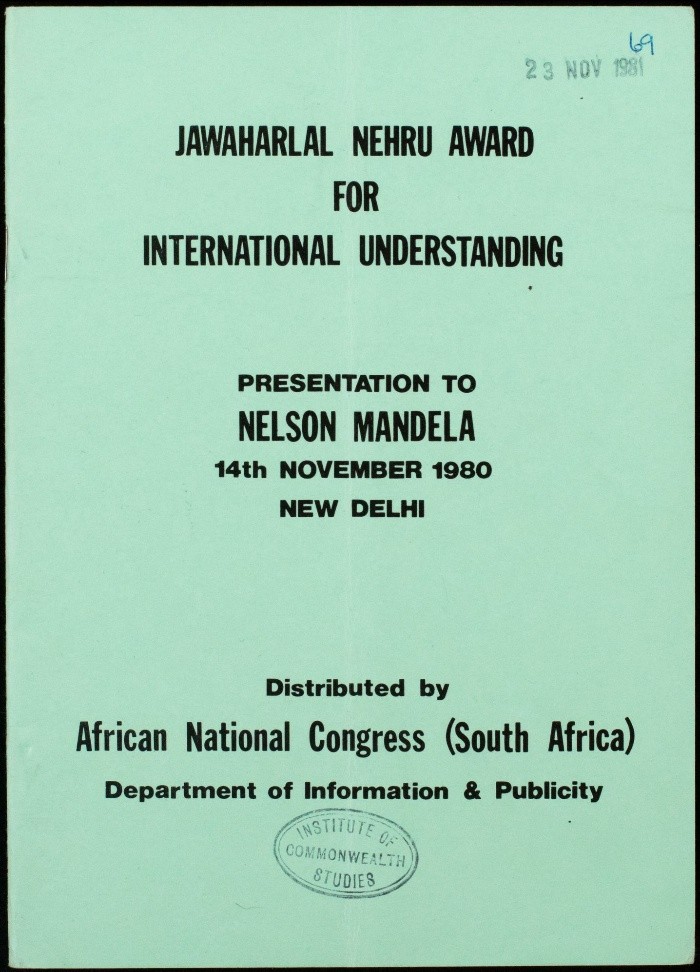
The 1979 Jawaharlal Nehru Award, presented to Oliver Tambo symbolically, reaffirmed the moral and political bond between India and Africa through Nehru’s vision. The ceremony, attended by Indian leaders and the diplomatic corps, reflected India’s steadfast solidarity with South Africa’s struggle against apartheid. By honouring Mandela, whom Nehru had long admired as a fellow champion of freedom, dignity, and human equality, India affirmed a shared legacy of vision and its belief and the universal ideals that Nehru espoused.
Richer and Older Connections
The historical, diplomatic, economic, and political connections between India and Africa are far older and richer than most modern studies acknowledge. Gale Primary Sources, through its archival documents, provides the foundation necessary to reconstruct these intertwined histories. For students and researchers of African Studies, South Asian Studies, or global history, Gale’s holdings are repositories of documents, making us understand the shared past that underpins contemporary India–Africa partnerships.
If you enjoyed reading about the relationship between India and Africa, check out these posts:
- In the Footsteps of My Avô: Exploring Angola’s Fight for Independence Through Family History
- Uncovering India with Gale Primary Sources
- Revisiting South Africa through Gale Primary Sources
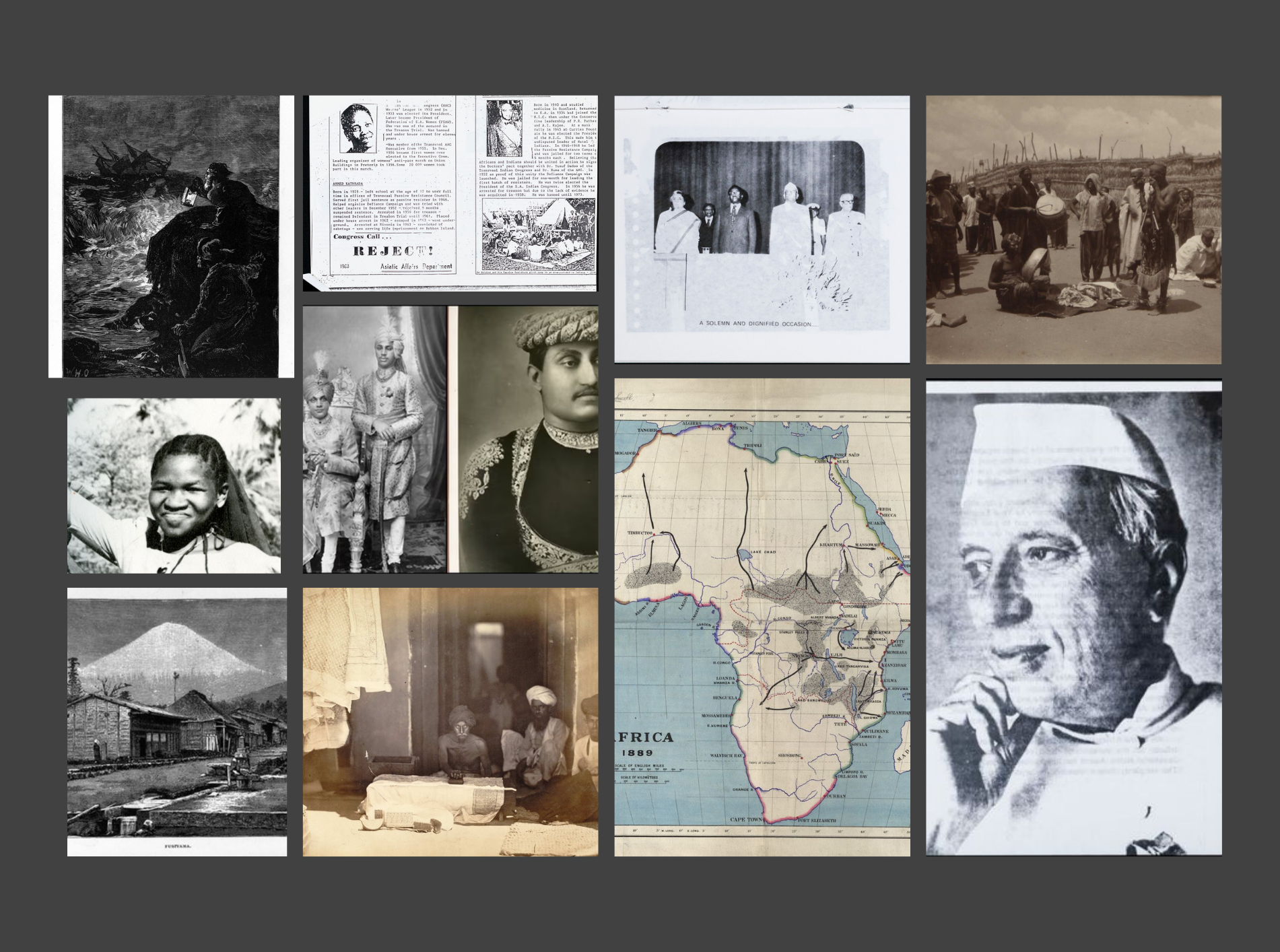
Blog cover image citation: a collage of documents from Archives Unbound: India from Crown Rule to Republic, 1945–1949: Records of the U.S. State Department, and Archives Unbound: Evangelism in India: Correspondence of the Board of Foreign Missions, 1833–1910.