
│By Eleanor Leese, Acquisitions Editor, Gale Primary Sources│
As an editor at Gale, I’ve been lucky enough to visit some of the most prestigious archives in the country, but nothing has been as exciting as when I was invited to see the conservation lab at the British Library. By sheer good luck, the week that I was there they were working on their collection of miniature books ahead of scanning them for Eighteenth Century Collections Online, Part III which sparked something of an obsession in both myself and the rest of the Gale team.
Miniature Books in the Eighteenth Century
The miniature books are a highlight of the recent ECCO III release, but they weren’t a solely eighteenth-century phenomenon. In fact, they first started gaining popularity in the seventeenth century with mostly religious works. Later there was a huge expansion with miniature novels in the nineteenth century. And there in the middle – both chronologically and thematically – are miniature books in the eighteenth century.
During this period, these were still relatively rare items and were largely secular non-fiction or children’s books – as perfectly represented by the sixty titles that we have included in ECCO III.
There are many almanacs, pocket-sized books that detail the most important days of the year, along with lists of prominent people in the city. These almanacs are a rich source of data on everyday life, such as the shape of any given year, and which dates were considered most important. These sit beside children’s books on the peoples of the world, and the history of England and its institutions – a window into the worldview taught to eighteenth-century English children.
The popularity of the miniature book in the eighteenth century perfectly captures the importance of viewing a digitised book as a material object as well as a text. For these tiny works which contain grand sweeping topics, their meaning emerges from that tension between the size of the body of knowledge and the scale of the object trying to encapsulate it.
Materiality at a Miniature Scale
Looking closely at the material aspects of these titles is a joy. Although they have their diminutive size in common, there is an enormous diversity of attributes across the dozens of titles, including different types of bindings, covers, and slip cases.
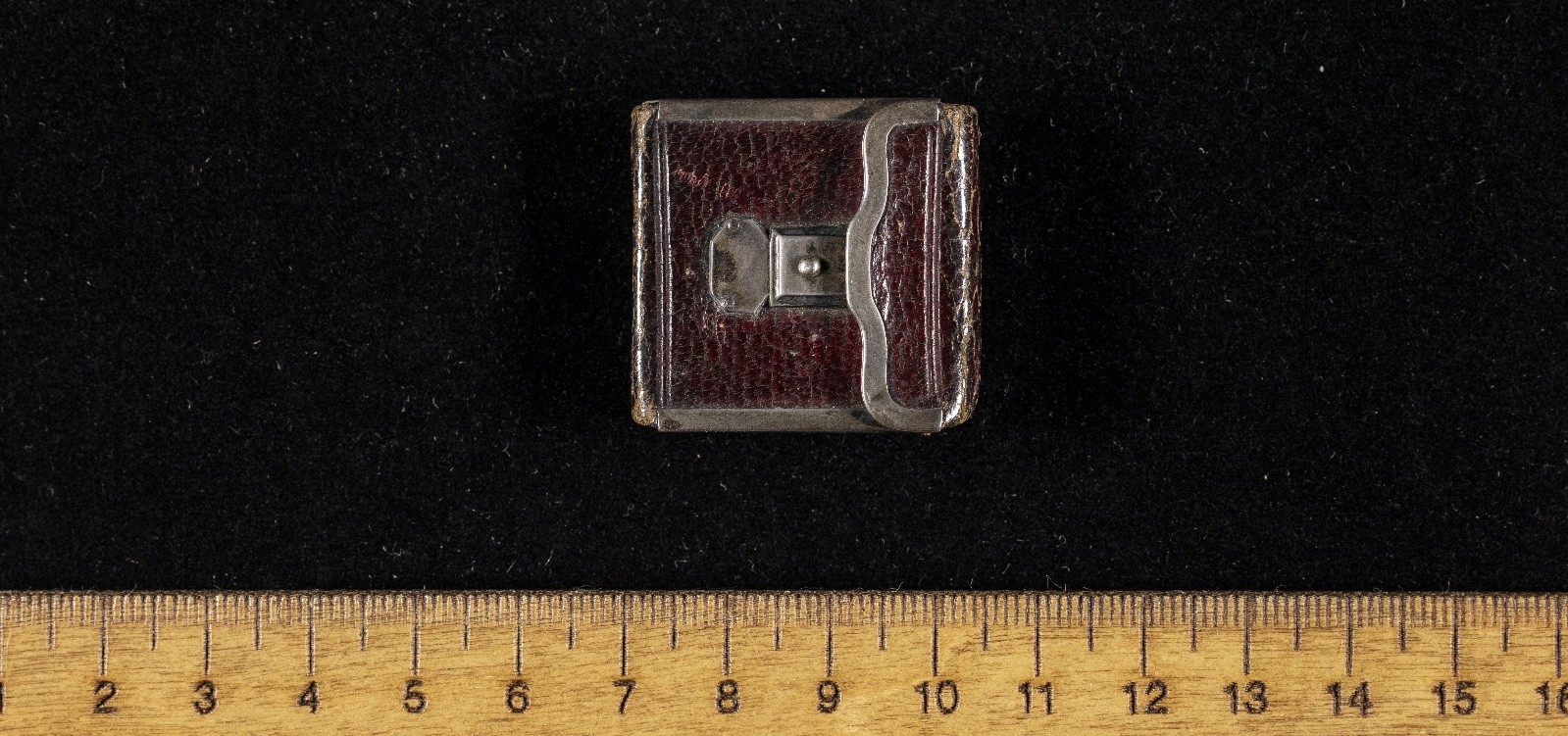
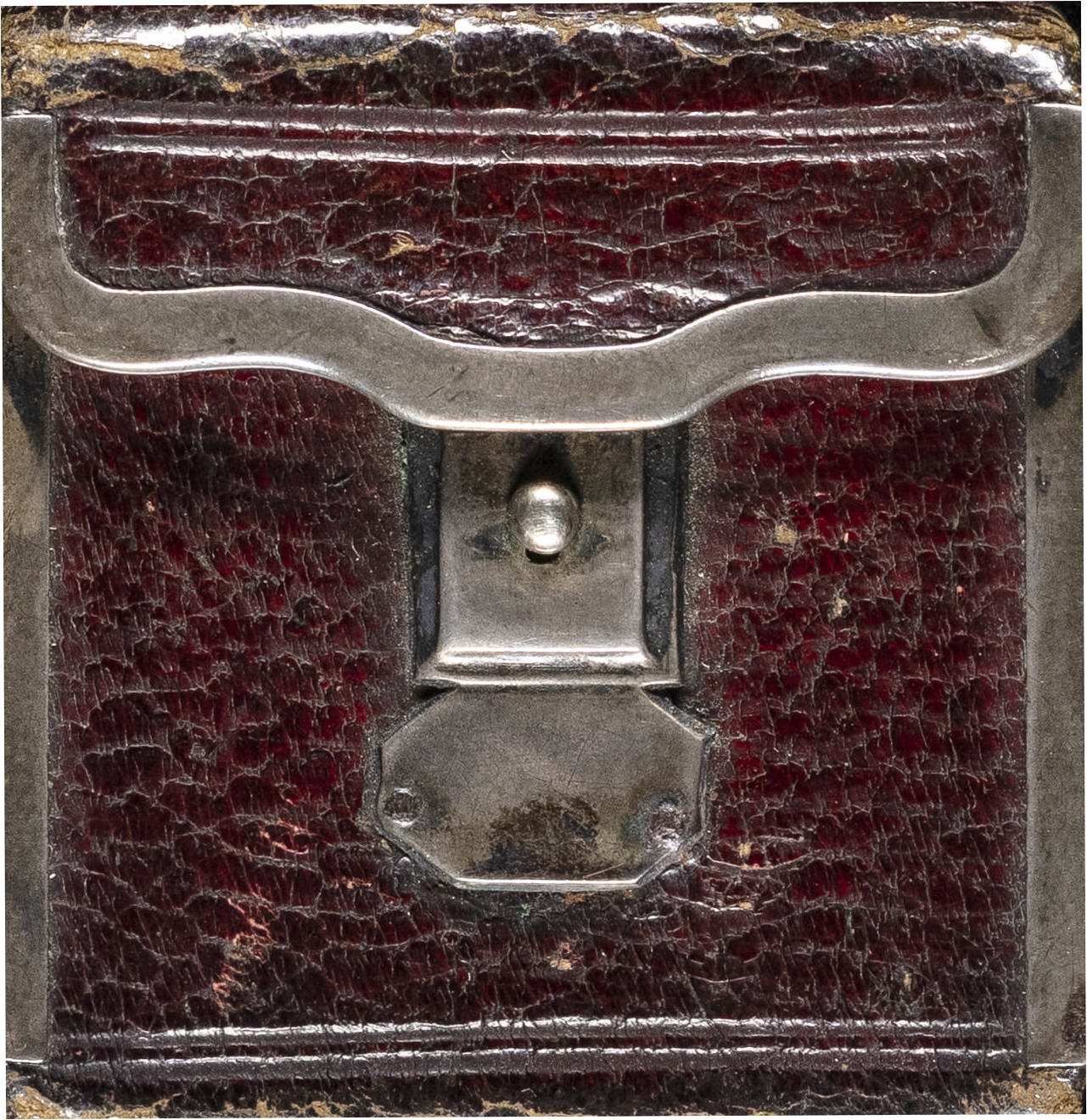
The smallest of the miniatures is bound in a deep red leather with a silver clasp. The pages are just over an inch square, small enough that the British Library stamp takes up almost an entire page.
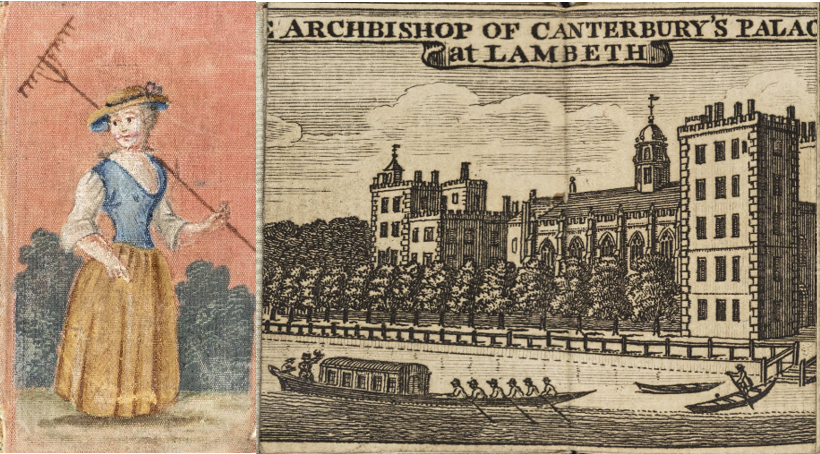
With an entirely different aesthetic are the painted cloth covers, which feel in stark contrast with the sharp engravings of the pages inside.
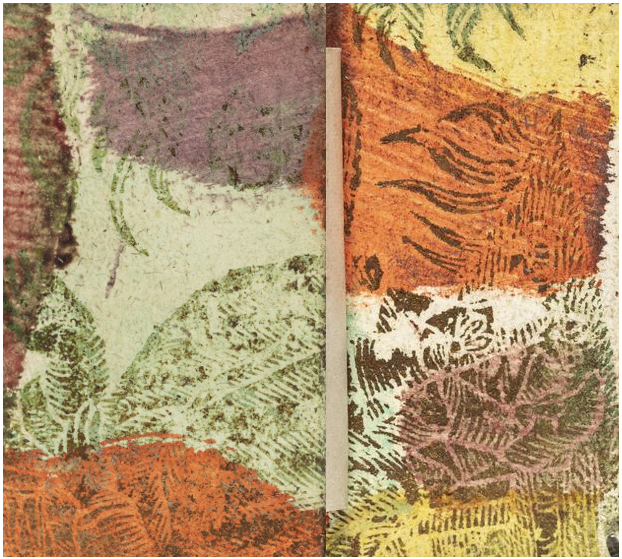
The inside covers are just as much of a treat, with printed and marbled endpapers:
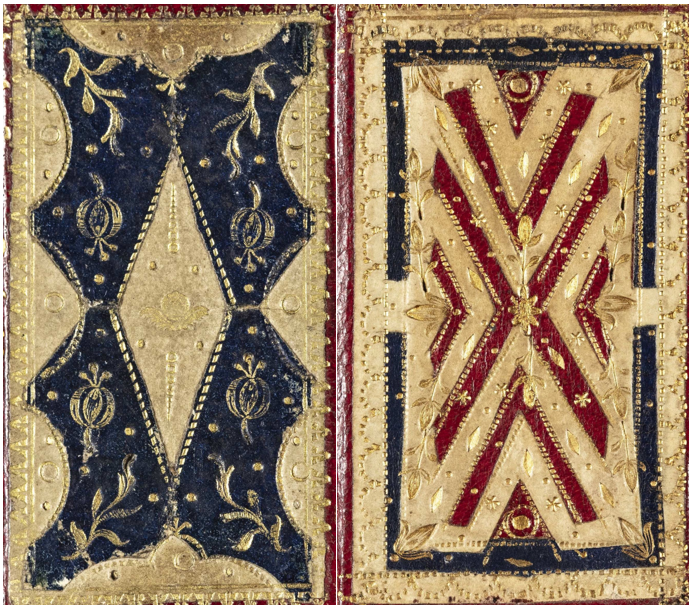
And then for the bling lovers there are the intricately tooled and gilded options, with designs so richly ornamental they scream status symbol.
Digitising Miniature Books: Challenges and Innovations
Of course, highly decorative features in a miniscule package pose some unique challenges. First and foremost that they don’t fit the standard scanning and imaging equipment that we used for ECCO III.
To overcome the challenges of trying to capture sharp images of pages so small it’s impossible to hold them open without obscuring the text, the staff at the British Library created a bespoke miniature book cradle in order to hold the books at an angle that allowed the camera to capture the whole page without damaging the fragile spines. Some of the children’s titles also included foldouts twelve times the length of a single page which needed supporting as well.
By including these miniature titles in ECCO III, we hope that they will reach further than tiny, fragile items in an archive are normally able to. In addition, by making the text fully searchable, they will appear in search results alongside standard sized items from the library, giving them a parity in visibility that is much more difficult for the physical objects.
Significance Over Size
The miniature books included in ECCO III remind us that size has never been a barrier to significance. These objects compress vast bodies of knowledge into forms that were portable, personal, and often beautiful, offering unique insight into how information, authority, and learning were shaped in the eighteenth century.
Through careful conservation and bespoke digitisation, these fragile artefacts are no longer constrained by their physical limits. Instead, they now sit alongside their full-sized counterparts, searchable, visible, and ready to inspire new questions about materiality, readership, and the scale at which knowledge has historically been encountered.
If you enjoyed reading about tiny books in the eighteenth century, check out these posts:
- Inside ECCO Part III: The Eighteenth‑Century Obsession with Insuring Everything
- Glam Rock to Georgian Riots: Bowie’s Last Notebook
- Digitisation as a Catalyst for Conservation
Blog post cover image citation: Photograph from author.