

│By Darren Brain, Gale Marketing Manager, Australia & New Zealand│
On the 15th May 1928, Reverend John Flynn founded the Australian Inland Mission (AIM) – Aerial Medical Service in Cloncurry, Queensland. Initially a one-year experiment with a young Australian airline called Qantas providing air services. This service later evolved nationally into the Australian Aerial Medical Service (AAMS), which was renamed the Flying Doctor Service in 1942, and became the Royal Flying Doctor Service (RFDS) in 1955 after receiving a Royal Charter.
With Gale’s recent release of Global Development and Humanitarian Aid: The International Federation of Red Cross and Red Crescent Societies, 1919-1997, I discovered some interesting documents about the history of RFDS and decided to dig deeper into Gale Primary Sources to learn more about the remarkable story of one of the world’s earliest flying doctors, the fascinating stories of the RFDS, and the growth of the critical service they have been providing against the harsh and unforgiving Australian Outback for nearly a century.
Reverend John Flynn – The Beginnings of the Flying Doctors
Born in country Victoria, Australia in 1880, John Flynn initially trained as a schoolteacher before joining the ministry of the Presbyterian Church in 1903. He developed skills in photography and first aid then later published The Bushman’s Companion to help people living in remote locations in case of emergencies. In 1910 after being appointed to a remote South Australian region extending from the Flinders Ranges to Oodnadatta which was 500 miles away from the nearest doctor, Flynn established his first bush hospital.
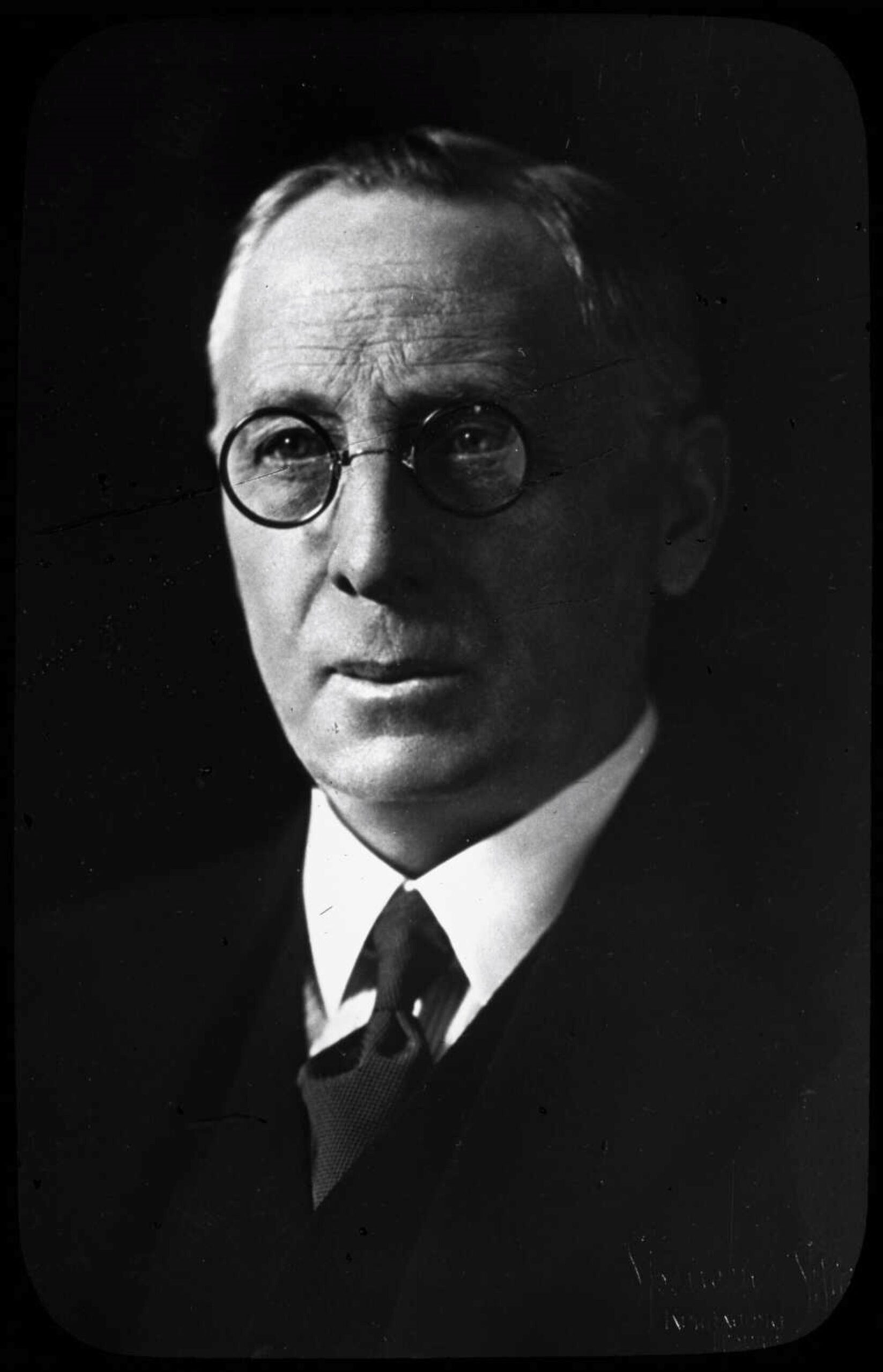
In 1912 Flynn was promoted to Superintendent of a special ministry covering the remote and sparsely populated areas of Australia. Flynn opened additional bush hospitals each staffed by two nursing sisters and recruited “patrol padres” to travel by camel or horse to help people in need of medical assistance. They added in buggies and eventually introduced the Dodge Buckboard vehicle (a precursor to the Aussie Ute).
As you can imagine being transported hundreds of miles by camels, horses or even a 1920s motor vehicle over rough terrain caused the patients pain and prompted Flynn to begin the introduction of aerial transport. Working with one of the founders of Qantas – Sir Hudson Fysh, Flynn leased a de Haviland 50 plane named Victory based in Cloncurry, Queensland.
In 1929, Flynn introduced a unique pedal operated radio to communicate between the bush hospitals, the remote homesteads, and the new Flying Doctor base at Cloncurry using a hand operated morse code transmitter linking the patient, hospital, and the new Aerial Medical Service.
Harold Large summed up John Flynn perfectly in 1933 ‘To link up the scattered settlers in the Australian bush with the rest of the of the continent, and provide for their spiritual, medical and material needs, was a dream which had long haunted the waking thoughts of one John Flynn, who, as “Flynn of the Inland”, is now a legend in the Antipodes.’
You can find out more about John Flynn in Gale’s Encyclopedia of World Biography on the Gale eBooks platform.
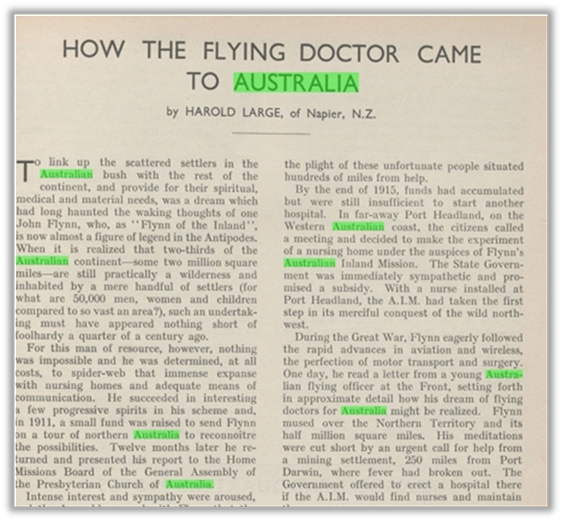
Early Days and Challenges of the AIM – Aerial Medical Service
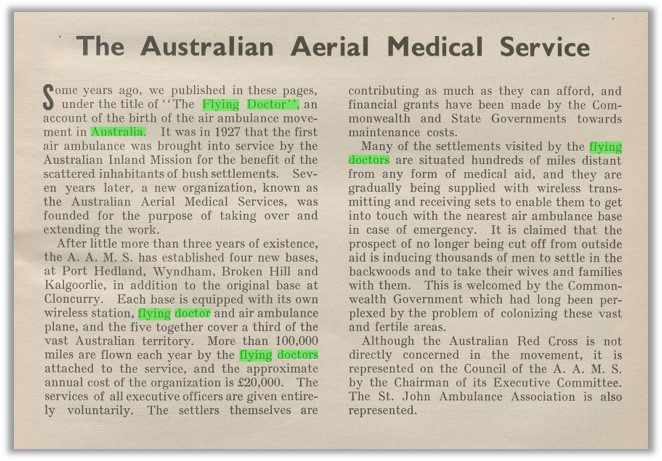
An article published in the League of Red Cross Societies Monthly Bulletin in 1938 describes the expansion of the service from its initial base in Clonclurry to four based in remote townships. The combined five bases now covered approximately a third of Australia with over 100,000 miles flown each year at an estimated annual cost of £20,000.
Other documents found across Gale Historical Newspapers during this period include articles about the importance of the establishment of the wireless radio bases. In 1933 the need for expansion from the initial base to cover more of the vast expanse of Australia is discussed along with the challenges caused by lack of funds and the impact of the Great Depression.
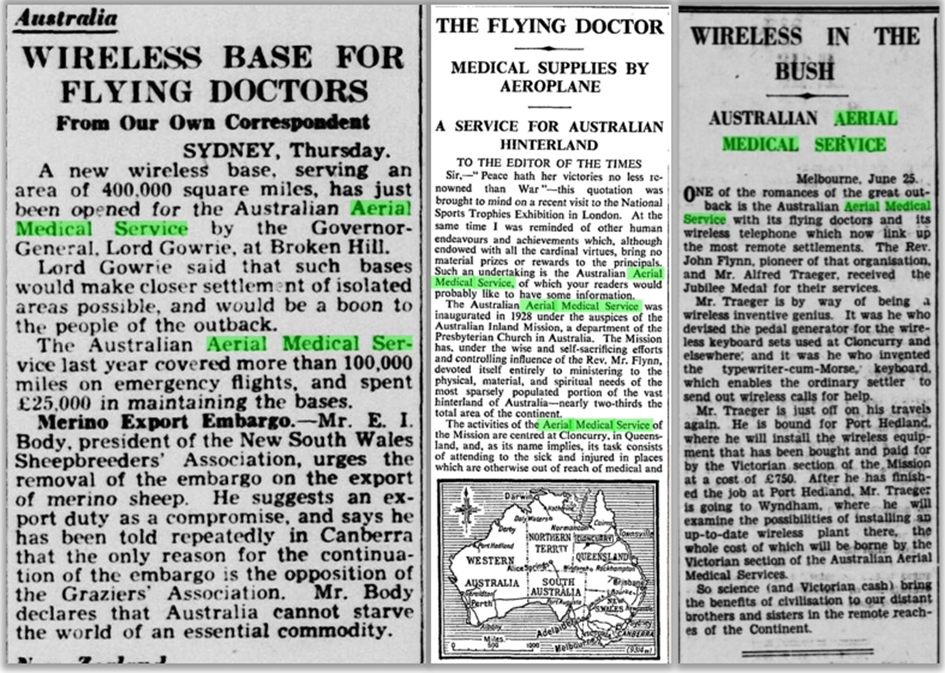
Reports on the flying doctor service appear in a wide range of publications from all over the world. An article in the Malay Mail from 1936 describes the importance of the bicycle pedal powered radio transmitters and the morse code symbol keyboard they utilised – there were over 30 pedal-operated sets in use at the time. The Nursing Times called the nursing sisters of the Australian Aerial Medical Service “the heroines of Australia”.

Further Expansion of the Royal Flying Doctor Service During the 1950-1960s
In the late 1950s the service expanded to 12 bases including new stations in Cairns in the far North of Queensland and Carnarvon in northwest Western Australia. Myanmar’s The Nation discusses the new bases and purchase of new aircraft to upgrade their service, as well as the involvement of the Federal Government in the running and funding of the service.

Margaret Baker was the Flying Doctor Service radio operator in Alice Springs and known as “The Voice of the Outback”. A 1963 interview in The Telegraph describes how she knew thousands of people from remote communities and visited them when they were in hospital. Margaret continued living in Alice Springs until her death in 2018 and made substantial contributions to the Northern Territory in the fields of tourism, hospitality, and heritage.

The Royal Flying Doctor in the Twenty-First Century
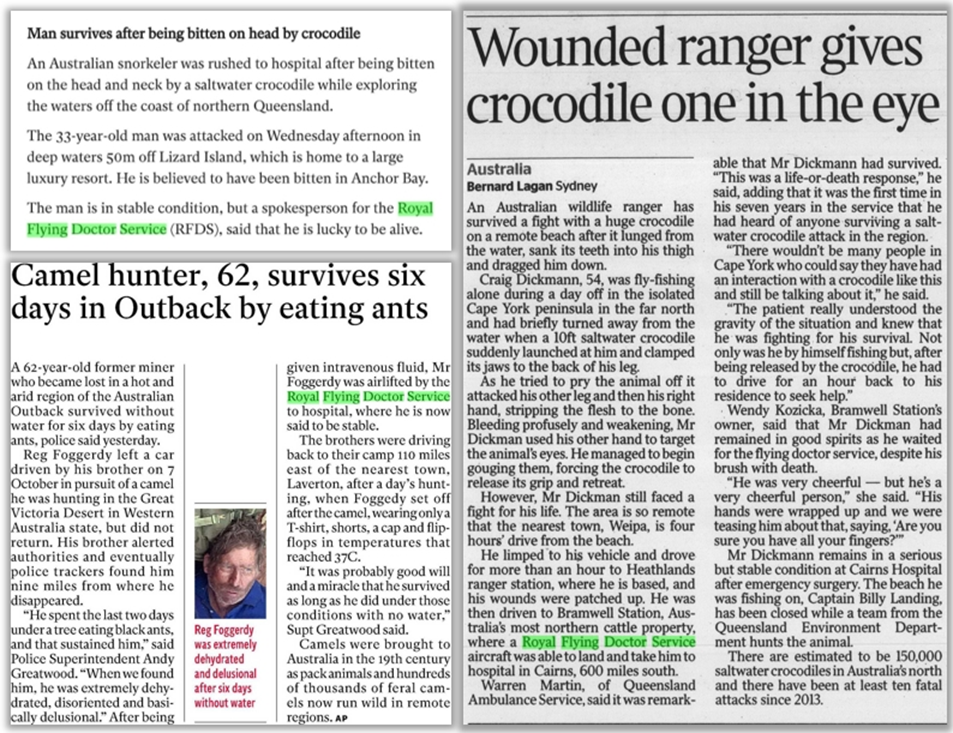
Australia and the Northern Territory are known for their dangerous wildlife, including the infamous crocodiles, however the RFDS stands ready to respond to any medical emergency. In 2019, The Times reported that Craig Dickman had been flyfishing at Cape York Peninsula in the most northern point of mainland Australia when he was attacked by a crocodile and narrowly escaped by gouging its eyes. Craig drove to a ranger station where his leg wound was patched up and he was transported by the RFDS to Cairns for life saving treatment.
In 2020 another man was bitten on the head by a 2-metre saltwater crocodile whilst snorkelling off Lizard Island, again in North Queensland. He was saved by the RFDS and transported to Cairns Base Hospital for further treatment as reported by The Independent.
In an even stranger story, Reg Foggerdy was found by local indigenous trackers in the Great Victoria Desert extremely dehydrated after six days without water and having only eaten black ants. The RFDS gave life-saving intravenous fluids and transported him to the nearest hospital in Kalgoorlie for treatment.
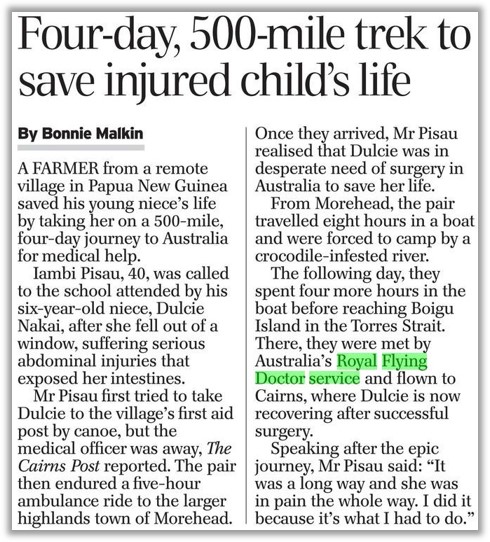
The RFDS has also helped other Pacific communities in times of need. In 2009 a young girl from Papua New Guinea was in desperate need of emergency medical treatment. Her journey began with a five-hour ambulance ride, followed by two boat trips totaling 12 hours, before arriving in the Torres Strait Islands where she was met by the RFDS and flown onto Cairns Base Hospital for life-saving surgery.
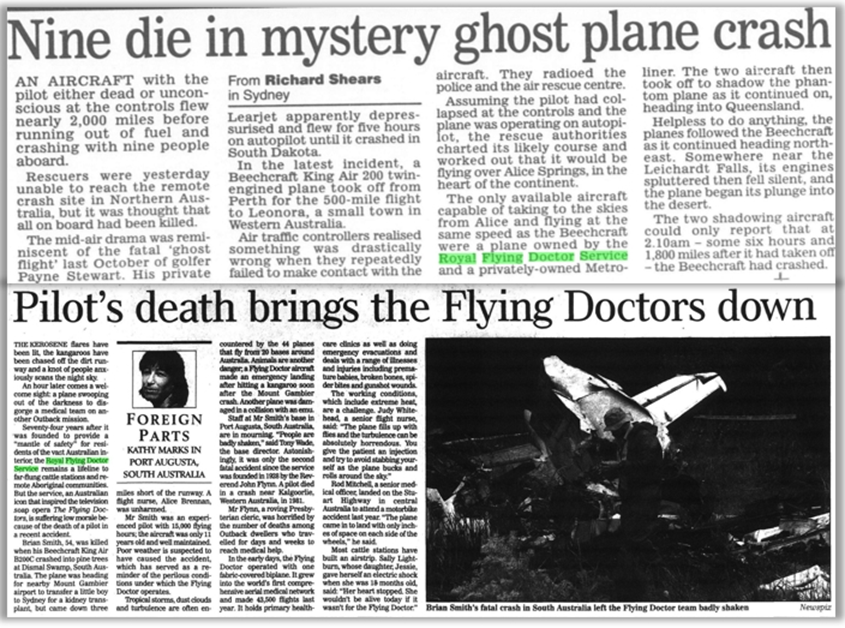
Sadly there are some tragic stories despite the best efforts of the RFDS. In 2000 nine people died in a plane crash after the pilot lost consciousness. The RFDS along with another plane based in Alice Springs took off and shadowed the aircraft but were helpless to intervene.
The RFDS also lost one of their own pilots, Brian Smith, who was killed after crashing his RFDS plane between Port Augusta and Mount Gambier in South Australia en route to collect a little boy for a kidney transplant. Miraculously, the flight nurse, Alice Brennan, survived unharmed.
What is the Legacy of John Flynn?
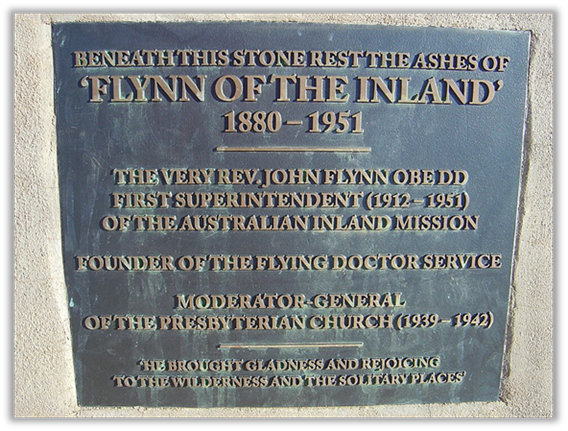
John Flynn died in 1951 and in recognition of his outstanding service to Australia he has suburbs named after him in Canberra and Alice Springs, a Uniting Church, and a private hospital. He also features on the Australian twenty-dollar note. As stated on his memorial plaque “He brought gladness and rejoicing to the wilderness and the solitary places” and was known as “Flynn of the Inland”.
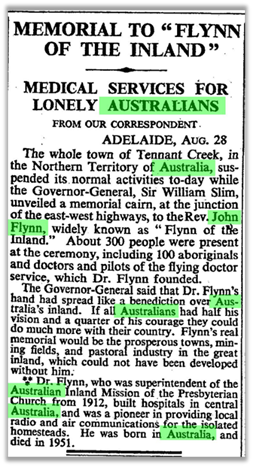
According to their website, today the Royal Flying Doctor Service has a fleet of 87 aircraft, 23 aero bases, treats over 900 patients around Australia daily, has transported over 33,000 patients by aeromedical aircraft, and flown over 27,000,000 kilometres. After nearly 100 years they continue to provide an essential lifesaving service for rural and remote Australians.
Conclusion
Gale Primary Sources archives are important resources for researching Australian history including the Royal Flying Doctor Service. The Gale Primary Sources platform is the perfect place to cross-search and examine these resources to research some of the pioneers that helped shape Australia, and discover the inspiring stories of how their work has influenced people’s lives across Australia and the wider world.
If you enjoyed reading about the Royal Flying Doctor Service, you may like to read the following posts:
- Australia’s 183-Year Search for its own Anthem
- China and Australia: Trade, Migration, and Politics in the Nineteenth to Early Twentieth Centuries
- Humanity and Courage: Refugees and the Memory of Those Who Saved Them
Blog post cover image citation:
A collage of images from various Gale Primary Sources archives