│By Phil Virta, Senior Acquisitions Editor, Gale Primary Sources│
Douglas MacArthur was an American military commander whose career spanned World War I, World War II, and the Korean War. One of the few U.S. military leaders to achieve a five-star rank, MacArthur was described by admirers as heroic and patriotic, while critics considered him to be overly ambitious and narcissistic.
The archive Asia in the Twentieth Century: General MacArthur and War, Occupation, and Reconstruction in the Pacific, 1941-1972 is about more than just MacArthur, but his figure permeates the sources. His leadership shaped the Pacific War, the rebuilding of Japan, the course of the Korean War, and U.S. policy across Asia.
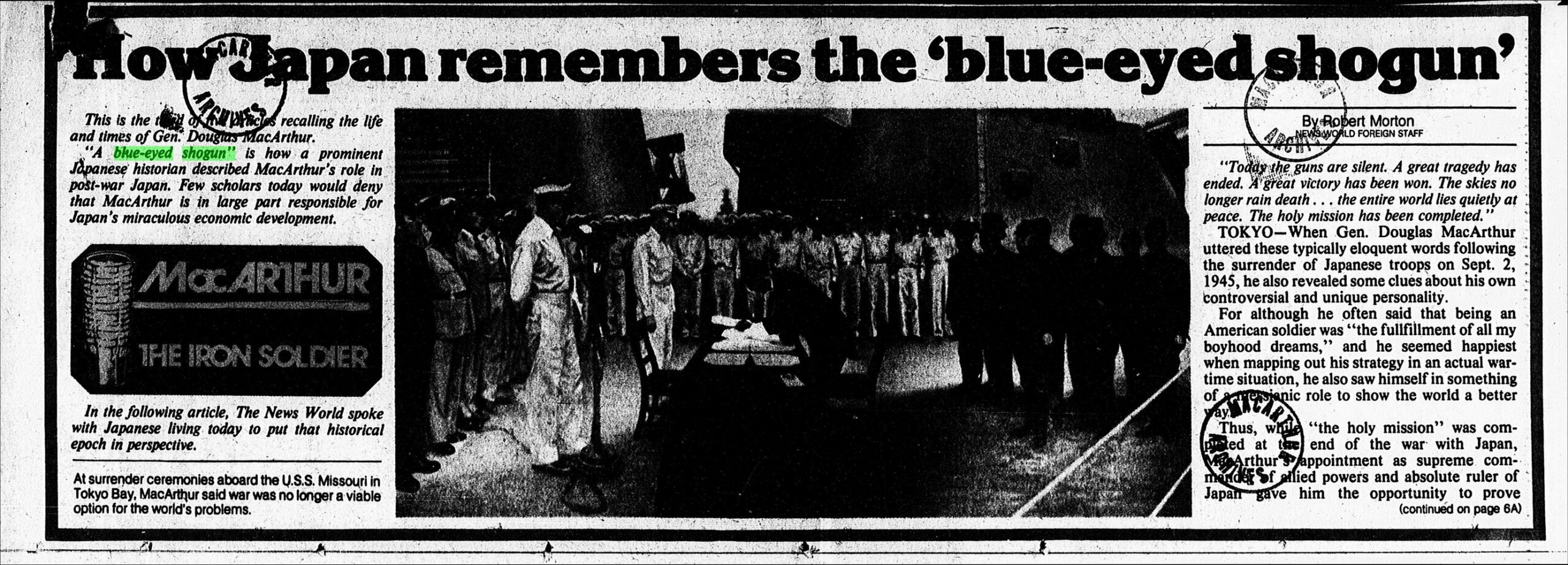
MacArthur’s legacy is deeply rooted in twentieth-century Japanese and South Korean history. During the occupation, many in Japan described him as “the Blue-Eyed Shogun”, with some considering him largely responsible for Japan’s development into a global economic powerhouse.
He is also regarded in South Korea. On September 29, 1950, as the South Korean government returned to Seoul, President Syngman Rhee told him, “We love you as the saviour of our race.” Yet not all in Japan or Korea welcomed U.S. occupation or the long term American military presence.
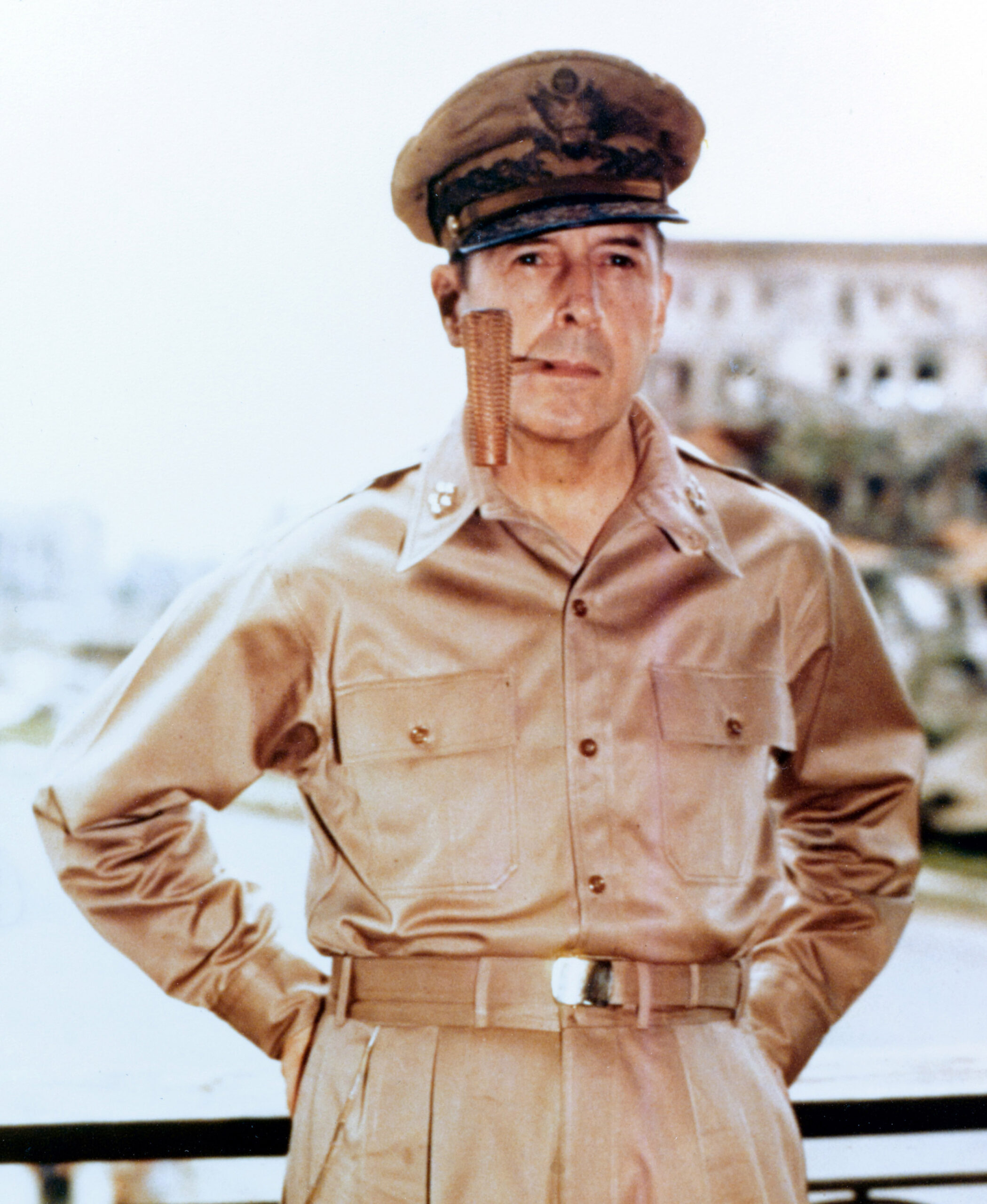
In the spirit of understanding Douglas MacArthur, his place in history, and his presence in Asia in the Twentieth Century, following is a brief biography illustrated by some documents from the archive.
Early Life and Career
Douglas MacArthur was born in Little Rock, Arkansas, on January 26, 1880, to Captain (later Lieutenant General) Arthur MacArthur and Mary Pinkney Hardy MacArthur of Norfolk, Virginia. Douglas was the youngest of three sons.
MacArthur grew up on military posts throughout the United States. In 1899 he was appointed to the U.S. Military Academy, where he graduated first in his class and served as the highest ranking cadet. Commissioned into the Corps of Engineers in 1903, he began his career in the Philippines, where Filipino insurrectionists gave him his first experience with combat. Between 1903 and 1914 he held engineering posts in the U.S. and abroad, with one notable exception: a yearlong tour of the Far East as aide to his father.
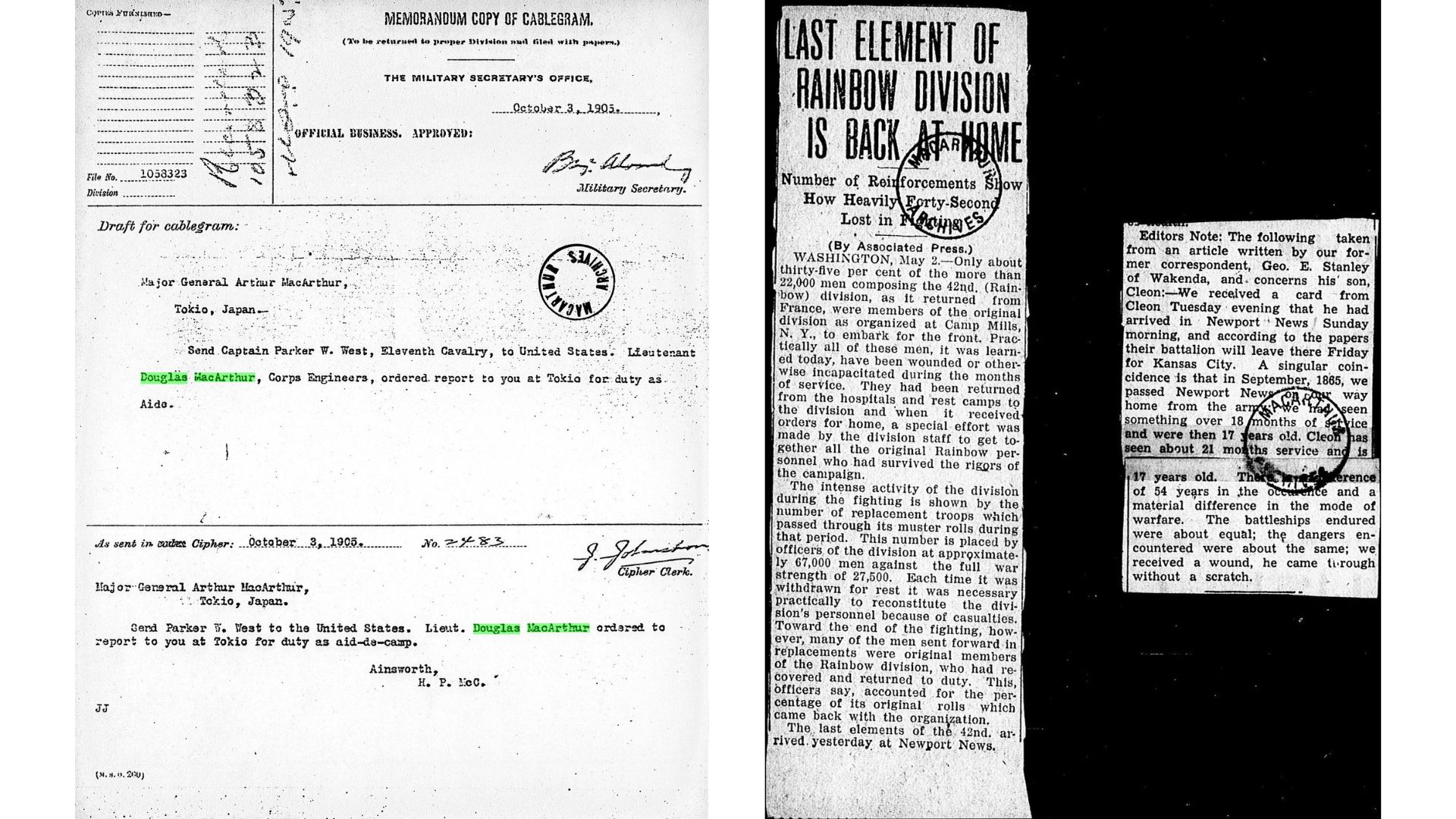
(Right) United States Army 42nd Infantry Division, 83rd Brigade World War I–Photographs–Personal Narratives. 1914-1918. MS Documents Donated by the General Public Box 27, Folder 5-7. MacArthur Memorial Archive and Library. Asia in the Twentieth Century, https://link.gale.com/apps/doc/KVBKXU644715406/AITC?u=virta&sid=bookmark-AITC&xid=597c696e&pg=20.
MacArthur held many positions leading up to World War II, including joining the 42d Infantry Division in 1917, serving as divisional chief of staff, brigade commander, and briefly division commander, when he also distinguished himself in France and Germany. He then became a brigadier general in the National Army, followed by becoming superintendent of the U.S. Military Academy. From 1922 to 1930 he served two tours of duty in the Philippines, as well as in various cities in the United States, and in 1930, President Herbert Hoover appointed Douglas MacArthur Chief of Staff, U.S. Army.
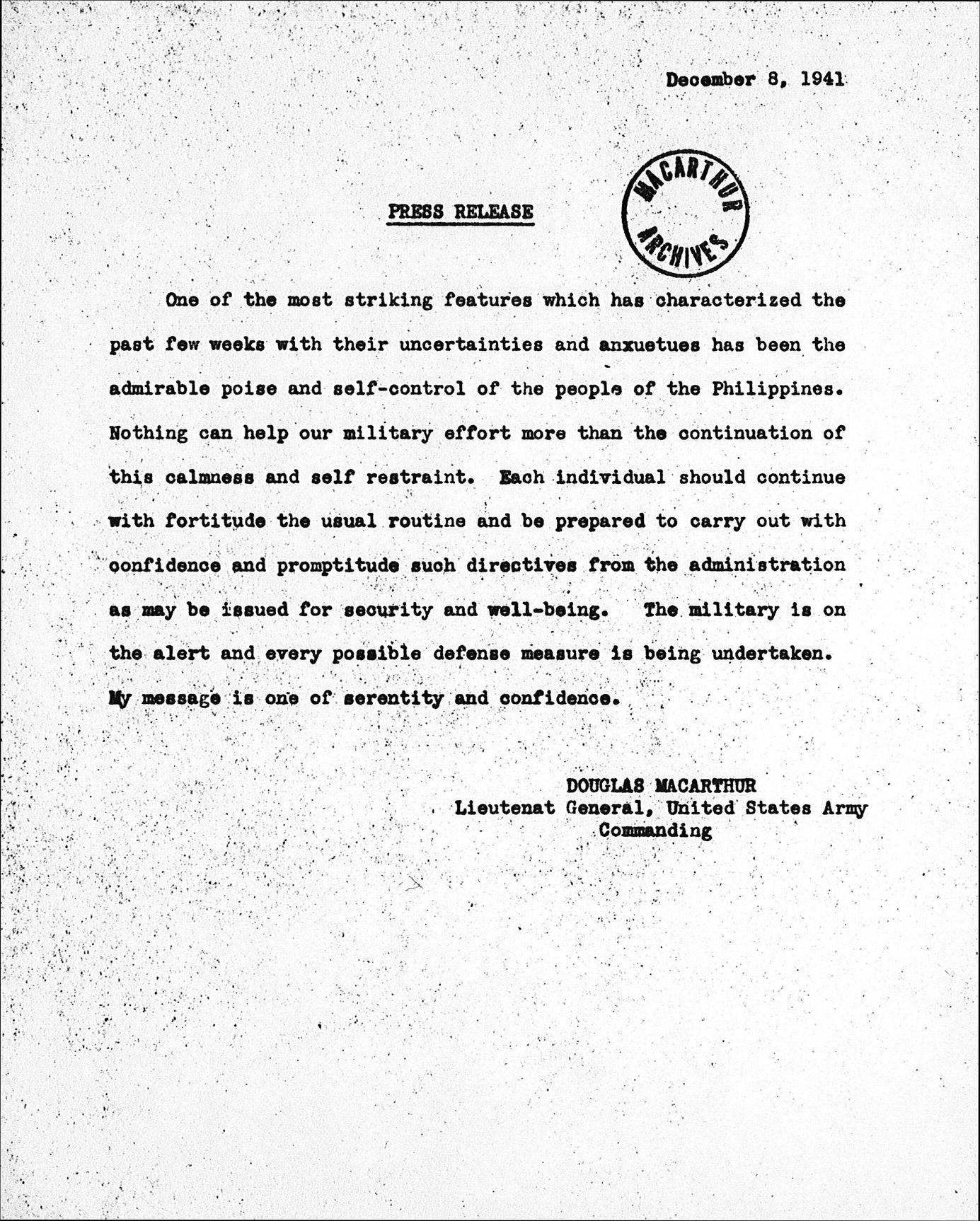
President Franklin D. Roosevelt retained him in this post until the fall of 1935, when MacArthur returned to the Philippines as military advisor to the newly established Philippine Commonwealth. MacArthur’s principal task was to organise and train a Philippine army. Although he retired from the U.S. Army at the end of 1937, General MacArthur remained military advisor to the Philippine Commonwealth and was named field marshal of its army.
World War II
Due to the spread of the war in Europe and the accelerating Japanese expansion in the Far East, the U.S. Army Forces, Far East were created. Roosevelt recalled MacArthur to active duty to command them and ordered the Philippine Army into service alongside U.S. troops. Despite significant strengthening of air power, MacArthur’s forces were unable to stop Japan’s massive assault beginning December 8, 1941. American and Filipino troops fell back to Bataan and Corregidor, halting the Japanese long enough to gain international admiration but without hope of reinforcement.
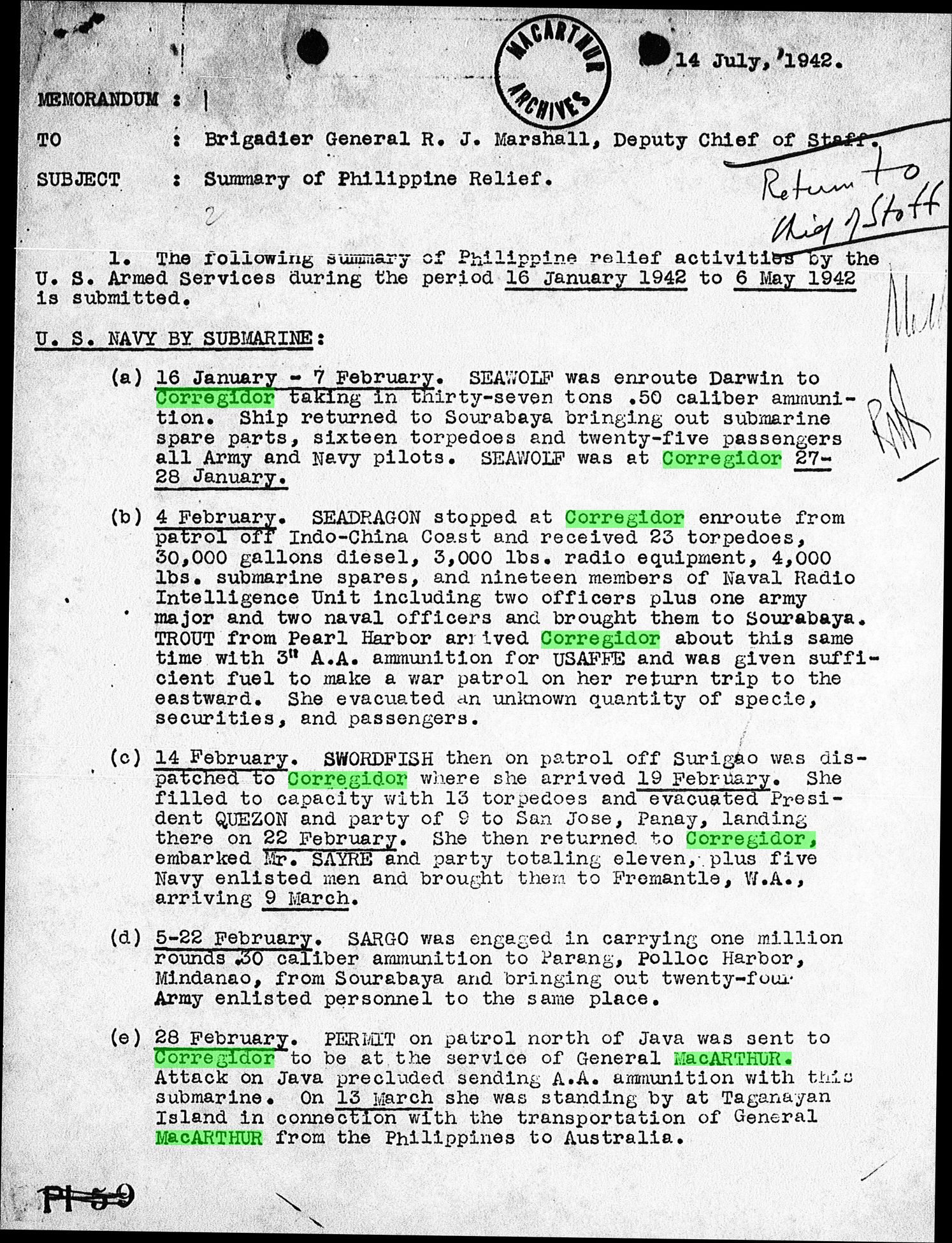
On February 23, 1942, President Roosevelt ordered General MacArthur to leave the Philippines and to proceed to Australia. The General, his family, and a nucleus staff left Corregidor in a torpedo boat. For his dogged, brave defence of the Philippines, MacArthur was awarded the Congressional Medal of Honor; almost eighty years after his father had won the medal for his bravery on Missionary Ridge, Chattanooga.
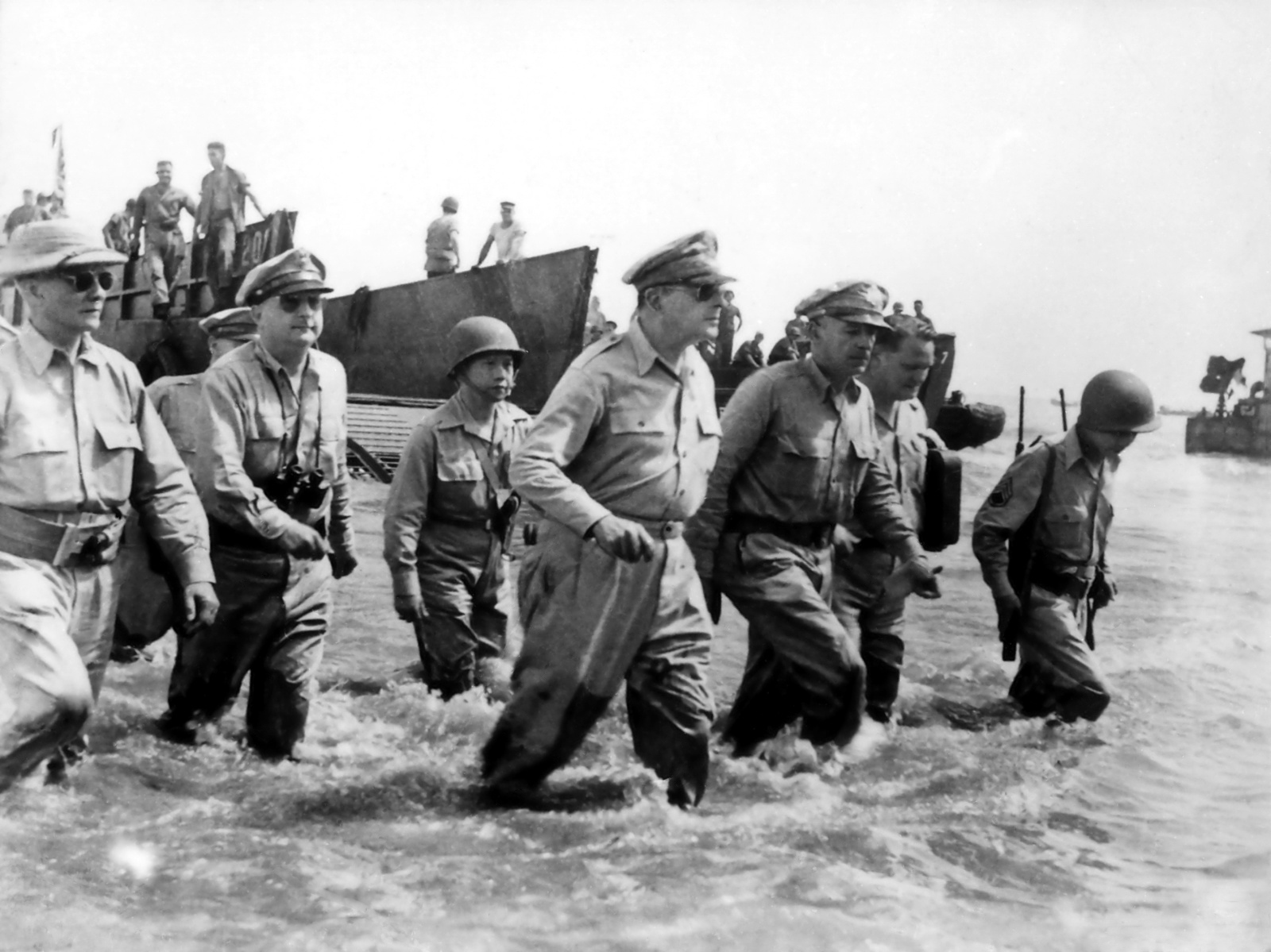
From 1942 to 1944, MacArthur led the Southwest Pacific Area through New Guinea, New Britain, the Bismarcks, and Morotai, culminating in the landing at Leyte in October 1944. In January 1945 he landed at Lingayen Gulf and advanced on Manila.
Occupation of Japan
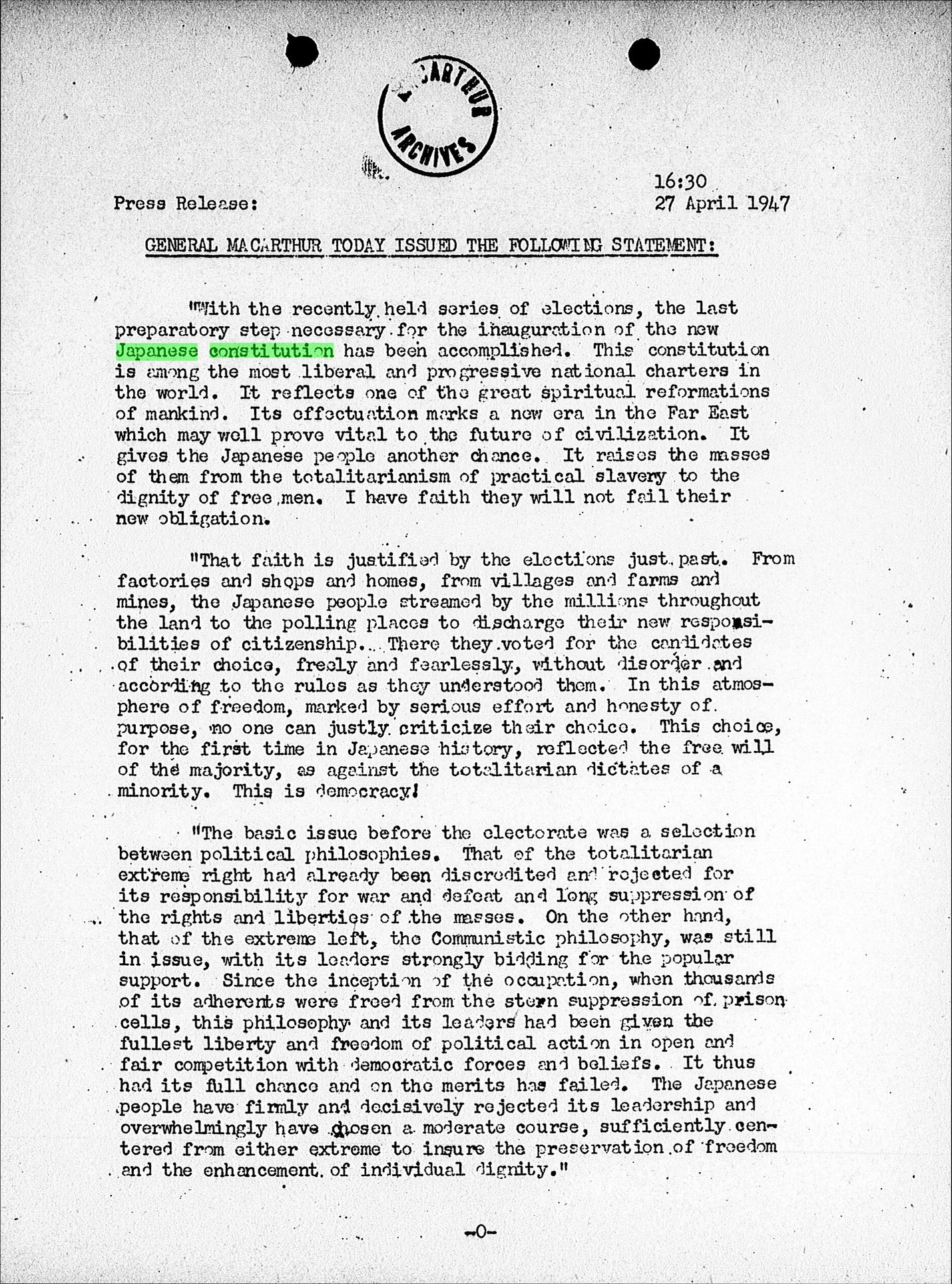
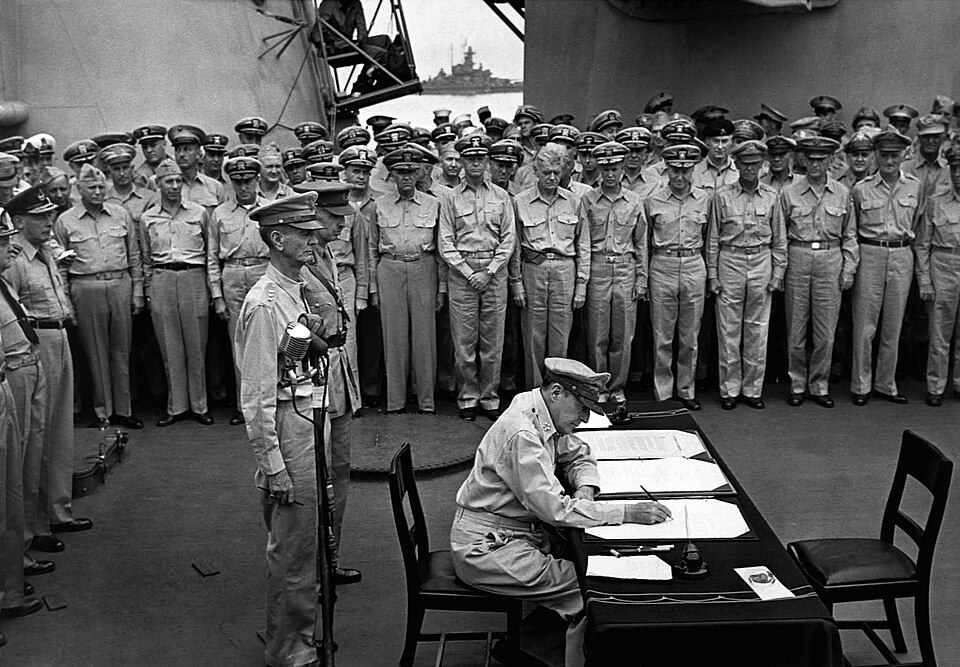
With the surrender of the Japanese on September 2, 1945, General MacArthur assumed his authority as Supreme Commander for the Allied Powers (SCAP). Unlike historical occupation commanders, MacArthur took a benevolent approach toward the Japanese and personally oversaw the rebuilding and democratisation of Japan. An early equitable peace treaty with Japan was a major goal. A new constitution, a radical departure from Japan’s prewar constitution, was readied in months.
New laws resulted in the first universal suffrage election in early 1946. And, even today, the reforms in land holding are still in effect. Trade and manufacture were fostered, education and local government reforms were instituted, and freedom of the press and the right to form and belong to trade unions were established.
The Korean War
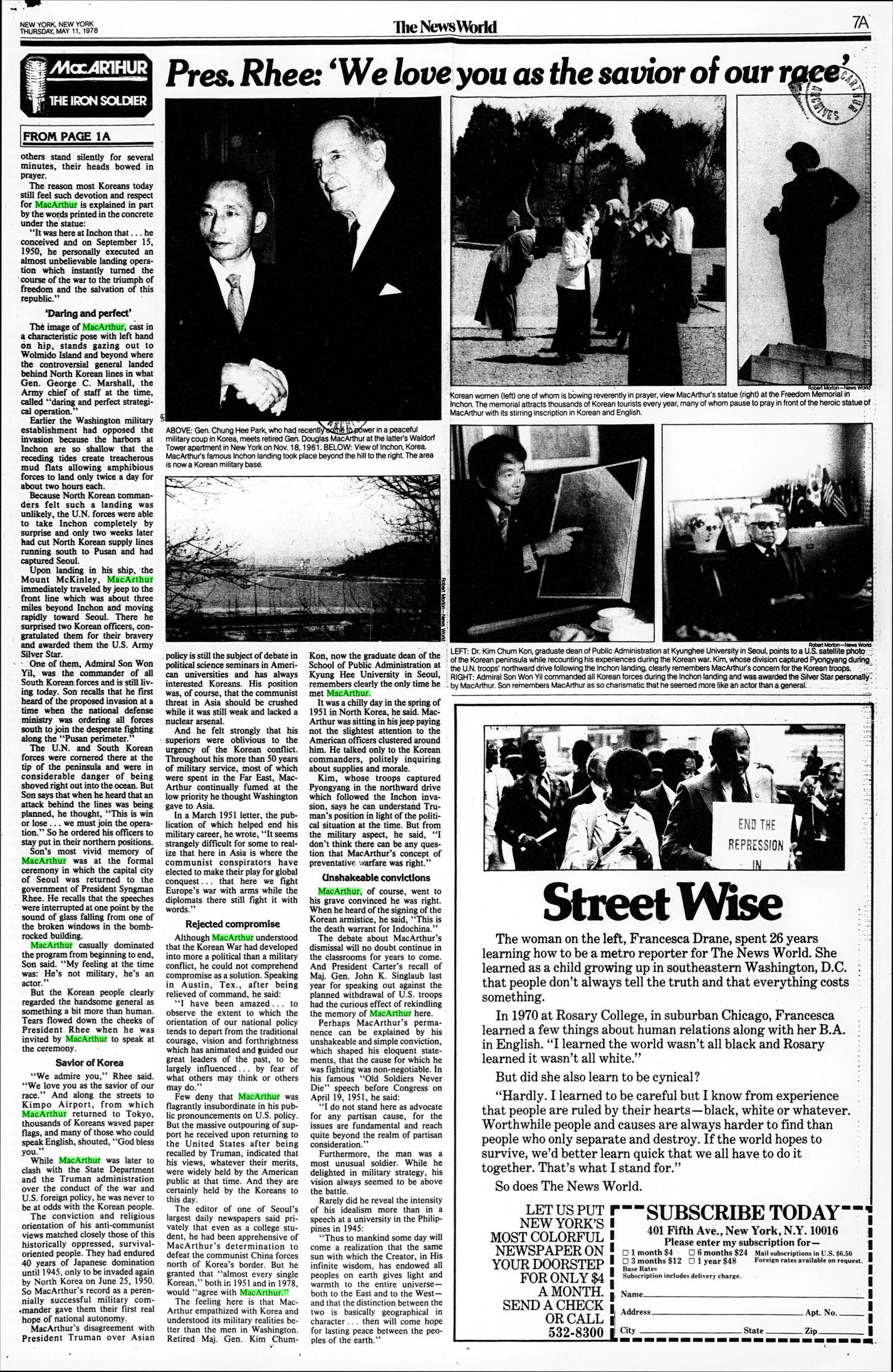
In June 1950, with the North Korean invasion of the Republic of Korea, General MacArthur was directed to assist the South Koreans with his resources, including ground forces. Named commander in chief, United Nations Command, in July, MacArthur directed the naval, air, and ground forces of the United States, South Korea, and the United Nations in stopping and turning back the Communist invaders. On September 15, 1950, the General personally directed U.N. forces in a daring amphibious attack at Inchon. This assault on the North Korean rear neutralised the Communist positions in South Korea so that U.N. forces were able to move quickly into North Korea and to the Manchurian border.
Although some Chinese Communists had been located in North Korea as early as late October, it was not until almost the end of November that massed Chinese “volunteers” openly intervened in the Korean War. MacArthur retained control of sea and air, but the massive Chinese ground forces could not be held back by the United Nations. A withdrawal commenced that gave up all North Korea and a portion of the Republic of Korea. By late March 1951, U.N. troops again pushed across the 38th parallel north of Seoul, South Korea’s capital.
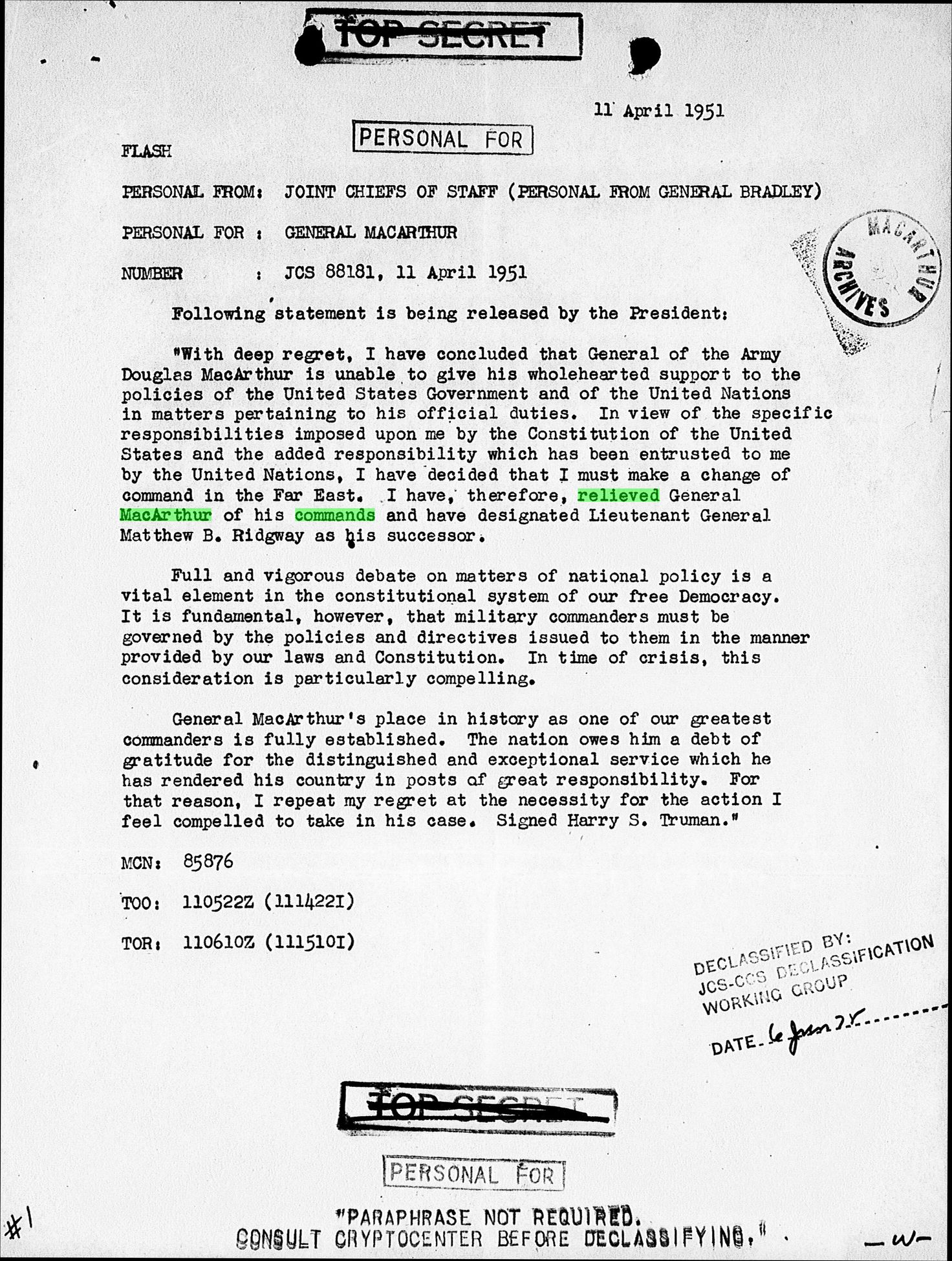
On April 11, 1951, President Truman, because of policy differences with General MacArthur, relieved him of his commands. MacArthur returned to the United States to a hero’s welcome. In a famous speech, he addressed a joint session of Congress, outlining his views concerning world conditions.
Later Years
MacArthur never again held military command but remained a public figure. He toured the United States, appeared before a congressional investigative committee, and delivered the keynote at the 1952 Republican National Convention, and later became chairman of the board of Remington Rand. In 1961 he took a sentimental tour of the Philippines and in 1962 gave his final address to the cadets at West Point. From 1962 to 1964 he wrote and published his Reminiscences.
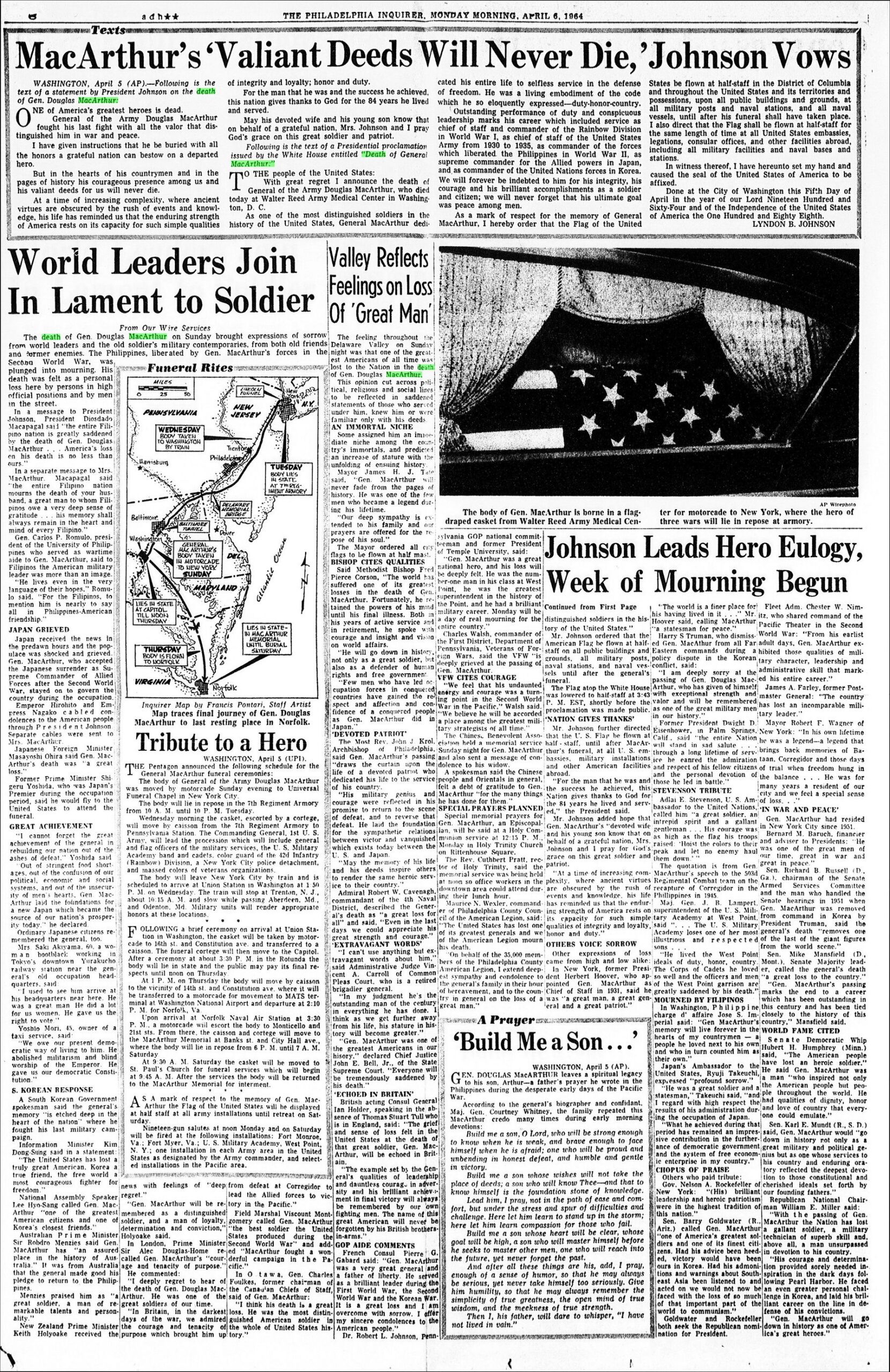
Douglas MacArthur died on April 5, 1964, at Walter Reed Army Hospital. After lying in state in New York and Washington, he was buried in the MacArthur Memorial in Norfolk, Virginia.
Special Thanks: The creation of the archive Asia in the Twentieth Century and much of the information in this blog post were the result of the hard work, research, and dedication of former Gale Associate Editor Lindsay Whitaker-Guest.
If you enjoyed reading about General MacArthur, check out these posts:
- Decolonisation in the British Empire in Asia: The Malayan Emergency and Singapore
- A Moment of Anguish: Revisiting the Separation of Singapore from the Federation of Malaysia Through British Library Newspapers
- China in Print: Two Centuries of English-Language Reporting, 1827-1974
Blog post cover image citation: General Douglas MacArthur signs as Supreme Allied Commander during formal surrender ceremonies on the USS MISSOURI in Tokyo Bay. Behind General MacArthur are Lieutenant General Jonathan Wainwright and Lieutenant General A. E. Percival. 2 September 1945. United States Navy, Public domain, via Wikimedia Commons.