
│By Chris Houghton, Head of Academic Partnerships│
This blog post discusses why it’s so important to provide additional value to universities at a time of unprecedented upheaval through professional development events like Hacking History workshops. It also reflects on the evolution of these events and the success of the third Hacking History event which recently took place at Coventry University.
Humanities Under Pressure
Academics have rarely been under such pressure in the UK. Shrinking funding, redundancies, career precarity, social and governmental pressure, AI, reduced budgets: the list of headwinds can feel endless. In the humanities, sometimes struggling to articulate their place in a rapidly shifting world, things can feel particularly dire.
In such a climate, it is increasingly important that publishers offer their customers something more than a sales pitch, and build long-term, mutually beneficial relationships. Fortunately, most people working at academia-orbiting companies are also hugely passionate about the value of education and keen to see universities succeed. Focusing on activities that are not immediately profit-generating can be mutually beneficial to both universities and publishers.
Providing Value Beyond the Product
Eight years ago, Gale developed Gale Digital Scholar Lab – a first of its kind integrated text and data mining platform for analysing digitised historical primary documents. There was, and continues to be, huge interest in the Lab. It meets the current moment in which universities are focusing on teaching skills and digital literacies to students, and provides an AI-resistant teaching method for instructors.
Finding the confidence and time to independently learn new ways of research or teaching, however, is difficult. In response, Gale ran its first hackathon in Chicago a year ago, offering academics, library staff, instructors and PhD students the chance to develop valuable digital research skills in a fun, collaborative environment. There was huge enthusiasm from attendees at the Chicago event, which only grew with the second hackathon run in partnership with the University of Oxford.
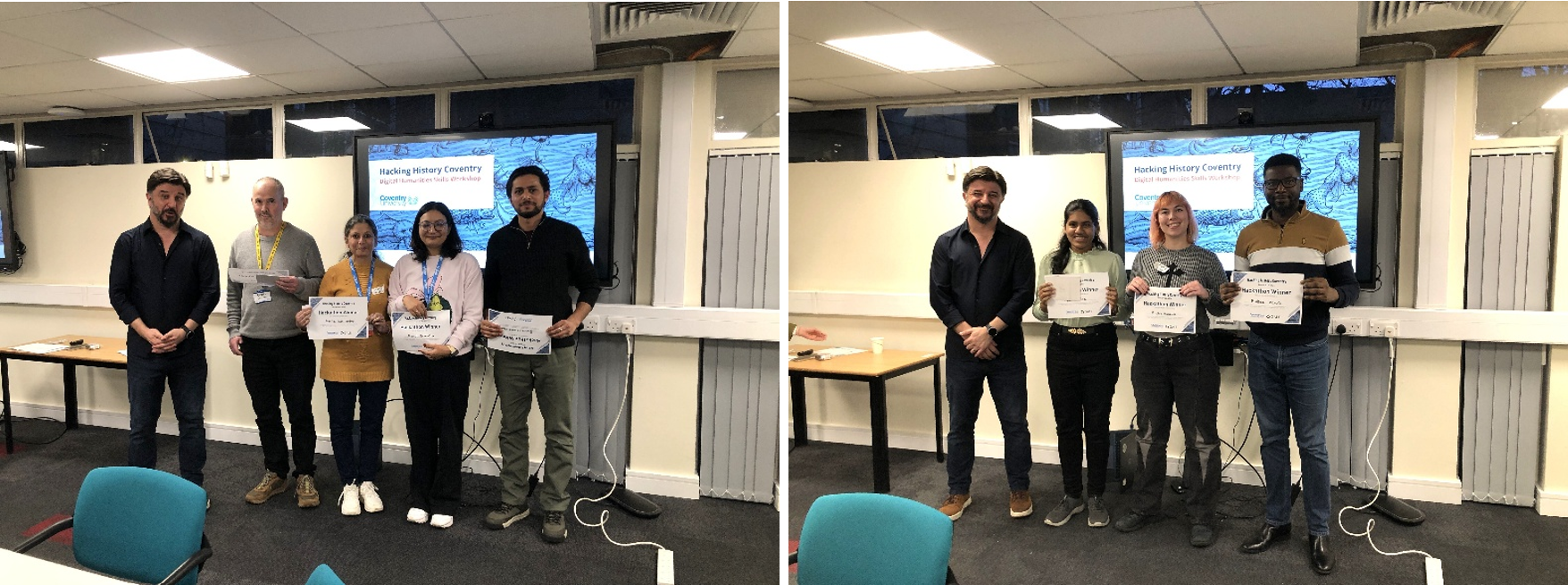
At every hackathon, we inject an element of competition and invite judges to choose winners from the projects developed on the day. So enthused were the judges at the Oxford event, they asked if we could run a hackathon at their institution, Coventry University.
Evolving Hacking History
As always, we first sought to reflect on previous hackathons, aiming to make the next one better. As a result, at the most recent hackathon in Coventry we decided to provide more scaffolding and structure so that attendees – many of whom were exploring these research techniques for the first time – had a clearer idea of what was required, and could better plan their projects.
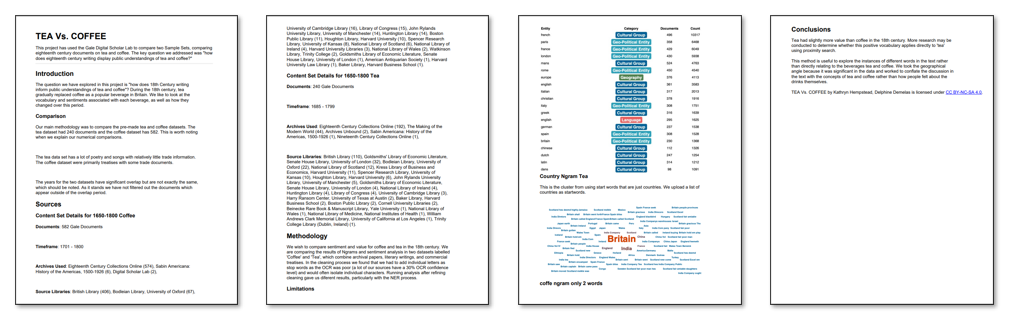
As well as this, to help participants look to the end goal, one of the first things we did was present an idea of the kind of project we were looking for teams to develop. In this, we were massively helped by the Gale Research Showcase, a repository of early-career research developed using the Lab. Pointing attendees to the Showcase and showing them examples of previous hackathon projects helped focus minds from the very start.
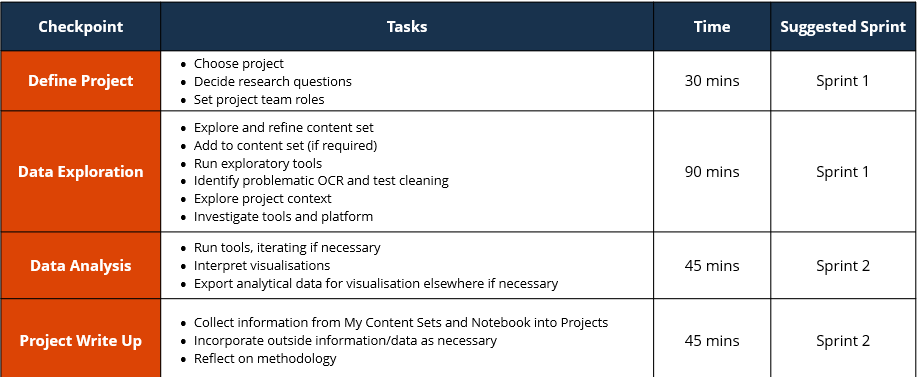
From the beginning, we used hackathon ‘sprints’ – discreet periods of time where teams work on their project. At Hacking History Coventry, we added ‘checkpoints’ to provide further structure for attendees, the majority of whom had never attended a hackathon before.
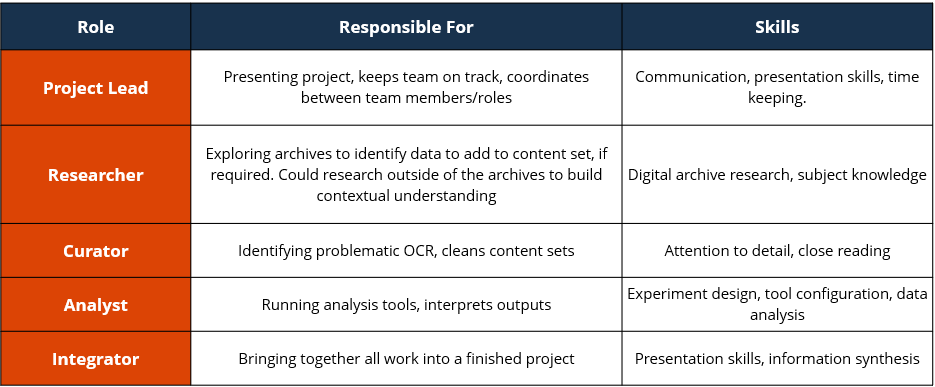
Another issue we identified in previous events was teams all clustering round one laptop. If groups delegate roles, they can cover more ground and develop better projects, so we introduced Project Roles and asked participants to consider which group members would undertake which tasks.
“A Great Learning Experience”
Hacking History Coventry was an exceptional event, but don’t take my word for it. Feedback from attendees was excellent, with just a sample below:
“Such a useful, in-depth exposure to these tools”;
“a great learning experience”;
“most valuable for my PhD project”;
“the [training] video that was shared was awesome”;
“a great way to learn to use these tools”;
“the collaborative features..[are] amazing and resource integrating capabilities equally good”
Plus, no attendee rated the day below an 8/10 on either the format or whether they felt they had gained valuable skills.
Excellent Projects Produced
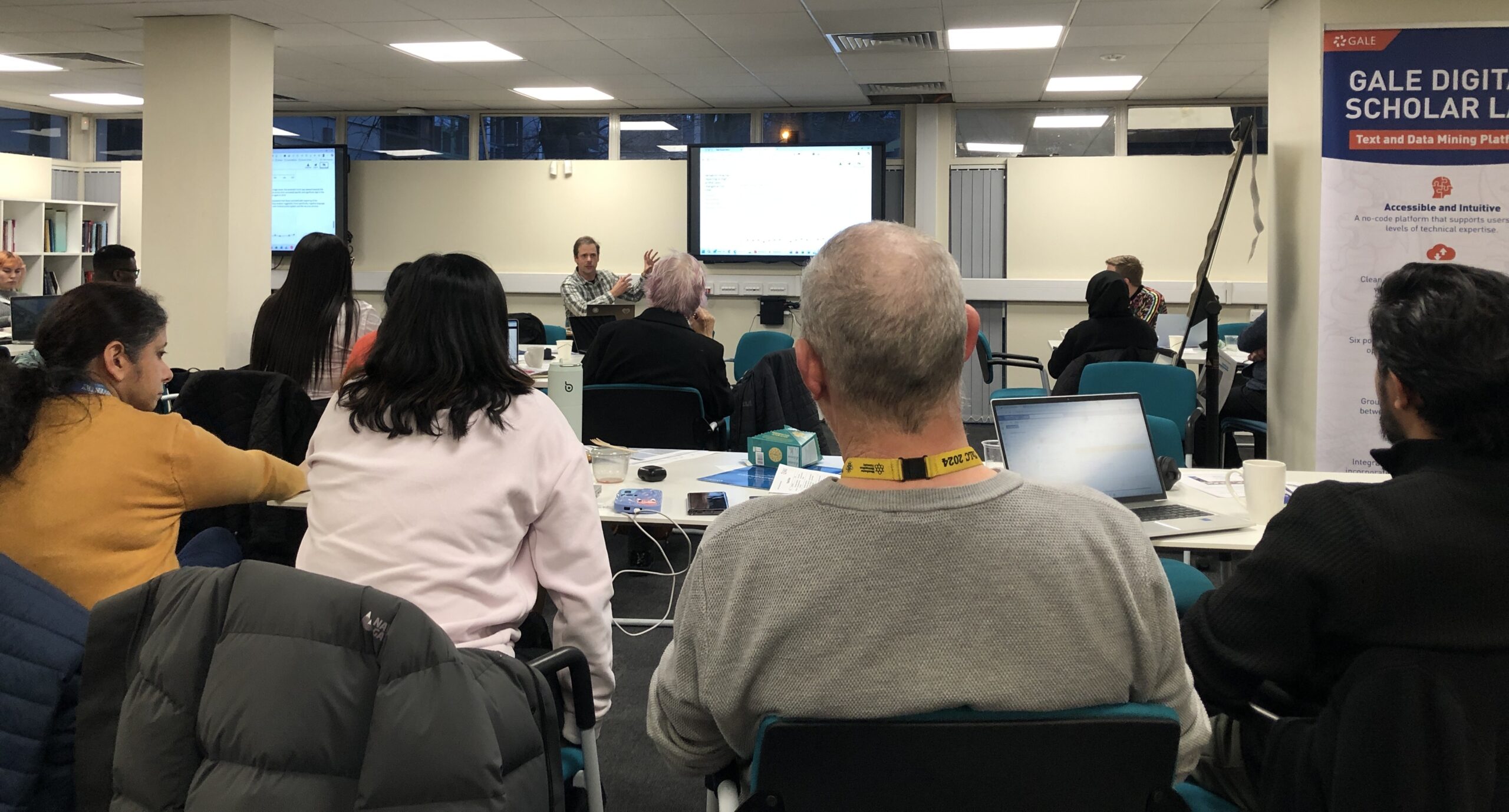
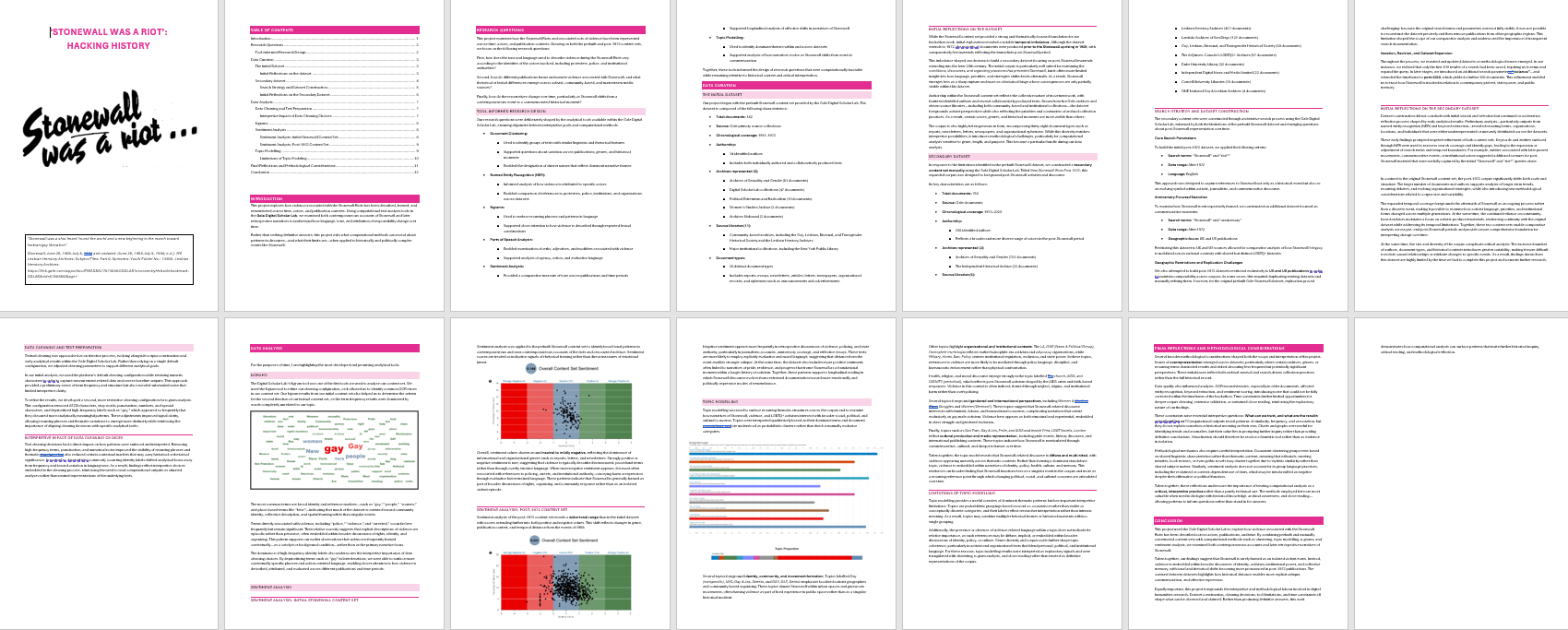
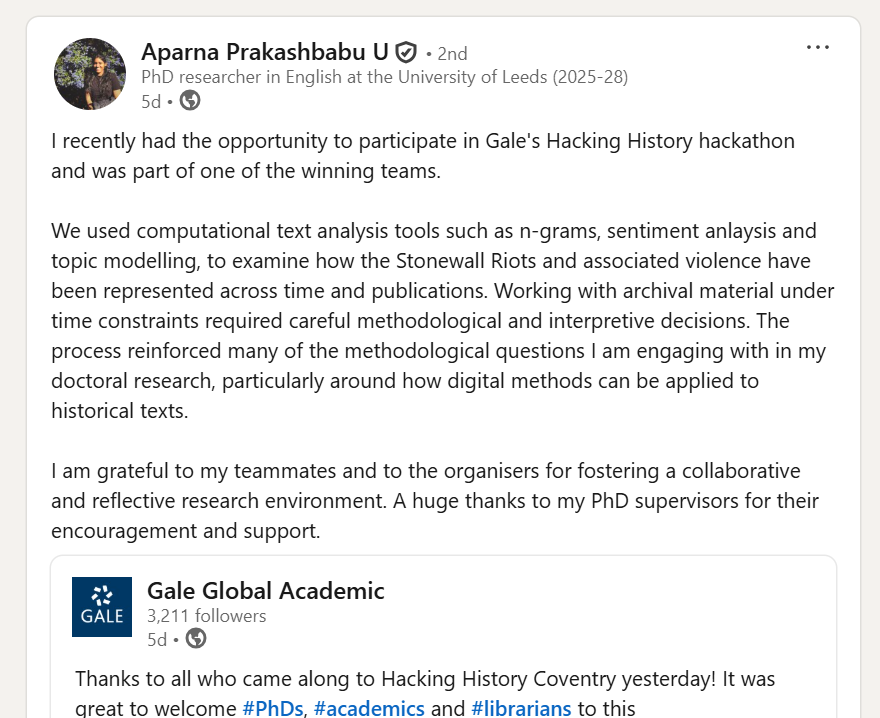
The quality of the projects produced was also impressive – all will be published on the Gale Research Showcase because they were so good! Every group selected a different topic and their projects were detailed, interesting and full of important reflections on their methodology. What makes this more remarkable is that the majority of attendees described themselves as beginners in digital humanities prior to the day.
Events of Great Value
Running Hacking History events is a privilege. We get to work with incredibly talented, committed university partners and meet fantastic researchers and librarians keen to develop their digital skills. Watching attendees brand new to digital humanities build a project from scratch in a day is so satisfying.
Hearing from our partners and the attendees that these events genuinely provide great value for them reinforces why we will continue to deliver these events. With universities facing more challenges than at any time in living memory, it’s vital we all step up and support them in whatever way we can.
If you enjoyed reading about Hacking History Coventry, check out these posts, or the blog post series ‘Notes from our DH Correspondents’:
- Learning from the Ground Up – Hacking History in Oxford with Gale Digital Scholar Lab
- Hacking History with Gale Digital Scholar Lab
- A New Course in Gale Digital Scholar Lab: Introduction to Digital Humanities