
│By Clem Delany, Acquisitions Editor, Gale Primary Sources│
December 2025 will see the launch of a new digital archive, Global Politics and US Foreign Policy: The Council on Foreign Relations, 1918–2000.
This is the digitisation of material from the Studies Department, Records of Groups, and the Records of Meetings of the Council on Foreign Relations, a non-partisan, independent US think tank focused on the international relations of the United States and its role in the world.
This role, and public perceptions of it, has altered greatly throughout the twentieth century, from the isolationist principles of the 1920s and 30s, to the American engagement in WWII and subsequent support in Allied recovery processes, to the Cold War, global anti-communist fears, and the growth of American soft power. In 2025, many of the programs of the United States Agency for International Development (established in 1961 and a key tool of US soft power) were shut down and a new phase of US international relations began.
What’s in the Archive?
Global Politics and US Foreign Policy: The Council on Foreign Relations, 1918–2000 provides discussion, debate, and context on every facet of twentieth-century US foreign affairs (‘Foreign Affairs’ being the title of the Council’s own publication), gathering experts from many fields including military leaders, diplomats, journalists, economists, industrialists, and more. World leaders, ambassadors, and international statesmen make frequent appearances in these files, including Jimmy Carter, Dick Cheney, Margaret Thatcher, Zbigniew Brzeziński, U Thant, Nelson Mandela, and Mikhail Gorbachev.
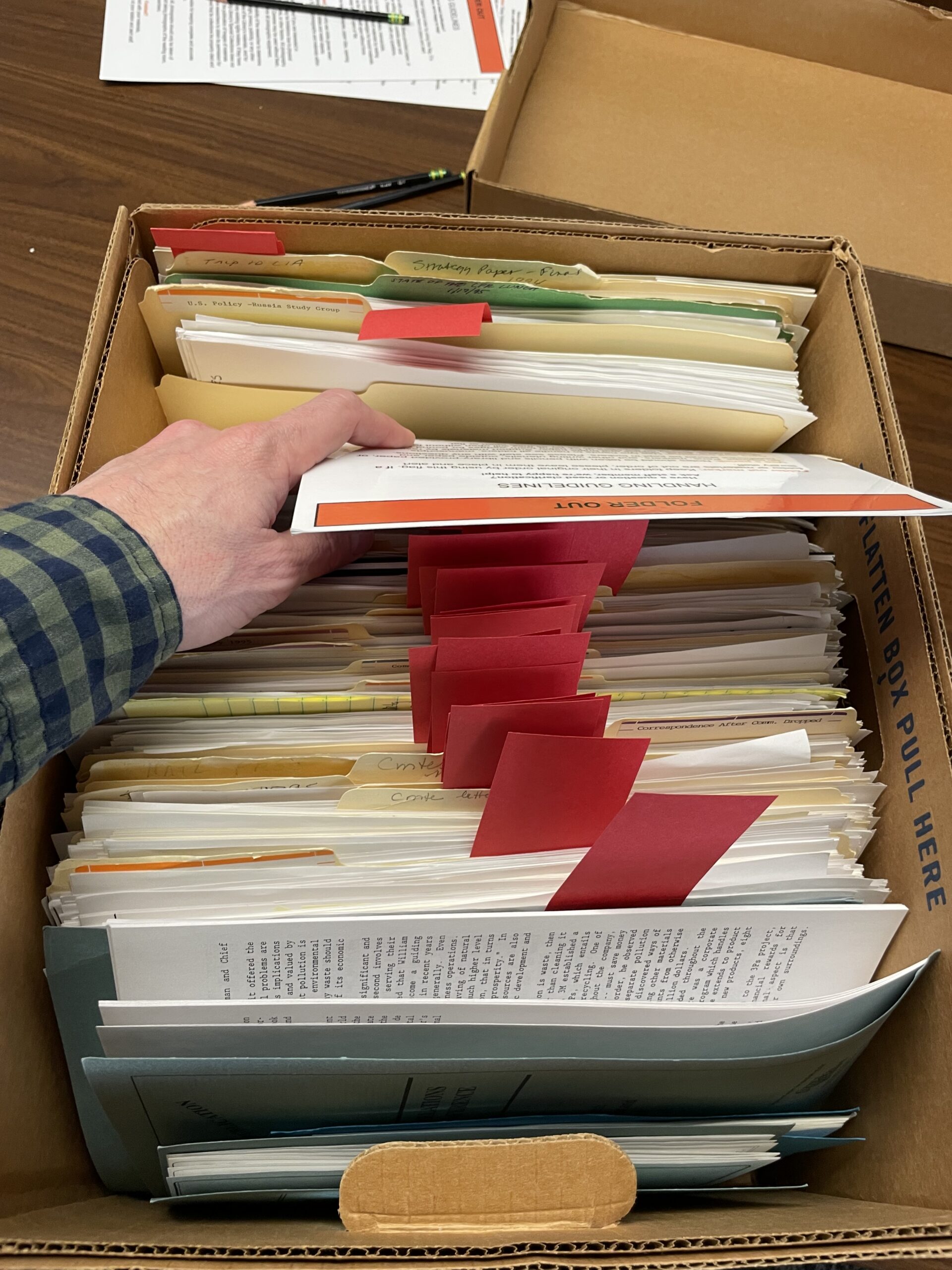
Consisting of around 450,000 pages of material, imaged directly from the original documents held at Princeton University Library, this collection runs from the establishment of the Council in the wake of the 1919 Paris Peace Conference to the era of the Yugoslav Wars and globalisation.
In 1919, there was a perceived need, among certain British and American diplomats, for an organisation focused on international affairs and foreign policy decisions around the world. Originally looking at the creation of a joint transatlantic organisation, they ultimately developed two separate groups – the Council on Foreign Affairs in the US and the Royal Institute of International Affairs, or Chatham House as it is more commonly known, in the UK, whose digitised archive can also be explored on the Gale platform.
An early Anglophile element to the Council, and a strong belief that US prosperity was intrinsically connected to the global context, colours the earlier part of this archive, on topics such as the US entry into and role in the Second World War. In particular, the War and Peace study group at the Council was important in this and in the pursuit of positioning the US as the dominant post-war global power, themes which can be explored in the Studies Department, William Diebold Papers on the War and Peace Studies Group collection in the archive.

From its inception, the Council held wide interests – early study group topics in the 1920s already included ‘American Policy in the Far East’, ‘Disarmament and Security’, ‘Germany’s Economic Revival’ and ‘The Division between Internal and External Concerns of a State; Traditions and Recent Practice of American Diplomacy in This Regard’.
As well as American experts in various regions and topics, leaders and representatives from these regions appeared at meetings, such as the Shah of Iran in the 1940s, Jawaharlal Nehru in the 1960s, and even Fidel Castro in 1959. Throughout the century, the focus of meetings and groups ranged from social issues like food security and unemployment, to health issues, human rights, international treaties, security concerns including arms control and nuclear non-proliferation, and economic and environmental concerns.
Collections Inside
Users can explore several series from the original archive here, namely:
- Studies Department, Records of Groups, 1918-1996
- Records of Meetings, 1920-1995
- Studies Department, William Diebold Papers on the War and Peace Studies Group, 1929-1999 (majority 1940s)
- Studies Department Series Additions, 1960s-2000
- Meetings Series Additions: 1972-2000
For the first three, the entire collection has been digitised. The ‘Additions’ material is drawn from later accessions, and selected, relevant material has been digitised from these, bringing the coverage up to the turn of the century.
Study Groups were formed under the Studies Department to discuss policy and the politics of America’s interests around the world. Major study groups include the Soviet Project and the 1980s Project, which contains within it the North-South Relations Group, the Human Rights Group, the Nuclear Weapons Group and more. The material within these files documents the work and output of the groups, and may include details of members, agendas, correspondence, speakers, and digests or background material from meetings held by the study group.
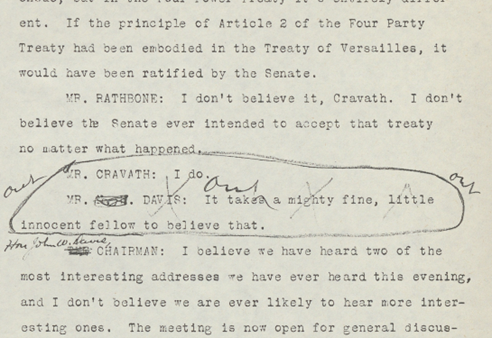
The meetings represent events called on specific subjects, or built around specific guests, and the files contain background material on the event, including contextual material on the speaker or subject as well as logistics like attendance lists and even seating plans. There may be correspondence with speakers and guests, transcripts, or summaries of the central remarks or of the questions and discussion that took place afterwards.
Global Coverage
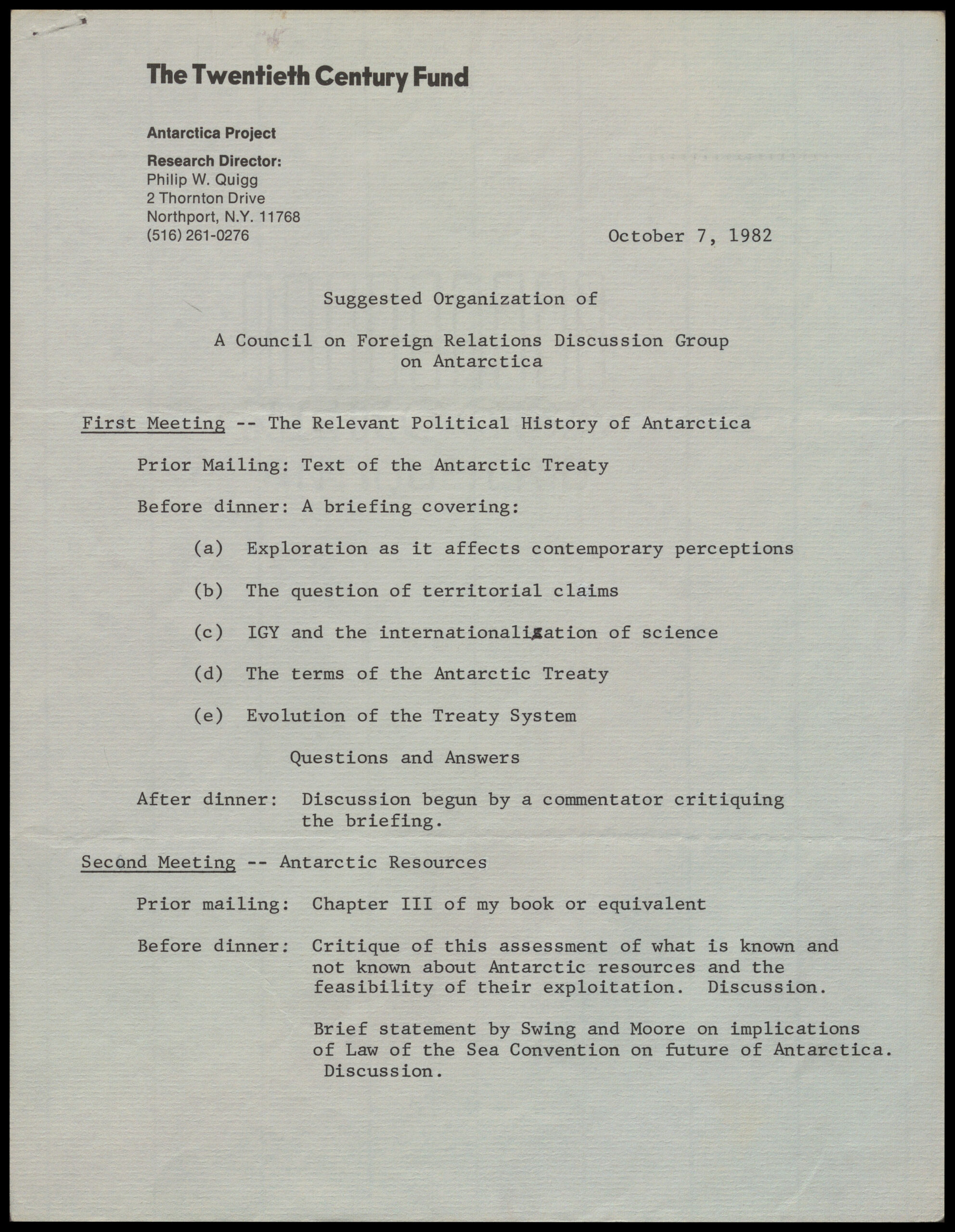
This archive will appeal to a wide range of researchers whose interests and disciplines relate to the global experience of the twentieth century and the development of the current global political environment. The Council has hosted expert opinion and discussions relating to every continent, including Antarctica, and analysed domestic and international US policy from varying perspectives, with members across the political spectrum.
There may even be something new for those familiar with the collection at Princeton, as during the process of digitisation we have been able to allocate dates and titles to items where they were previously absent – for example, a previously untitled item featuring frequent attendee John Foster Dulles in 1949 can now be found under, ‘No Title [“Comments on the United Nations Assembly in Paris”]’, retaining the original catalogue information but adding crucial detail for a researcher.
Similarly, applying OCR across the collection means relevant material can be more easily surfaced – for example, the below document discusses the Horn of Africa in the mid 1970s, when it was a battleground in the Cold War. The file it appears within relates to human rights and US policy, and may not appear on a researchers list focused on this region, but a search in the digital archive for ‘Horn of Africa’ would find this document, provided as background context in this file.

The depth and breadth of material found here opens up new pathways of research and helps explore questions around regional issues concerning global powers such as China and Russia, on key events like the Vietnam War or the Bay of Pigs, on the international order built around organisations like NATO and the UN, or around the international role of the US both past and present.
Or, if you’re interested in who sat next to who and what they ate at a 1984 dinner in honour of Zhao Ziyang, Premier of the State Council of the PRC, we’ve got you there as well.

If you enjoyed reading about the new Global Politics and US Foreign Policy: The Council on Foreign Relations, 1918–2000 archive, you may like to read the following posts:
- Chatham House Online Archive and International Law
- Reimagining Global Politics: International Relations through a Non-Western Lens
- In or Out? Exploring Britain’s Relationship with Europe Using Chatham House Online Archive
Blog post cover image citation: a collage of images from the archive.