
│By Eleanor Leese, Acquisitions Editor, Gale Primary Sources│
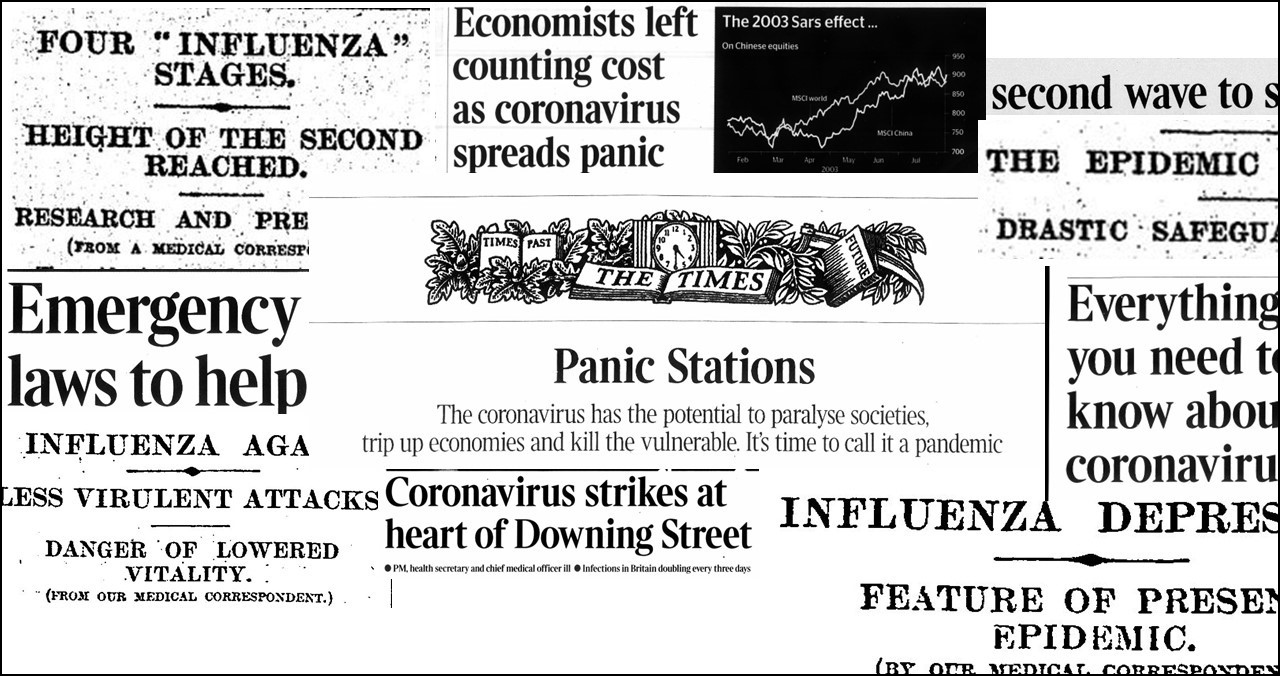
The first half of the 2020s brought with it political and social upheaval on a scale not seen for generations. Nothing touched the lives of more people than the COVID-19 infections that were reported in the opening days of the decade, and led to the deaths of more than seven million people worldwide. To understand these once-in-a-lifetime events, journalists turned to the most recent example of a global pandemic – still just within living memory: the ‘Spanish Flu’.
With the addition of issues for 2020 to 2024 in The Times Digital Archive, it’s possible to research the development of these two in parallel for the first time.
Spanish Flu in the Early Days of COVID-19
Early The Times reporting of a novel coronavirus in Wuhan, China, focused on the economic cost being felt in China, and its ripples across world markets. Much as early reports of a new, deadly strain of influenza in 1918 considered the impacts on a labour market already severely depleted by four years of war. Comparisons could be drawn between life in Britain and in China that made the spread of the virus here seem so unlikely as to be impossible.
In this environment, references to Spanish Flu were thrown casually into a sentence, a bogeyman or worst-case scenario, usually cited along with its horrific death toll. The first mention of Spanish Flu in relation to COVID-19 comes in late January: ‘The great influenza outbreak of 1918-20, commonly but inaccurately known as Spanish flu, killed some 50 million people worldwide’.
Covid Reaches the UK
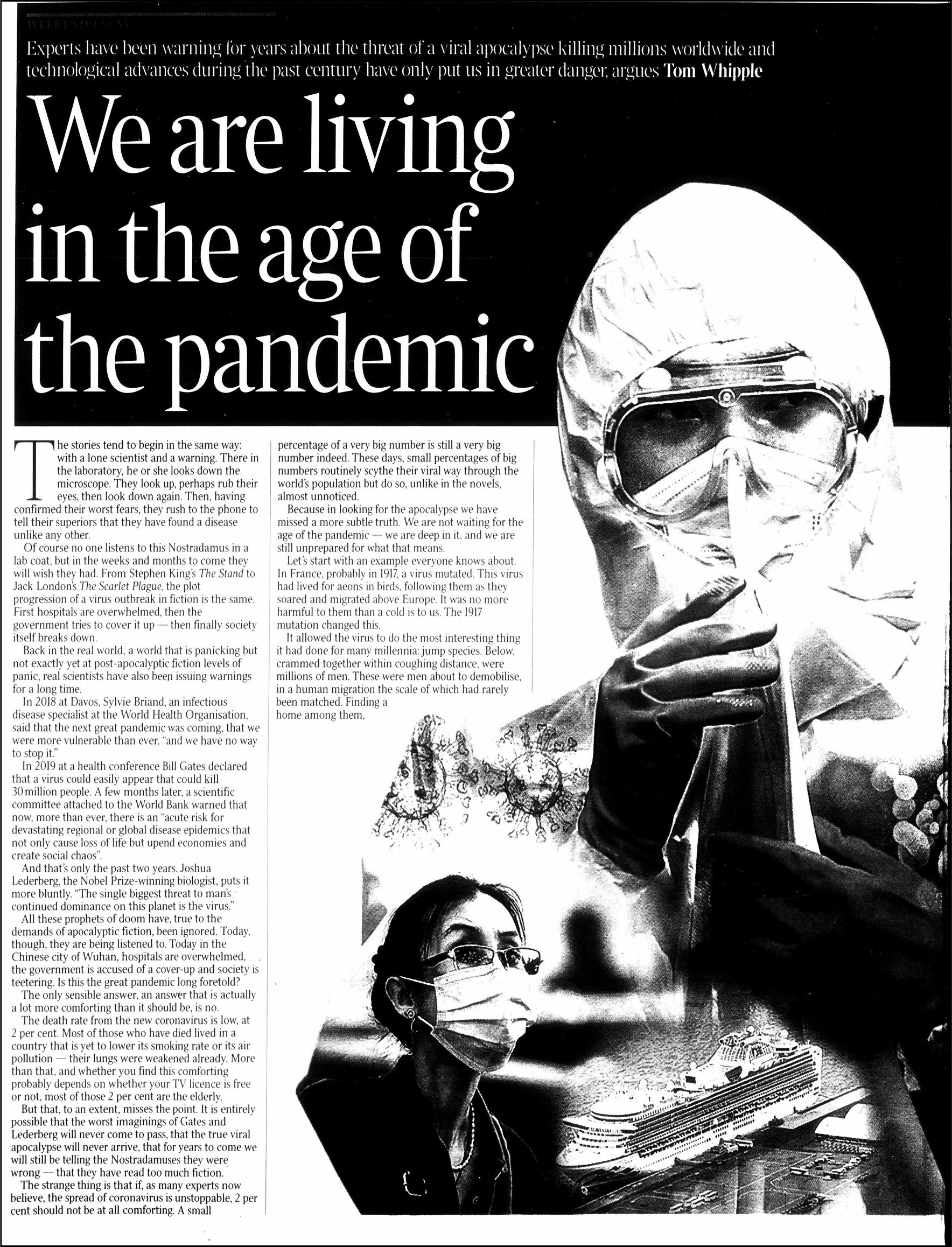
But by the end of February 2020, with cases worldwide increasing exponentially, more details about Spanish Flu start to be included. Rather than being the bogeyman that we can safely assume won’t visit, it’s an opportunity to learn from our most recent experience of a worldwide spread of an infectious disease. A potential source of information for how to live in ‘unprecedented times’.
In March, we see the first mention of the greatest lesson we would take from the Spanish Flu, that it attacked in waves, and the growing realisation that we were only at the beginning of a long, arduous fight. This is highlighted in the reproduction of a graph that first appeared in the pages of The Times in 1920, and which barely needed updating for a 2020 audience.

Lessons Learned?
There were few areas where a comparison with Spanish flu was not deemed helpful: politics, economics, the arts, feminism all make an appearance. As the Spring months progressed, more nuance in the similarities and differences between Covid and the flu arose. Spanish flu was mentioned several times a week throughout March and April, the illness of Lloyd-George compared to Boris Johnson’s hospitalisation.
But the stark differences a century makes were as notable as the similarities between the two pandemics. Though self-isolation was ‘official advice’ in 1920, it was not enacted in law. School and business closures were a local issue, and – notably – there was no Ministry of Health to coordinate the government’s response.
As the first wave of COVID-19 waned in the summer of 2020, attention turned to lessons that might be learned from the aftermath of the Spanish Flu. Would Britain see an economic downturn as was experienced in the 1920s, and led to the Great Depression of the 1930s?
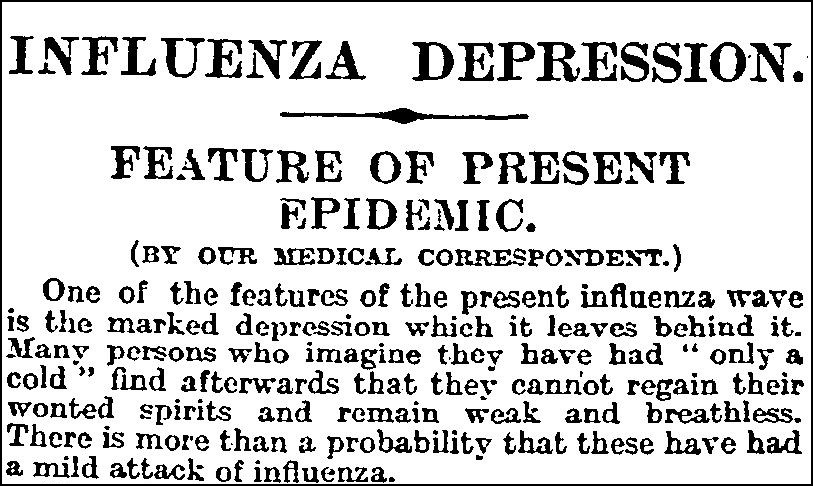
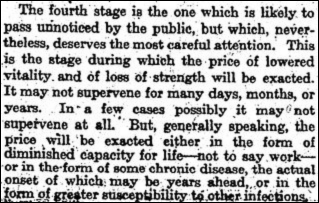
The Times reports from 1918-1920 offer a wealth of information about life post-pandemic. From the recovery of financial markets to the potential for a widespread mental health crisis, and long-term ill health for survivors of an initial infection. But despite these early suggestions that we might learn from the long-term impacts of Spanish Flu, mentions of the earlier pandemic become scarce from 2021 onwards.
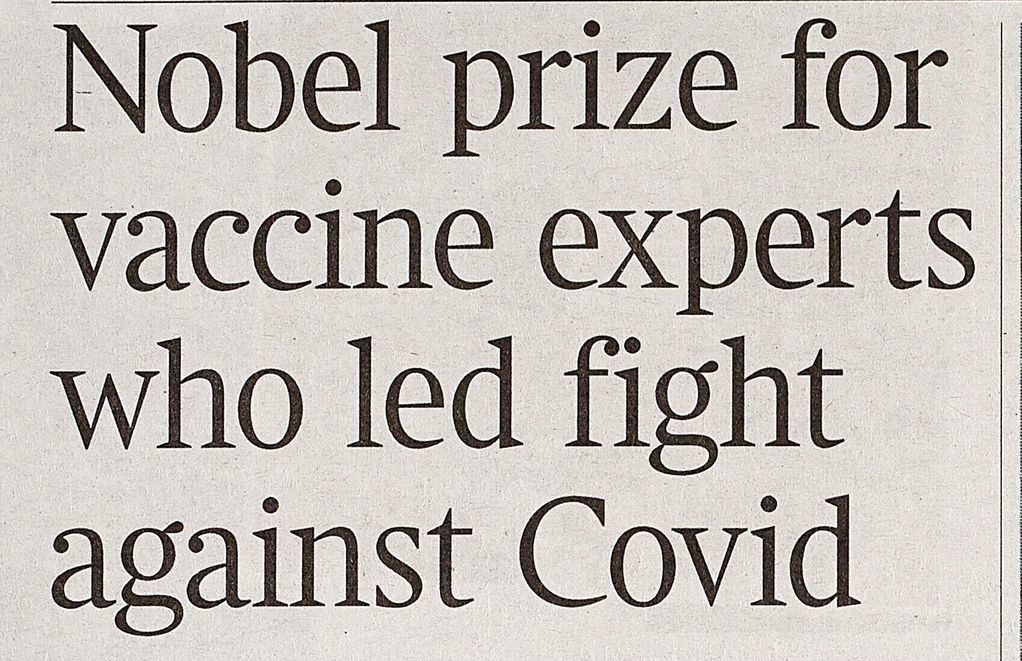
We could ascribe this change of course to the emergence of the biggest difference between the Spanish Flu and Covid epidemics, and the moment at which our experience of them diverged from our forebears’: the announcement in November 2020 of an effective vaccine. The vaccination programme that started the following month saved millions of lives, ensuring that the death toll from COVID-19 never reached the figure of 50 million that is commonly associated with Spanish Flu.
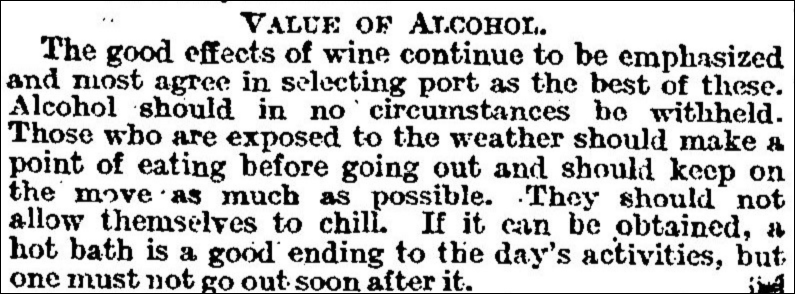
In contrast, The Times reported various attempts at inoculation programmes throughout 1918 and 1919, without any great success. In fact, the best medical advice that emerged from the Spanish Flu epidemic was that, ‘The good effects of wine continue to be emphasised and most agree in selecting port as the best of these. Alcohol should in no circumstances be withheld.’
Gale Primary Sources’ regular updates to its newspaper archives allow for pulling these interesting parallels in history, and discovering the advancements made over the century as we’re faced with similar widespread issues.
If you enjoyed reading about using newspapers to discover parallels in history, check out these posts:
- In Need of Some Good News: Daily Mail Historical Archive, 2017-2021
- Reflecting on the Recent Past with The Independent Historical Archive Supplement, 2017-2021
- The Mirror and Women: Female Readers, Female Writers
Blog post cover image citation: A collage of headlines from The Times Digital Archive.