│By Elizabeth Gaglio, Academic Customer Success Specialist│
The nineteenth century is known as a “Golden Age” of children’s literature. Advancements in printing and new views on childhood transformed the genre that was overwhelmingly moral and didactic, finally allowing for tales of adventure, nonsense verse, and imaginative illustration.
Rather than reading just to learn proper behaviour and lessons, children got to find out what happened to Alice when she fell down the rabbit hole and follow the woodland adventures of “a silly old bear” and his friends. Reading for pleasure, curiosity, and wonder became a valued part of childhood in this golden age.
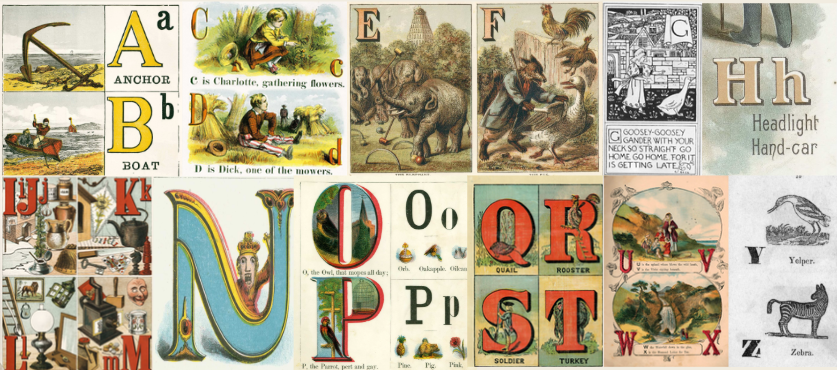
By looking at one popular style of book, the alphabet book, we can see echoes of trends found across children’s literature in the nineteenth century, laying the foundations of modern works. Didactic by nature, but with growing whimsy and creativity, these alphabet collections found in Gale’s Children’s Literature and Childhood archive (part of Nineteenth Century Collections Online) help us track the evolution of children’s literature.