“In the spring of 1978, Taito approached Midway about distributing a new arcade game in the United States. The game had originally been invented as a hexadecimal test used for evaluating computer programmers. Someone decided to convert the test into a video game that Taito distributed in Japan, despite the unenthusiastic blessing of company executives. The game was called Space Invaders.”
Kent, Steven L. The Ultimate History of Video Games, New York: Three Rivers Press, 2001, p. 116
Gale News and Teams
Not on the Ball: England’s Top Three World Cup Blunders
By Megan Murphy
With excitement for the World Cup 2018 building, I’ve been looking back to some of the most memorable moments from World Cups throughout the years. From England’s infamous victory in 1966, to their disastrous loss against West Germany in Italy 1990, Gale’s newspaper archives provide an invaluable tool for exploring these unforgettable (although sometimes we may wish they were) moments. I’ve featured my favourite three below…
The Little Ratters We Know Little About: The A Brief History of the Yorkshire Terrier
By Anna Sikora, Gale Ambassador at NUI Galway
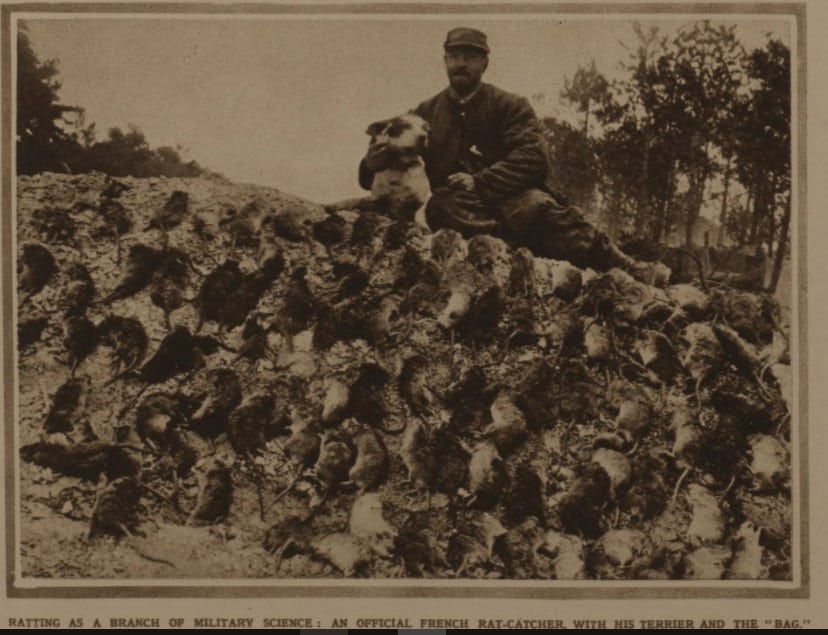
I hate it when parents do homework for their kids, but the last one tempted me enough to get involved! To deter my 15-year-old from using the plethora of lazily compiled websites cluttered with poorly researched material, I got her onto Gale Primary Sources. Her presentation, according to her history teacher, was beyond impressive. Plus, he could not believe how easily one can now access such primary source materials, and how uniquely valuable they are. The topic was simple: to research the family pet. We have a little Yorkie, so here goes the shortened version of my child’s homework… Today, Yorkies are tiny posh dogs which celebrities like to parade in their bags, grannies hold on their laps, and small kids pet in the park (to the horror of the owners), all forgetting that a terrier is the ultimate working dog: a snappy little ratter originally bred to catch rodents.
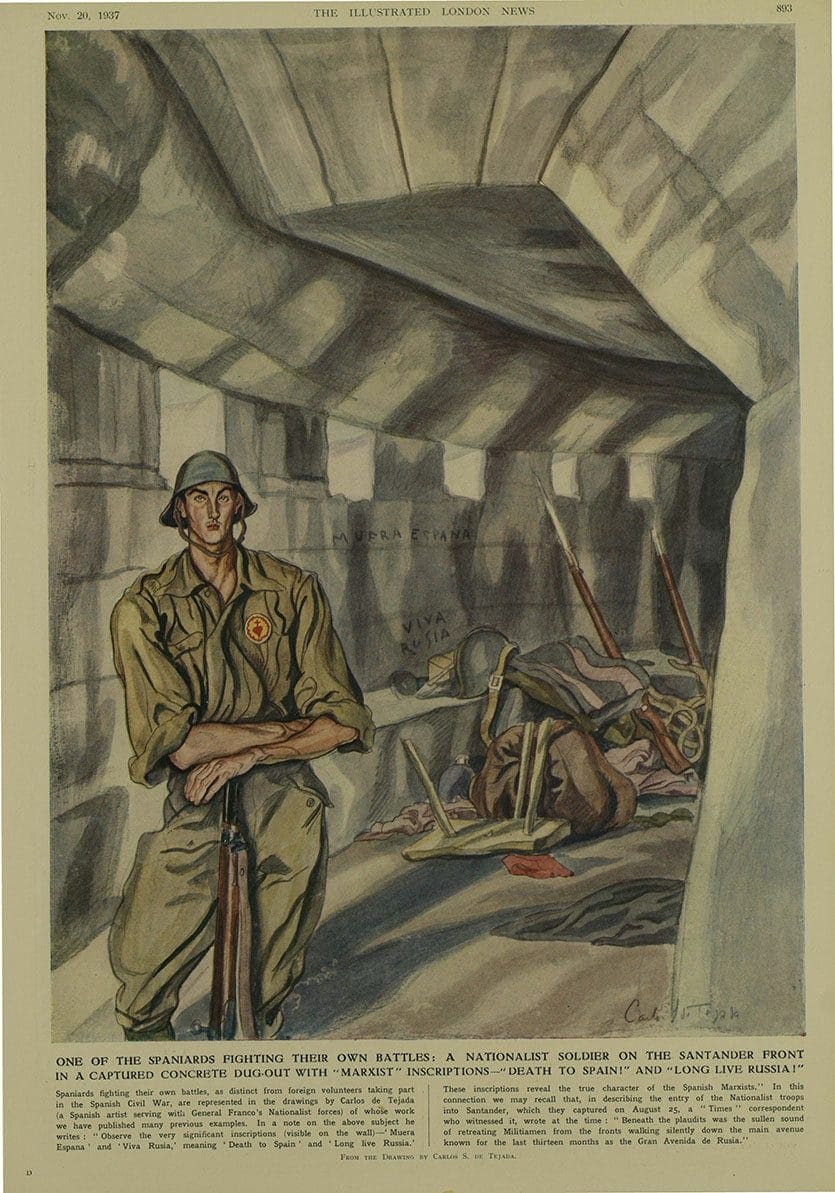
Soviets and the Spanish Civil War
By Rory Herbert, Gale Ambassador at the University of Portsmouth
Rafael Merry del Val (1865-1930) remarked in his manuscript on the Spanish Situation, written for Chatham House and accessed via Gale’s online archive, that Lenin viewed Spain as imperative to the eventual success of the Bolshevik revolution [1]. It should come as no surprise then that both prior to and following the outbreak of the civil war, the Soviet Union maintained a great interest in the outcome of this nation.
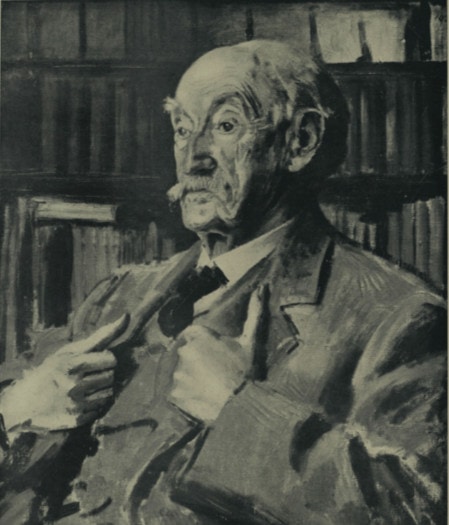
The Only Way is Wessex: Thomas Hardy’s Cultural Impressions
By Daniel Mercieca, Gale Ambassador at Durham University
“She was not an existence, an experience, a passion, a structure of sensations, to anybody but herself. To all humankind besides Tess was only a passing thought. Even to friends she was no more than a frequently passing thought.” [i]
The well-trodden Dorsetshire heathlands, bustling rustic communities and evanescent ghosts from Thomas Hardy’s folkloric world, Wessex, continue to impress memories of English rural heritage. Hardy’s sensitive capturing of ‘mere impressions of the moment’ in prose and poetry; the cascade of raindrops on a gate, hazy warmth of a barn dance or ghostly silhouette of a horse rider in sea mist, reinvigorates our appreciation of ordinary experience [ii]. This year marks the 90th anniversary of Hardy’s final collection of verse, Winter Words in Various Moods and Meters (1928), whose sombre cadences echo amongst later generations of modern poets and can be found in The Times Historical Archive. The continual resurgence of Hardy’s works in dramatic and televisual adaptations, modern poetry and National Trust Heritage fosters a Wessex mythology which remains vibrant today.
Rebeldes, pícaros, místicos y rústicos: los irlandeses en las reseñas literarias británicas
Por Paula Maher Martin, Gale Ambassador en la Universidad NUI Galway
Lee este blog en inglés aquí
‘Un cuadro plasmado a partir de la vida de un pueblo cuyos días transcurren bajo el cielo en campo abierto’: los contornos lingüísticos de lo que Edith Somerville, al examinar la obra de PW Joyce Inglés como lo hablamos en Irlanda (1909), denomina el dialecto anglo-irlandés, acomodan un microcosmos de Irlanda. Paisaje exuberante y un pueblo embriagado de naturaleza, sentimientos, magia y alcohol.
Rebels, rogues, mystics and rustics: the Irish in British literary reviews
By Paula Maher Martin, Gale Ambassador at NUI Galway
Read this blog in Spanish here
‘A picture drawn from the life of a people whose days are spent under the sky in the open country’. These are the linguistic contours with which Edith Somerville, in examining P.W. Joyce’s 1909 work English as We Speak it in Ireland, denominates the Anglo-Irish dialect, and accommodates a microcosm of Ireland – an exuberant landscape and a people intoxicated with nature, feeling, magic and alcohol.
How can human trafficking be tackled in Britain?
By Tiria Barnes, Gale Student Ambassador at the University of Liverpool
Despite slavery being outlawed in the nineteenth century, human trafficking – defined by the Tearfund as ‘the transporting or abduction of people for the purposes of exploitation, using coercion, fraud or deception’[1] – is still a prevalent problem in our world today. In 2015, it was estimated that the trafficking industry was worth 32 billion US dollars a year, which is equivalent to the GDP of Tanzania[2]. As the fastest growing business in the world, it has been suggested that every 30 seconds a child is trafficked[3]. I decided that it would be interesting to investigate human trafficking on a more local scale, and see how newspapers reported on Britain’s response to the problem. Using Gale Primary Sources, I was able to make some thought-provoking discoveries.
‘The Very Latest Craze’ Slumming Parties in the Late-Nineteenth Century
By Megan Murphy, Gale Ambassador at the University of Liverpool
During the mid-nineteenth century, slums in the world’s largest metropolises (namely London and New York) became a site of continuous fascination. From Henry Mayhew’s famous ‘Labour and the Poor’ series in The Morning Chronicle, to Jacob Riis’ book length study ‘How the Other Half Live’, social commentators in both Britain and the US were captivating the minds of middle class society with their investigations into the living conditions of the urban poor. Yet what is perhaps most interesting about this fascination is the social phenomenon of ‘slumming parties’ which resulted. This phenomenon was readily reported on within the pages of both the British and US press, which I have been able to investigate through the British Library Newspapers and Nineteenth Century US Newspapers archives inside of Gale Primary Sources.
Collection Highlights – State Papers Online Eighteenth Century, Part IV: Scandinavia, Eastern Europe and Turkey
State Papers Online Eighteenth Century, Part IV: Scandinavia, Eastern Europe and Turkey is now available. The final part in the State Papers Online Eighteenth Century programme, Part IV rounds out the State Papers collection of 1714-1782 with series from Denmark, Sweden, Poland and Saxony, Prussia, Russia, Turkey and the Barbary States, as well as volumes of Treaties, papers sent to the British Secretaries of State from foreign ministers in England, and ‘confidential’ and intercepted letters between key figures in international politics. Joining the domestic, military, naval and registers of the Privy Council of Part I to the full scope of the State Papers Foreign offered in Parts II, III and IV, the State Papers Eighteenth Century collection represents the government of Britain at home and abroad in unequalled depth.
Including primary source material spanning decades from some of the most powerful courts in Europe, there is much to be discovered. With such a wealth of material available, where to begin? In this blog post I providea starting point, exploring just some of the highs and lows of Part IV for researchers, scholars and the perennially curious to explore.