
By Liping Yang, Senior Manager, Academic Publishing, and Emma Harris, Associate Editor, Gale Primary Sources│
Gale has recently released Part IV in its State Papers Online Colonial: Asia series (SPOCA 4). This new module provides a perfect continuation of State Papers Online Colonial Asia Part I-III through a combination of major Colonial Office files featuring (East & West) Malaysia and Singapore as well as a curated collection of Hong Kong-related British official and non-official files selected from the archives of the Colonial Office, the Prime Minister’s Office, Cabinet Office, Ministry of Defence, and the British Council.
Consisting of around 380,000 pages of documents digitized from 15 series, this new module features a wide range of content types including correspondence, register of out-letters, registered files, government gazettes, sessional papers, and maps and plans, providing a wealth of valuable material for researching the history of Malaysia, Singapore, and Hong Kong as former British colonies between 1844 and 1997.
World War II
World War II (WWII) is covered in Part 4 as in Parts 1-3. One major topic relates to the allied prisoners of war (POW) and civilian internees captured and held by the Japanese army after the fall of British Malaya and Singapore between December 1941 and February 1942. These POWs consisted of surrendered British, Australian, British Indian army officers and soldiers including Lieutenant-General Arthur Ernest Percival, General Officer Commanding (GOC) Malaya. Civilian internees included men, women and children.
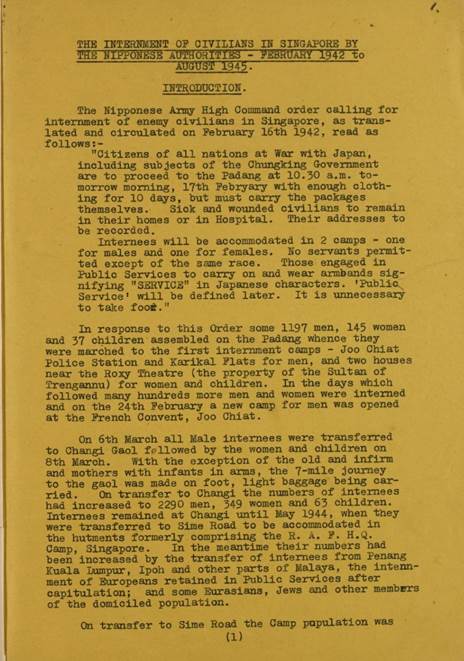
CO 537/1220 includes a document titled “The Internment of Civilians by the Nipponese Authorities Feb 1942-Aug 1945.” It was compiled by C. E. Courtenay from camp records. Shortly after the fall of Singapore, the Japanese army command issued an order on the internment of “enemy civilians”. Thousands of civilians were first captured and put in internment camps across the island before being moved to the notorious Changi Gaol.
Following the surrender of Japan in August 1945, demanding reparations for injuries and losses became a hot topic among British officials. CO 537/7703/19 contains a draft letter from the Colonial Office’s Permanent Under-Secretary of State, Sir Thomas Lloyd, to Sir Shenton Thomas, Governor and Commander-in-Chief of the Straits Settlements and High Commissioner of the Federated Malay States (later British High Commissioner in Malaya) during 1934-1946.
The letter laid out the following principles: National-level war reparations shall be paid by the defeated Japanese government. As for individual property losses and injuries sustained outside Japan, these would be compensated using funds derived from the disposal of Japanese assets that had been left behind where such losses or injuries were caused.
Monitoring the Conduct of Sultans
Sultans were the in-principle rulers of the Malay states on the Malaya Peninsula during the period covered. The British colonial government in Malaya monitored their activities closely, especially those from the unfederated states which included Johor, Kedah, Kelantan, Perlis, and Terengganu. Unlike the federated states where the British residents and resident general had more say in administration, the sultans of those unfederated states retained more power despite the presence of British advisors.
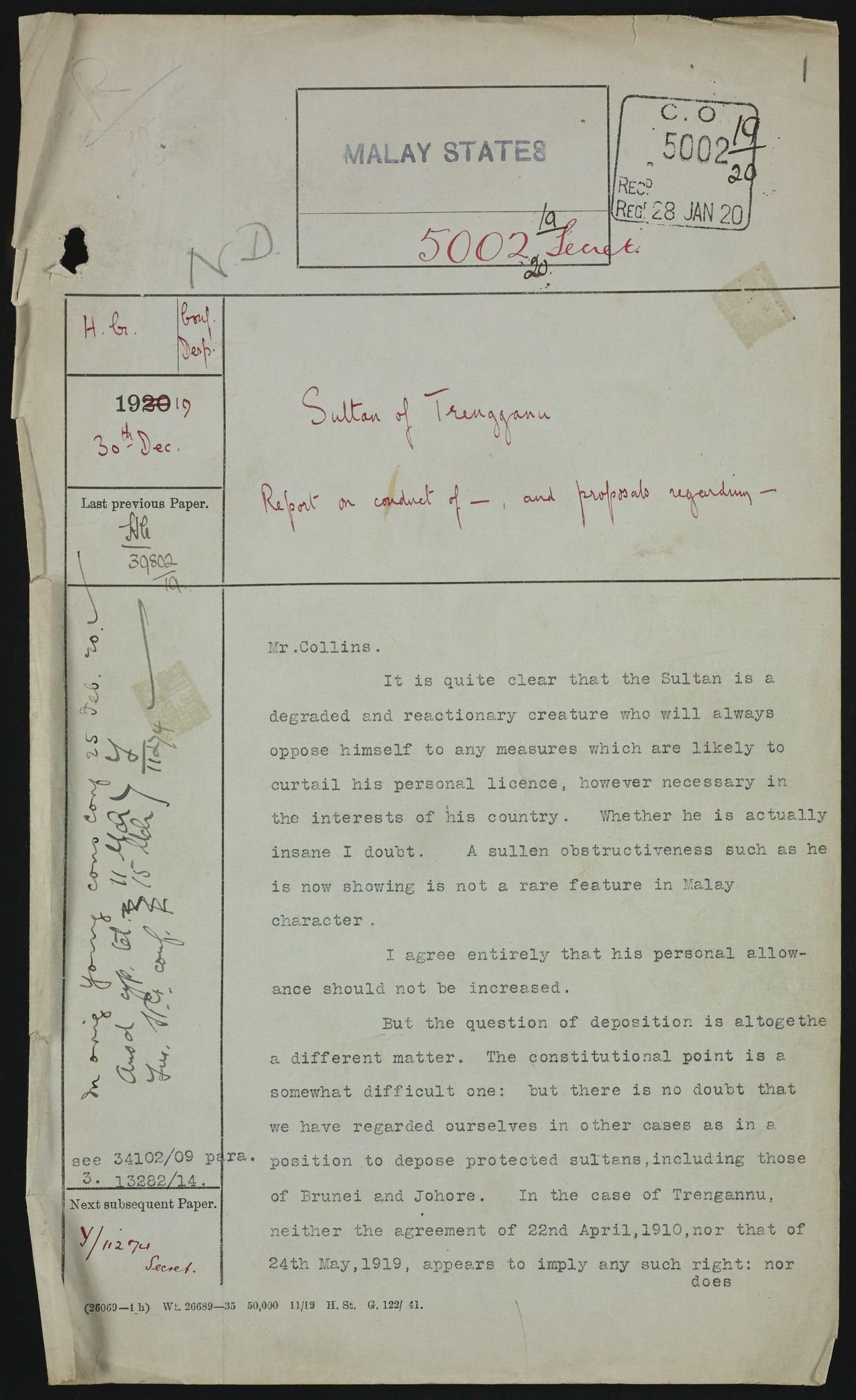
CO 537 contains many volumes on the activities of these sultans. Sultan Muhammad II (1919-1920) of Terengganu was described in a report of December 30, 1919 by the British high commissioner as a “degraded and reactionary creature” and would not recommend increasing his allowance. At the same time, the report also discussed the possibility of deposing/removing the Sultan, which transpired in 1920 when he was forced to abdicate.
Dato Onn and the Formation of UMNO
Following the end of WWII, the British returned and reoccupied Malaya. They consolidated their control by establishing the Malay Union in 1946. The Union was made up of all the Unfederated and the Federated Malay States along with Penang and Malacca as a result of the dissolution of the Straits Settlements. However, the Union did not last long due to the strong resistance of the native Malay communities against the significant reduction of the Sultans’ powers and the easy granting of citizenship to immigrants.
In the process, the United Malays National Organisation (UMNO) came into being under the leadership of Dato’ Onn bin Ja’afar in May 1946. As a Malay nationalist political party, UMNO was instrumental in terminating the Union, ushering in the formation of the Federation of Malaya in February 1948, and pushing for the eventual independence of Malaya from British rule.
Dato Onn was the founder of UMNO and known as the pioneer of organised anti-imperialism and early Malay nationalism. So, it is no surprise to see quite a number of files in CO 537 on UMNO and Dao Onn’s activities. CO 537/6020 contains a report on an UMNO meeting held in Kuala Lumpur on February 19, 1950. At the meeting, motions for adopting Malay as the official language were discussed and passed and Dato Onn’s predicted when Malaya would gain independence.

Communism and Chinese Community
Malaya and Singapore are home to large Chinese immigrant communities. Most of the members of the Malayan Communist Party (MCP) were Chinese. During WWII, MCP fought the Japanese side by side with the British. However, after the end of the war, the MCP and the returned British became enemies because the former championed anti-colonial and national independence while the latter strove to retain its control over Malaya and Singapore.
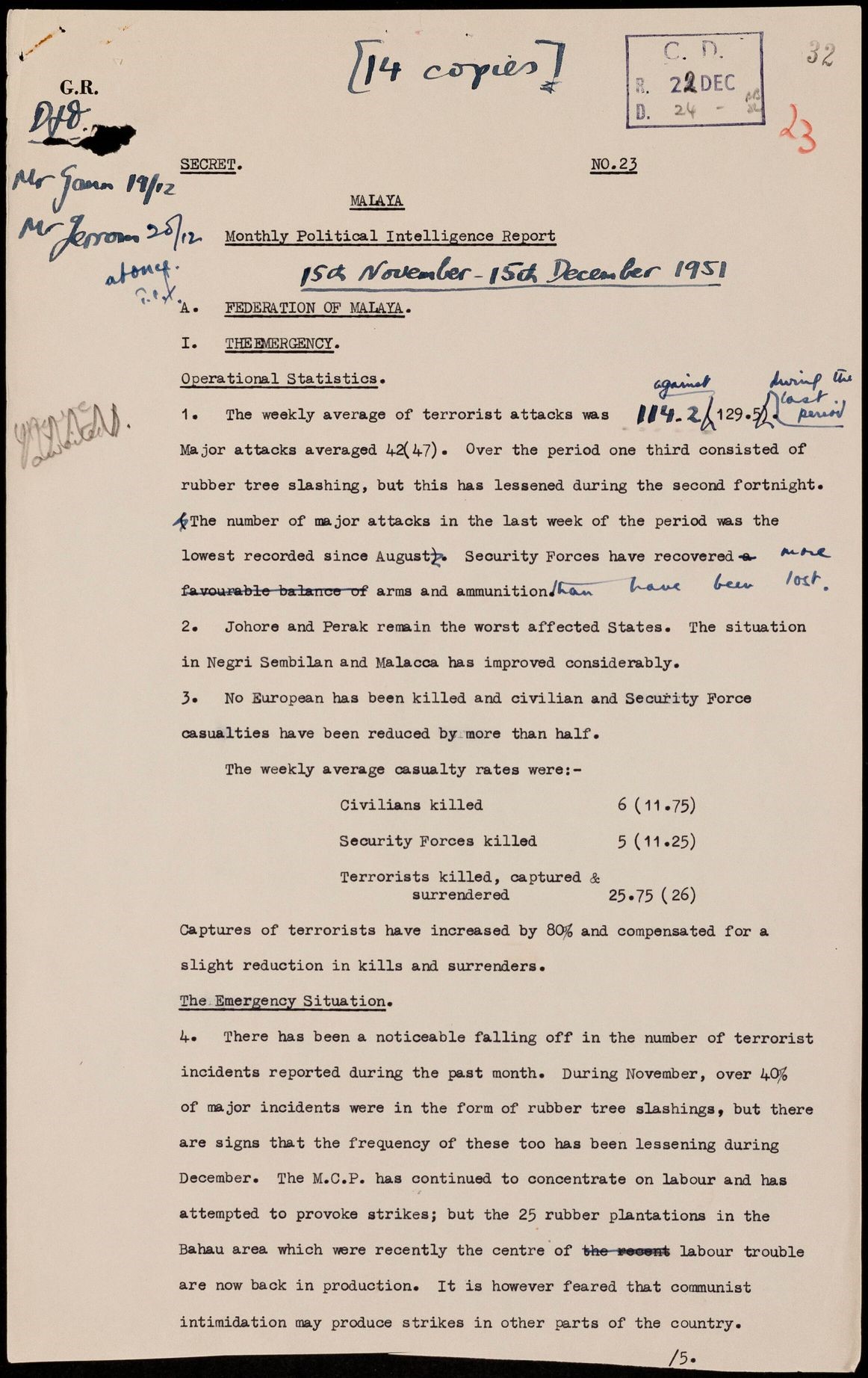
Escalating social and economic unrest caused by the post-WWII economic difficulties exacerbated tensions between the British and the MCP, giving rise to the devastating Malayan Emergency. The Federation of Malaya found itself embroiled in a four-year long war against the communist-led pro-independence Malayan National Liberation Army.
Below is a page from a monthly political intelligence report on the emergency situation during Nov-Dec 1951, describing the number and form of attacks and casualties caused.
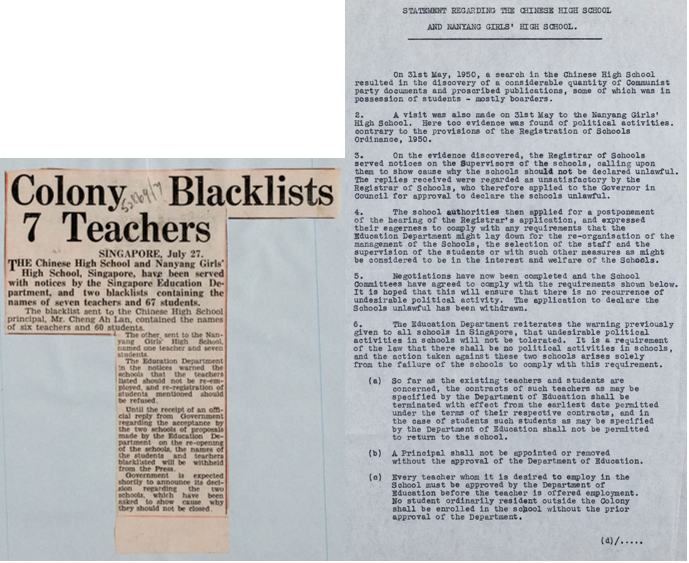
Communism also found its way to schools. Some teachers and students from the Chinese High School ( 華僑中學) and Nanyang Girls’ High School (南洋女子中學校) in Singapore were found actively involved in communist activities. Here is a page from the statement issued by the Colonial Government of Singapore regarding communist activities in the two schools.
“A considerable quantity of Communist party documents and proscribed publications” were discovered and other “evidence of political activities contrary to the provisions of the Registration of Schools Ordinance” was found. Teachers were fired and put on the blacklist while students were allowed to return to schools.
Indonesian influence in Malay Peninsula
Malaysia and Singapore’s relationship with Indonesia can be explored in the files of this module, highlighting how their relations were shaped by the broader context of decolonisation and nationalism.
While Malaya and Singapore remained under colonial rule after the end of Japanese occupation, Indonesia declared independence from Dutch rule. A conflict ensued between the Netherlands, who had attempted to regain their lost control, and an independent Indonesia, until 1949 when Indonesian independence was finally recognized.
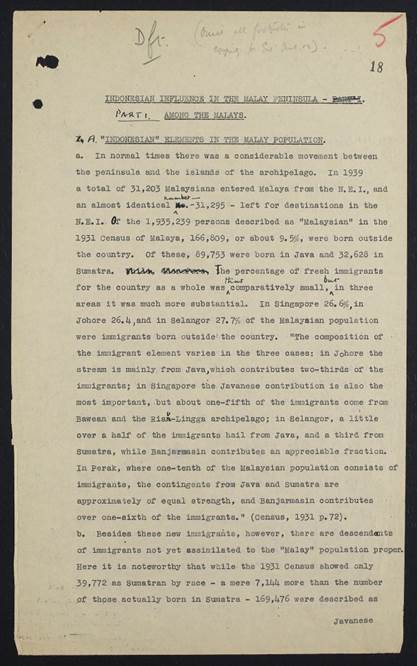
Files from the late 1940s show the Malayan government’s concern with pro-nationalist movements in Indonesia manipulating the political climate of Malaya. CO 537 reports on Indonesian influence over the Malayan Peninsula, with the government being advised to monitor the political situation in Indonesia. One report considers the significant percentage of Indonesian immigrants in Singapore and Malaya and how this could give rise to pro-independence sentiments in Malaya.
Evidence of Indonesian representatives supporting and encouraging an independent Malaya are noted in these documents, where a member of the Indonesian Diplomatic Staff had contacted a Malay student leader and “urged him to use his influence in uniting Malay and Indonesian students for a struggle for a free Malaya.”
The Defence and Future of Hong Kong
Britain reoccupied Hong Kong after WWII. From then to the 1970s, how to defend the colonial city from its northern neighbour, the People’s Republic of China (PRC), became a recurring topic for the British government. To reduce the burden on London, cost-sharing schemes between London and Hong Kong were proposed. In this press release, “Hong Kong Defence Costs Agreement” negotiated between London and Hong Kong started with 50% in the first year (1976-77) and increased gradually to a significant 75% by the 3rd year (1978-79).

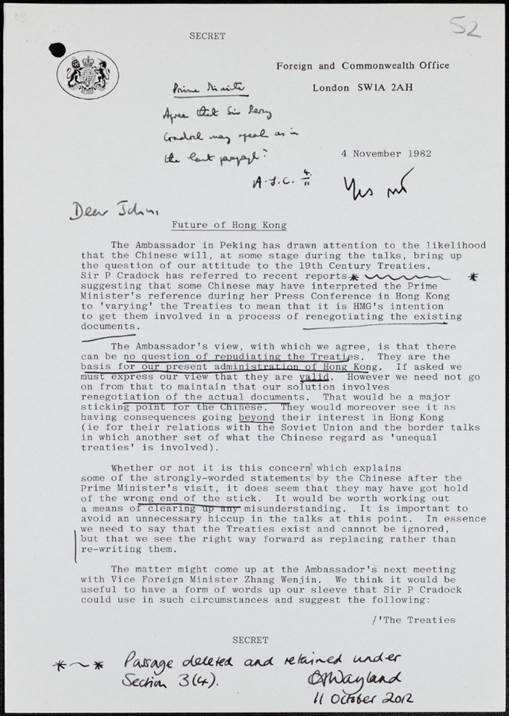
Given the increasing defence costs and the expiry of the lease of the New Territories, the British government realised it had to engage in talks with the PRC. The Prime Minister’s Office archive contains more than 30 subject files with the same title of “Future of Hong Kong” produced between 1982 and 1997 providing an archival record of the protracted bilateral negotiations.
This volume revolves around the subject of the various unequal treaties signed between Britian and China during the nineteenth century and how to handle it properly in talks. After years of negotiations, an agreement was reached on the handover of Hong Kong to China in 1997.
Hong Kong Government Gazettes and Sessional Papers
SPOCA4 includes two very different collections of Colonial Office files: CO 131 Sessional Papers and CO 132 Government Gazettes. Together they shed light on the day-to-day running of the local colonial government, reflecting what happened on the ground in the colony and providing a local perspective on the history of Hong Kong.
Sessional papers are government documents presented to the Legislative Council meetings, including administration reports, executive council minutes and memoranda, and committee reports. Administration reports are released annually, consisting of reports on general administration and specific topics including Law & Order, Public Health, Education, Defence, Public Works, and Undertakings of Government.
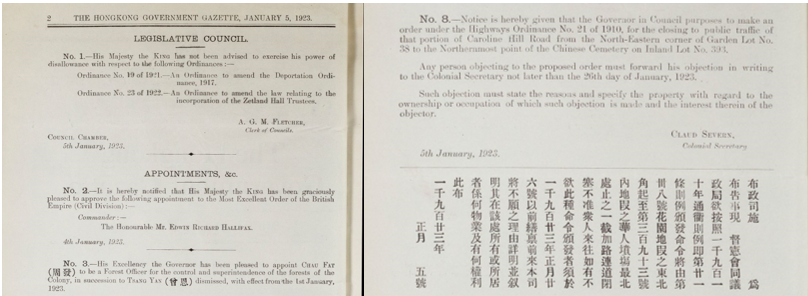
As a weekly official publication of the Government of Hong Kong, the Hong Kong Government Gazette contains government/departmental proclamations and notifications on topics like appointments, public tenders, etc. It also includes legal supplements on newly enacted or amended ordinances, regulations, and bills.
Here are two pages from the Hong Kong Government Gazette from January 5, 1923. Notices concerning Chinese residents sometimes are released in both English and Chinese. Here is one such notice on the closing of a section of road in the city that may affect the Chinese cemetery.
British Council in Hong Kong
One unique collection included in SPOCA4 is the registered files of British Council in Hong Kong (BW 94 British Council: Registered Files, Hong Kong, 1946-1996). As a British non-departmental public body, the British Council is dedicated to promoting cultural and educational exchanges with other countries. Some scholars consider it a soft power extension of the UK foreign policy or simply a propaganda tool.
The 24 volumes of registered files include among others quarterly and annual reports, management reports, and country briefs, covering the council’s policy, budgets, and activities organized. Included in the country brief for 1979 is a statistical profile that lists the various activities organised or initiated by the council in Hong Kong, such as summer schools, fellowships and grants, courses, lectures and seminars.
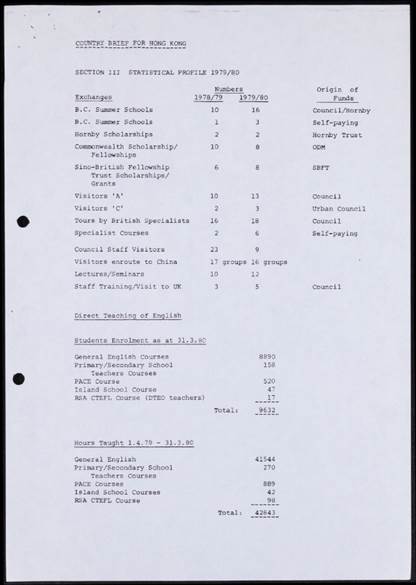
These files complement the serious and formal British official papers as included in the other series by providing a non-official perspective on the post-WWII history of Hong Kong.
State Papers Online Colonial: Asia Part IV: Malaysia, Singapore, and Hong Kong will support a wide arrange of research and teaching areas including history of Southeast Asia, history of Hong Kong and China, and British colonialism and decolonisation.
If you enjoyed reading about SPOCA4, you may like to read the following posts:
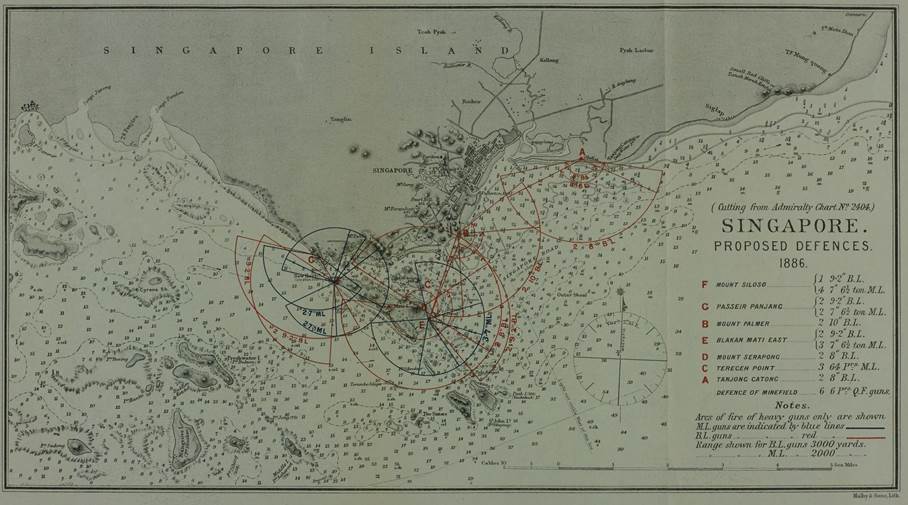
Blog post cover image citation: Singapore proposed defences (1886) Straits Settlements. (Despatches and Offices. 1885-1888. MS Records of the British Colonial Office CO 537/46/392. The National Archives (Kew, United Kingdom). State Papers Online Colonial, https://link.gale.com/apps/doc/DYLUAO323435480/SPOC?u=omni&sid=bookmark-SPOC&xid=7153524b